
 The story that rocked the world: Ten years of the Panama Papers, part 1
  France to try alleged Magnitsky Affair mastermind Dimitry Klyuev in absentia
  Canada revokes dozens of crypto firms’ registrations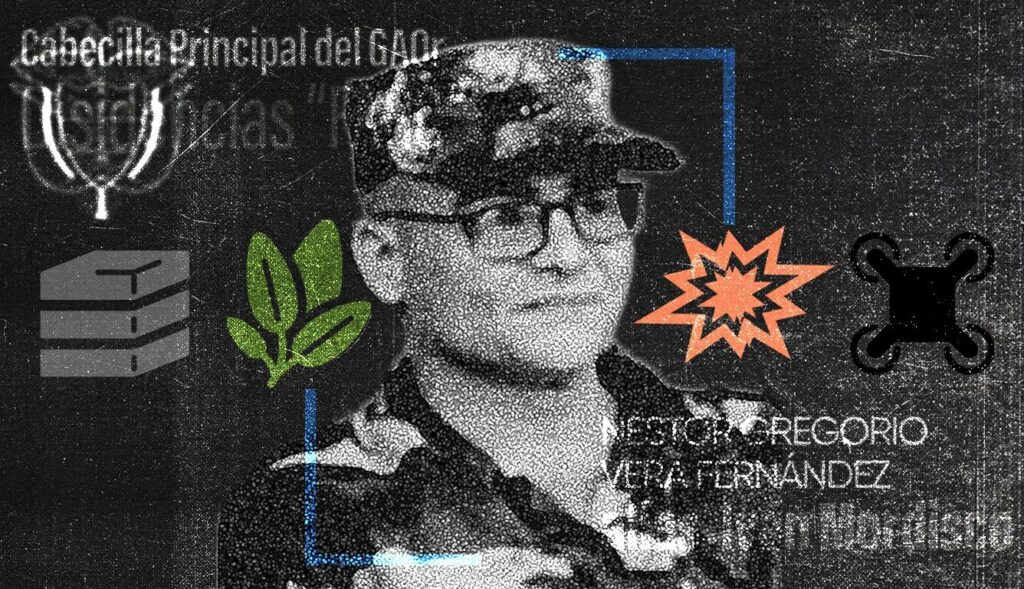
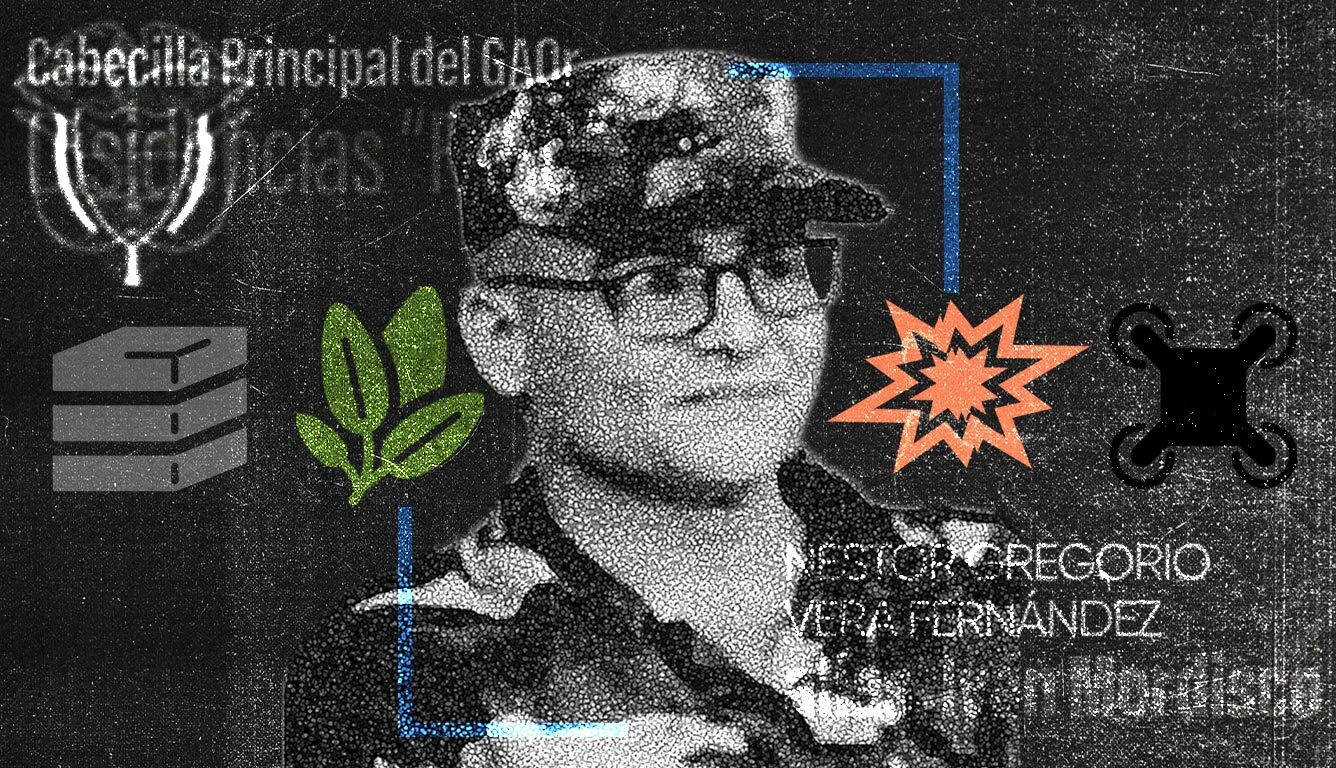
President Gustavo Petro has intensified operations against Iván Mordisco, Colombia’s most wanted criminal. But, after years of military offensives and false reports of his death, the guerrilla leader continues to elude authorities.
On March 26, the armed forces reported a bombing in the department of Vaupés, in southeastern Colombia, targeting Néstor Gregorio Vera, alias “Iván Mordisco,” leader of one of the main dissident factions of the now-defunct Revolutionary Armed Forces of Colombia (Fuerzas Armadas Revolucionarias de Colombia – FARC). His group calls itself the Estado Mayor Central (Estado Mayor Central – EMC).
“The goal of the campaign is for the State to neutralize alias ‘Mordisco,’ for whom a reward of up to 5 billion pesos [US$ 1.3 million] is being offered,” Colombian Defense Minister Pedro Sánchez posted on his X account after the military operation took place.
SEE ALSO: Néstor Gregorio Vera Fernández, alias ‘Iván Mordisco’ Criminal Profile
Initial signs from the state offensive indicated Mordisco’s death, but this was soon debunked by a report from the National Institute of Legal Medicine and Forensic Sciences listing the deceased, which included several members of his security detail.
Since his refusal to adhere to the peace process between the FARC and the Colombian government in 2016, Mordisco’s criminal power has grown rapidly, making him one of the country’s primary military targets. The guerrilla leader has over 30 years of combat experience and commands a dissident faction with more than 4,000 members operating in 10 of Colombia’s 32 departments. In March 2024, he became the first criminal leader to abandon President Gustavo Petro’s Total Peace project.
Iván Mordisco’s Multiple Lives
The recent operation marks the latest in at least three incidents where both the Colombian government and local media have wrongly reported the guerrilla leader’s death.
In July 2022, then-Defense Minister Diego Molano announced that the dissident leader had been killed during a military operation. At that time, his distinctive beret was found, but no body was located. Three months later, Mordisco reappeared alive in a video.
In April 2025, the discovery of a computer, glasses, and a rifle following an attack by military forces against one of their camps in the department of Caquetá fueled rumors that the hunt for the guerrilla leader had come to an end. However, once again, that was not the case.
Recently, authorities have also increased their efforts around his family circle. Alias “Lorena,” Mordisco’s partner and mother of his child, is believed to have died in the most recent bombing, while four of Mordisco’s brothers have been captured in the last year, three of them in March 2026. Petro even requested support from the United States to track down Mordisco during a meeting with US President Donald Trump in February 2026.
Why Has It Been So Difficult to Nab Iván Mordisco?
The military pressure that Mordisco has faced over the past decade has done little to check his criminal power. He has managed to evade capture thanks to a combination of geographical factors, operational strategy, support from some local communities in his areas of influence, and a healthy dose of paranoia.
Our research indicates that Mordisco mostly resides in the Colombian Amazon, especially the departments of Guaviare, Caquetá, Amazonas, and Vaupés, where the EMC’s Amazonas Bloc operates. In this region, the jungle’s dense vegetation offers refuge from military operations, and its rivers serve as mobility corridors for drug trafficking and escape.
In addition to the territorial advantages, Mordisco has a highly experienced security scheme, composed of 50 guerrillas who have fought the Colombian army for decades. At the core is a trusted group that guarantees his protection and helps him make quick escapes. A second ring controls strategic pathways, rivers, and supply points. A larger network of militants and civilian collaborators performs surveillance throughout the areas where the group operates, acting as an early warning system.
SEE ALSO: Colombia’s EMC Holds ‘Total Peace’ Hostage in Cauca
However, the most decisive factor in his ability to evade capture is the territorial control his organization exerts over vast areas of southeastern Colombia.
The FARC dissidents have consolidated robust criminal governance schemes, imposing rules on communities and keeping tight control over territories in their purview. For example, the EMC has implemented mobility restrictions, and control over transportation, and “card systems” in local communities to monitor who enters their territor . These practices allow them to monitor their territory in real time and detect the presence of external actors, including state forces.
Don't Miss:
-
Is China’s commercial rocket now cheaper than Elon Musk’s SpaceX Falcon 9?
-
Four Police Officers Killed in Ambush in Escuinapa, Sinaloa
-
BBC defends action in new sex abuse scandal
-
Trump claims Iran president wants ceasefire, no response from Tehran
-
US church launches search for new HKIS school head amid legal row with operator