
 New documents show how a retail chain’s sales practices helped put guns on US streets
  Singapore a battleground of commodities fraud lawsuits
  From Propagandist to Criminal
The arrest of Daniel Kinahan in Dubai has renewed focus on one of Europe’s most influential drug traffickers and the Kinahan criminal group. InSight Crime’s Managing Editor Deborah Bonello and Co-Director Jeremy McDermott analyze how the network rose to prominence, what led to Kinahan’s arrest, and what it means for cocaine trafficking in Europe.
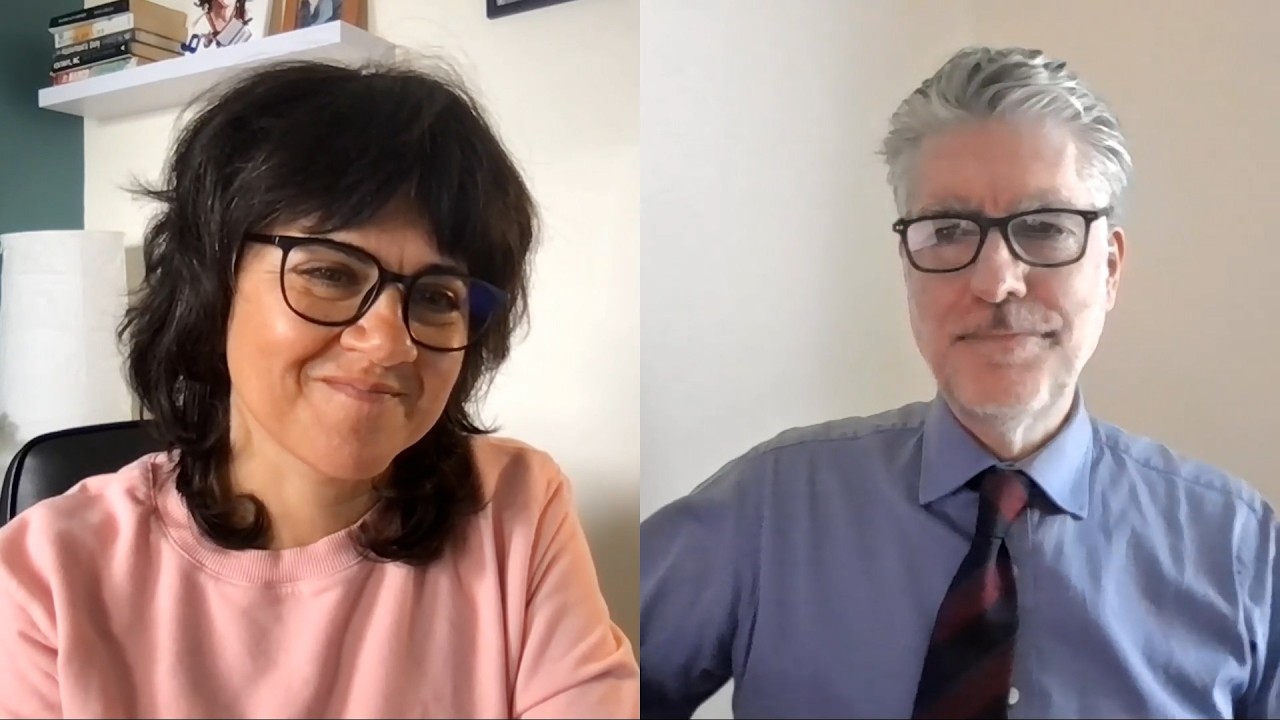
00:10.78: Deborah Bonello (D. B.): Good morning. Today we are looking at the arrest in Dubai of Daniel Kinahan, one of Europe’s most powerful drug traffickers and a central figure in the Kinahan criminal group. For more than a decade, Kinahan was building a global criminal network and business empire and perhaps even a model for how organized crime is now thriving in the global world. I’m Deborah Bonella, Managing Editor at Insight Crime and I’m joined by our co-director, Jerry McDermott. Jerry, you’re looking very smart today.
So, tell us a little bit about who Kinahan is and how important he is..
Who Is Daniel Kinahan and Why Does He Matter?
00:58.46: Jeremy McDermott (J. M. D.): Okay, Kinahan, head of the Kinahan drug trafficking organization, a family clan-based mob from Dublin.
Very big players, particularly, I would say, from 2015 until 2022. From 2015 until 2022, they were playing at the top table in transnational organized crime, principally cocaine, but they were also involved in other stuff, some heroin, and then some pretty sophisticated money laundering operations.
SEE ALSO: InSight Take: LatAm Militaries Are Already Fighting ‘Cartels,’ But Trump Wants More
Links to not only Colombian drug traffickers, you know, the source, some Venezuelan traffickers, and then partnered up with the Moroccan mafia, the Dutch, some of the Dutch transnational organized crime players, and guys in the Balkans. So fingers in a lot of transnational pies and definitely a big player.
From Dublin to Dubai: How the Kinahan Network Expanded
02:09.53: D. B.: Yeah, I believe he had a $5 million reward on his head from the US State Department. And I think that the Dubai arrest is revealing in terms of the summit of transnational organized crime that the Kinahans reached. How did they get there?
02:29.86: J. M. D.: It’s kind of an interesting and perhaps well-worn path that’s always, you know, from our world, important to trace. His dad, Christy Kinahan, alias the Dapper Don, not John Gotti. He was the Teflon Don there.
The Dapper Don, he starts in the 70s in Dublin. Car theft, burglary, handling of stolen goods, and then begins to move into the retail sale of drugs.
And they’re quite violent early on. They establish themselves as one of the top, well, one of the two top drug trafficking organizations in Ireland. The others are the Hutches and we’ll come on to them in a bit.
And then what they do is they seek to consolidate that hold on particularly Dublin’s and then Ireland’s drug market; they are, of course, keen to secure direct supply, not via any middlemen. And this is where they begin to go from zero to 100 miles an hour relatively quickly. They get a connection in Colombia, and soon they’re handling more product than the Irish market can possibly handle.
The Irish market is a relatively small market, and they then move most of their operations to Spain. And this is from kind of the 2010s. They’re sat in Spain, and Spain, as you well know, has long been one of the centers of the European cocaine industry. This is because of its links to Latin America, obviously the cultural and linguistic links are there, and there’s an enormous Latin American diaspora.
And ever since the days of the Medellin and Cali cartels, Spain has been, if you like, the first port of call for cocaine into Europe.
SEE ALSO: InSight Take: What Does the Killing of ‘El Mencho’ Mean for Mexico’s Drug War?
Now that’s switched up to the Netherlands for a bit and to Belgium. But Spain remains, if you like, the meeting and negotiating center. And who doesn’t like a bit of Spain? You know, you’re sitting on the beach, you’re drinking beer, and you’re making millions of dollars or pounds from the cocaine industry. So the Kinahans relocate to Spain and then they move in 2016 to Dubai. And Dubai, which is now kind of notorious as a hub for transnational criminals.
But when they move, it’s not. And so the move of the Kinahans to Dubai is one of the reasons Dubai has become so notorious as a kind of safe haven, operating base, and money laundering place par excellence for transnational organized crime. And in Spain, they’ve solidified their transnational cocaine connections.
05:53.98: D. B.: Yes.
And then with the move to Dubai, they continue to play at the top table in the cocaine business, but they also move up to the top table of money laundering because Dubai is a financial center and a gold center as well.
05:59.24: J. M. D.: And it’s one of those links between Latin America, Europe, and Asia. And so this is where Daniel Kenahan, who sets himself up as a fight promoter, a boxing promoter, mixed martial arts. And according to some sources quite close to this case, he’s this close to legitimizing himself, to getting out, to putting distance between himself and the criminal world. But misses as good as a mile.
He’s been arrested. He’s going to be extradited to Ireland, and this was a joint operation between the Irish and the Dubai police.
However, it could take anything up to six months, which is what happened with Sean McGovern, who was a previous member of, who is another member of the Kinahan organization, who was extradited, I think, 2024 from Dubai to Ireland. So that’s where we are at a moment.
07:01.21: D. B.: Right, and we see every time there are these big kingpin arrests, we usually see some kind of succession, right? So who’s standing in the wings who could, you know, pick up the reins after Daniel’s out of the picture?
07:16.02: J. M. D. : Well, there’s still his dad, the founder of the Kinnehan’s, Christie, but he’s now, I think, in his mid- to late 60s, and apparently he’s taken a big step back.
But he is in Dubai still. And Daniel’s the eldest of Christie’s sons.
There’s also Christopher, who is there and also in Dubai, but he’s been described to me as kind of the Fredo Corleone of the family. So really not going to be stepping up. But I think what this arrest signals is it’s all it’s done for the Kinahans. No one is going to want to do business with them now. And I don’t think anyone really wanted to do much business with them since 2022, when, as you mentioned, they get this $5 million bounty on Daniel’s head, and suddenly they’re big news and the newspapers are talking about them, there are pictures of Daniel with serious fighters as a boxing promoter. He’s just too notorious. And I think from 2022 onwards their power has fallen and fallen.
But they’ve got a property portfolio, I think just over $100 million. I mean, it’s not like they need to make more money. I do think they were trying to scale down and withdraw from criminal activity.
So I think the Kinahans as major world players are done now.
08:41.41: D. B.: Right, but it wasn’t actually their criminal activity that put them on the radar of law enforcement in the end, was it?
08:48.63: J. M. D.: Well, it was their criminal activity, but it wasn’t the drug trafficking. It was a feud with perhaps Ireland’s other top mafia or criminal clan, who are the Hutches, and this started, I think, in the early 2000s, when these two clans are fighting for control of the Dublin drug market and then the wider Irish drug market. In 2015 it spills into violence with the first killing. If I remember, a guy called Gary Hutch was killed in Marbella, Spain, so the Kinahan’s were already established in Spain by 2016—in fact, well before—and sorry, 2015, I think his death was.
And up to 18 people have been killed in this feud, Deb. So, you know, it’s a serious, serious amount of bodies in various jurisdictions. And this is what brought the Kinahans, more than anything, to the attention of law enforcement.
And ironically, it’s likely to be the murders, not the drug trafficking, that are going to put Daniel Kinahan in prison. It’s that violence is a clumsy tool for drug trafficking, and then it tends to be always the violence that gets them in the end. One, because there isn’t a statute of limitations on murder, whereas there are statutes of limitations on drug trafficking and everything else. And also, of course, when people are getting shot on Spanish streets or Dublin streets, you know, this becomes a political issue.
And the pressure for law enforcement and the politicians to do something ensures that resources are thrown at this problem, task forces are put together, and convictions are needed. And I think, you know, Daniel Kinahan will probably be kicking himself, one, because he was almost out, and secondly, that, you know, he’s being picked up for what was a really local Irish feud.
Impact of the Daniel Kinahan Arrest on Cocaine Trafficking in Europe
11:24.66: D. B.: Yeah, well, also that kind of violence, which of course we’re used to seeing across Latin America is relatively unusual in Europe, and we have seen as the appetite for cocaine in Europe has grown, it seems to go hand in hand with this growing violence, which obviously authorities want to quash. What impact do you think Kinahan’s arrest is going to have on transnational organized crime within Europe?
11:54.87: J. M. D.: In terms of the flow of cocaine and money laundering, I think minimal to none. But in terms of criminal learning and adaptation and evolution, I think it will have a significant effect.
We have to remember that these guys at the top end of drug trafficking and transnational organized crime, well, they’re very sophisticated. These guys are not protected by the armed sicarios anymore. They’re protected by lawyers and accountants and tend to be increasingly white collar or white collar aspirational. And they’re going to be looking at the Kinahan case and going, OK, what brought Daniel down?
And one of the things was he took on a really high profile.
You know, he’s in the media as a boxing promoter at a wedding. He’s invited ah every drug trafficker worth their salt. It’s like the who’s who of drug trafficking at a 2017 wedding that they have.
SEE ALSO: The InSight Take: How Juan Ramón Matta Ballesteros Shaped Honduras’ Drug Trade
And he’s posting on social media, you know, it’s like, really, you know, and then the Americans, you know, are coming for you.
So I think the low profile again, which isn’t a new lesson, but this has just been reinforced by Daniel Kinahan being that clumsy.
The other thing is the position of Dubai. I think Dubai’s criminal heyday is done. It’s done because it’s become too notorious as a criminal hideaway. And this has become a reputational issue for the United Arab Emirates, particularly Dubai. And you’ve seen this because before they don’t have extradition treaties, but we have seen Taghi, the Moroccan mafia Dutch trafficker, top level, extradited. We’ve seen Sean Montgomery. Now we’ve seen Daniel Kinahan, hopefully quite soon. And it’s clear that Dubai can no longer tolerate this. Whilst it might and did welcome the money, it has now become a serious reputational issue. And also there’s the issue of the Iranian drones flying around. I’ve got a feeling that is to make it a slightly less appealing um place.
Why do the traffickers go there? One, for its financial sector, the quality of life, its business sector, and its safety. And its economy is in tatters due to the Iran [war], definitely not as safe as it used to be. And there aren’t going to be the party people to hide amongst.
You know, we’ve seen all these poor influencers who have had to go back to Britain and other places because, you know, oh dear, we could get hit by a drone. So, yeah, I think we’re going to see the decline of Dubai in criminal terms, we’re going to talk about a lot less stuff, I suspect, over the coming years. And perhaps the question we should be asking is what’s going to be the next Dubai. I haven’t got the answer for it right now, but I’ve got a feeling that a list of suspects will crystallize over the rest of 2026.
15:32.01: D. B.: Yeah, well, for sure, that is one to watch, as is this case and the ever-shifting chess game of international organized crime, Jerry. Thanks for taking the time, and thanks, viewers, for watching. You can find detailed profiles of all the criminal groups connected to Latin America’s drug trade on insightcrime.org. And please stay tuned for the release next week of our annual Cocaine Seizure Figures Roundup, as well as an event that you can sign up for with a small donation.
Bye for now, and thanks, Jerry, once again for joining us.
16:03.52: J. M. D.: Ciao, Deb.
Don't Miss:
-
Former American Idol singer Caleb Flynn sentenced to life in prison for wife’s murder
-
Bogota mayor presses Chinese-led consortium for more metro workers as auditors flag delays
-
ICC unseals arrest warrants for 4 Taliban leaders wanted on gender persecution charges
-
Quebec votes in provincial election as separatist surge poses test for Canada’s PM Carney
-
“Here, We Confront Drug Traffickers Daily… And The U.S.?”