
 The Taliban’s New War Begins at Home
  Panama removed from EU’s tax haven ‘blacklist’ a decade after the Panama Papers
  Crackdown and Controversy: The Battle Over Beach Bars and Noise in Phuket’s Bang Tao
 By: Bintang Agung
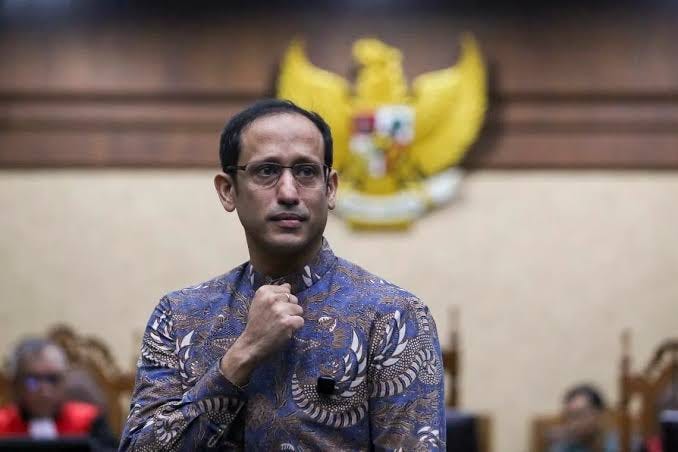
When Indonesia’s most recognizable tech entrepreneur accepted the job of education minister in the Indonesian government of Joko Widodo in 2019, many people at the time warned him that the stultifying bureaucracy of a ministry that presides over mostly second-rate primary and secondary schools would smother fresh ideas.
But Nadiem Makarim, a sometimes brash and cocky tech-savvy businessman, told friends he could make a difference by using his technology background to modernize and improve a school system that still relies on rote learning and churns out graduates who, by most accounts, are ill-equipped for modern industry.
He was wrong.
At the end of a 10-month-long criminal trial, Nadiem, the Harvard-educated co-founder of GoJek, the ride-hailing, delivery and payments app that has transformed urban life in Indonesia, was sentenced on June 30 to 10 years in prison on corruption charges related to the procurement of Chromebook laptop computers to aid in remote learning during the Covid 19 pandemic. Prosecutors said the Chromebook deal caused 1.57 trillion (US$87.6 million) in state losses. State losses are the usual measure of corruption in Indonesian law.
The case hinged on the problem that Chromebooks require a reliable internet connection to function, something that doesn’t exist in some remote parts of the country. Allegedly, Nadiem and his ministry ignored this issue, and in doing so, both caused state losses and enriched themselves. Prosecutors contended that the procurement of Chromebook laptops from the IT giant Google was in exchange for Google investing US$60 million in Nadiem’s Gojek technology group when he was education minister.
No Google executives were charged – just Nadiem and a handful of ministry aides and consultants.
While the Attorney General’s Office initially wanted Nadiem to pay Rp5.6 trillion in restitution to the state, the court instead ordered him to pay Rp809 billion, or US$45 million, in restitution and a Rp1 billion fine. Nadiem has said he cannot afford to pay that amount, but if he doesn’t, the court will add 5 years to his sentence.
“The Chromebook laptop procurement was not optimal because the devices could not be used due to the lack of internet access in many regions in Indonesia,” said a judge reading out the verdict. “As a result, many Chromebooks could not function as intended, meaning the state budget did not generate benefits in line with the amount spent.”
Two of the judges on the five-judge panel dissented, with one, Judge Andi Saputra, saying he saw no evidence that Nadiem was corrupt.
In a normal world, getting the Chromebook limitations wrong might be a policy error at worst. Maybe somebody gets fired. But in Indonesia, it became a crime. A tech entrepreneur who has been hailed as a hero for creating Indonesia’s first billion-dollar start-up is being treated like a common criminal and a threat to the nation. Nadiem has denied all charges and at one point called the case “crazy”.
In his defense in early June, Nadiem asked the judges to acquit him, arguing that the case was a matter of bureaucratic resentment rather than criminal intent. He denied enriching himself and said that the Chromebook project had actually saved the state Rp3.9 trillion.
“Today, we are asking a big question of our legal system. Do truth and justice still matter? Today, it has been answered; all the court facts were ignored,” Nadiem told reporters after hearing the verdict.
Attending the sentencing hearing in support of Nadiem were former finance minister Chatib Basri, prominent lawyer Todung Mulya Lubis and human rights activist Delpedro Marhaen. Dozens of GoJek motorcycle-taxi drivers staged a rally supporting Nadiem outside the court and filled the court’s lobby. Out of sight, prominent Indonesian business leaders and others bitterly lamented the sentencing. Many people in Jakarta have been asking throughout the entire, deeply embarrassing ordeal who Nadiem pissed off to get hit with such a legal sledgehammer. Nadiem has not commented about why the case was brought, other than to point to an angry bureaucracy.
But the case has echoes of the 2025 conviction and sentencing to four years in prison of former Trade Minister Thomas Lembong, another Harvard graduate, on charges related to sugar imports from a decade earlier when he was serving under Jokowi, or the conviction of Hasto Kristiyanto, an official of the opposition Indonesia Democratic Party of Struggle (PDIP), on bribery charges. Lembong and Hasto, however, had both bitterly split with Widodo over politics and those cases reeked of revenge. Current President Prabowo Subianto pardoned the two men in 2025, shortly after they were sentenced, supposedly to calm a public backlash against the prosecutions. That may be an option in Nadiem’s case and would allow Prabowo, who has not commented on the case, to appear magnanimous.
In addition, Nadiem is not openly political and he doesn’t appear to have done anything to upset the famously thin-skinned Prabowo, although some say Nadiem is perceived in political circles as “arrogant,” which is not a crime even in Indonesia. But a case like this, which has focused the worries of investors on the Indonesian justice system and kicked off bad publicity worldwide, could not have ended up in court without the imprimatur of someone powerful.
In the end, regardless of whether Nadiem languishes in prison or is pardoned, the damage the case has done to Indonesia’s reputation is substantial. That the co-founder of one of the country’s most recognizable and iconic companies should end up in the dock on charges that appear questionable on the surface, sends a message to other bright young people who may be tempted to try and do good by serving the country: proceed at your own risk.
Don't Miss:
-
The Taliban’s New War Begins at Home
-
Panama removed from EU’s tax haven ‘blacklist’ a decade after the Panama Papers
-
Crackdown and Controversy: The Battle Over Beach Bars and Noise in Phuket’s Bang Tao
-
East Asia’s Youth Job Crisis Is Hiding Its Coming Labor Shortage
-
Leaked files reveal how Deloitte Cyprus helped Roman Abramovich hide $10B fortune