
 Would a Big Alaska LNG Deal make Taiwan Safer?
  Philippine VP Sara Duterte’s Impeachment Trial Narrows as Stakes Remain High
  Indonesia Stock Market Faces MSCI Exile over Poor Governance
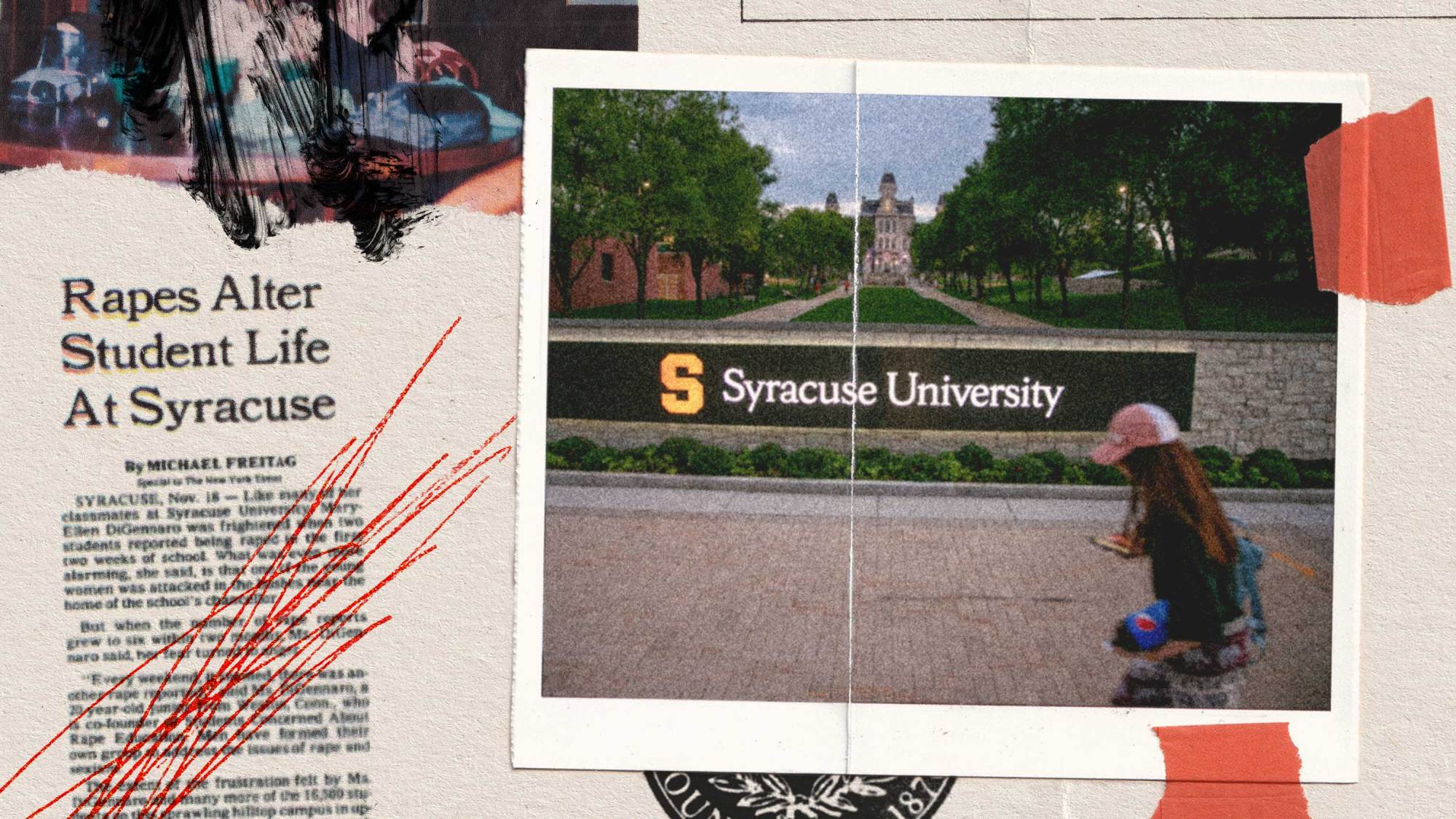
When ProPublica recently investigated a rape crisis that surged through Syracuse University in the 1980s, we found evidence that the school had taken steps to suppress news coverage of the assaults. The university responded by portraying itself as a changed institution today, “committed to supporting the students who come forward and being there for them at every step of the process,” as a school spokesperson put it.
But the university’s recent actions in a lawsuit filed by a former student who was attacked on campus during that period appear at odds with that commitment. After the Syracuse Police Department agreed to provide old records to the victim, lawyers for Syracuse University intervened, seeking to block the victim’s access to many of the records. The school argued in legal papers that the subpoena sent to the police department was “overbroad” and suffered “from fatal geographic overreach” that rendered “it unreasonably burdensome and irrelevant.”
New York state court Judge Joseph Lamendola ruled in the university’s favor in February, dramatically limiting the records the victim could obtain to make her case that the school should have beefed up security in response to escalating crime in the area.
In June, her attorneys appealed that decision, sending the matter to a state appellate court.
“It smacks of the 1980s when SU quashed media coverage of sexual assault. It’s that all over again,” said Andrew Stengel, a former Manhattan prosecutor representing the victim. He accused the university of “retraumatizing” his client “by pretending sexual assault wasn’t a problem on campus and in the surrounding area.”
Stengel and his client, referred to as Jane Doe in legal filings, are suing the university under the Adult Survivors Act, a New York law that opened a one-year exemption from the statute of limitations for survivors of long-ago sexual assaults to pursue legal claims against alleged abusers and negligent institutions.
Sarah Scalese, Syracuse University’s vice president of communications, said in an emailed statement that “we do not comment on active litigation.” In response to ProPublica’s earlier story, Scalese said the university “has a robust structure in place to support those affected by sexual and relationship violence,” including “confidential counseling, advocacy and investigation and resolution services to students.”
Doe was attacked by a man with a knife inside a bathroom on the third floor of the university’s music building at about 6:30 p.m. on Feb. 27, 1987. Her assailant had entered the building through an unlocked door, according to her lawsuit, which contends that the university administration offered her “zero support” after the assault. The music program director, the complaint alleges, told her, “Men get raped, too,” and advised her to get “back on the horse.” (The director is deceased.)
Hers was one episode in a brutal saga of sexual violence that unfolded in and around the Syracuse campus throughout the decade. The scourge of assaults became so pervasive that it eventually inspired student protests, drew national press attention and contributed to the passage of federal legislation that now requires universities to publicly report crime statistics.
ProPublica’s earlier examination — rooted in the wrongful conviction of Anthony Broadwater for the rape of Alice Sebold, an author who wrote a bestselling memoir about being attacked on the last night of her freshman year at Syracuse University in 1981 — found that more than a dozen women, many of them students, reported being raped or attacked by strangers in a half-square-mile area near the campus over four years. Sebold’s was the third such attack in Thornden Park, which runs alongside the campus, in about seven months.
Some of the police reports from this time period were marked “NO PRESS,” which, according to the testimony of a former Syracuse detective, meant that the university had used its influence in the police department to “put their foot down and said no press for any kind of rape, robbery, burglary that’s anywhere in the area of Syracuse University.”
Last year, Stengel asked the police department for all police calls and reports tied to a variety of crimes from 1982 to 1987 within the ZIP code that contains the university, Thornden Park, various businesses, and a mix of student and nonstudent housing.
Emails filed as an exhibit in Doe’s case show that a lawyer representing the Syracuse Police Department suggested that Stengel focus his search on that ZIP code. The two of them agreed on the terms in August 2025, and the police department began gathering the records shortly thereafter.
A month later, the university filed a motion to “partially quash” the subpoena. Relying on case law that applies only to central and western New York state, university lawyers argued that it had standing to limit the request, even though it was not the recipient of Stengel’s subpoena. The university asserted that the subpoena would create unnecessary work for the police department, unearth irrelevant documents and waste the time of everyone involved.
The police department then reversed its earlier position and joined in the motion, estimating in a February brief that it would take 845 hours and $50,000 in staff time to provide the documents Stengel had asked for and the police department lawyer had initially approved. (A spokesperson said that “the City of Syracuse does not comment on ongoing litigation.”)
At a hearing, John Powers, an attorney hired by the university, seemed to play to Lamendola’s previous role as a lawyer for the city of Syracuse, reminding the judge that the city is “inundated with [Freedom of Information Law] responses and subpoenas, and it’s incredibly burdensome on the city, I think, as you know in your experience as well.”
The records were too old to be digitized, Powers told the judge, adding that, just as the judge once did, Powers represents the city in other matters. City employees, he said, would have to find them “the old way, Judge, the way we used to do it, crawling around in the dusty storeroom … trying to determine what ZIP code’s involved, looking at the crime. A lot of boxes, a lot of files. Very burdensome, very expensive for the city.” (Powers declined to comment, citing the litigation.)
Lamendola was persuaded. Under his ruling, none of the rapes that took place in Thornden Park or in the student apartments near it will have to be disclosed. The police will have to disclose only reports of crimes that took place on the campus itself, and not reports concerning burglary, larceny and other offenses, which the judge deemed irrelevant. He also directed Syracuse University, the defendant in the case, to assist the Police Department in identifying cases that occurred on its campus.
Doe’s team filed a 37-page appellate brief in late June that argues that the court’s decision to limit the disclosure to university buildings is “hard to justify” given that the campus is interwoven with the city. The brief, authored by appellate attorney Michael Steinberg, also takes issue with the decision to allow university personnel to act as “gatekeepers,” authorizing them to review the police files and decide for themselves which meet the judge’s criteria and which don’t. That, the appeal contends, presents a conflict of interest that would “give the defendant the power to control the evidence it will have to contest at trial.”
The university has until Sept. 23 to respond to the appeal.
Legal filings also show that university lawyers have sought to reduce its liability by raising the name of a onetime suspect in the case, Michael McKinney.
At the time of Doe’s rape, McKinney was on parole after attacking a woman in a downtown parking lot. According to police reports, two witnesses saw a man matching his description running out of the Syracuse music building the night of the attack. Doe later picked him out of a photo array.
Days later, police went to his home. Officers learned from his wife that he owned a Miller beer hat identical to the one the suspect was said to have been wearing at the time of the crime. She also said he had left abruptly, for another state. Police put the case in the “inactive file,” a common occurrence for rape cases in Syracuse at the time.
Months later, McKinney turned up in New York City. By then he had come under scrutiny for the violent robbery of another Syracuse woman. According to a newspaper article from December 1987, he was eventually found guilty of that robbery and given an unusually lengthy sentence of 20 years to life, with the judge noting his repeated crimes against women. McKinney was never prosecuted in the Jane Doe case.
McKinney served 30 years in prison on the 1987 robbery charge, records show. Then, in March 2025, he was arrested for the rape of a 46-year-old woman earlier that year. A grand jury indicted him in June 2026. He has pleaded not guilty.
While McKinney was in jail, Syracuse University lawyers filed a civil complaint against him, arguing that if the university is held liable in Doe’s case, McKinney should “contribute to any award in an amount equal to his equitable share” because of “his own culpable conduct.” Because McKinney did not respond to the suit, the university lawyers have asked the judge to find him in default. This could eventually affect a jury’s decision on the financial responsibility owed to Doe by the university.
Reached by phone, Donald Kelly, McKinney’s court-appointed lawyer in the new rape case, said, “It’s concerning that the university would serve a third-party complaint upon a prisoner to try to avoid liability,” noting that McKinney has “empty pockets.”
Reiterating that McKinney was never charged in the 1987 rape of Doe, Kelly added, “Either the university was negligent or it wasn’t.” (Kelly declined to make his client available for an interview.)
Jonathan Cardi, a Wake Forest University law professor who specializes in civil litigation and has researched negligence claims for rape, said it was not especially unusual for a defendant to try to quash subpoenas of third parties or to shift liability to others.
“These are litigation tactics,” he said. “But, at the end of the day, the university is the client, and very frequently a client’s business interests or morals dictate what they say their attorneys can and can’t do. If a university is trying to turn over a new leaf, they can tell their attorney that even though this might be the best litigation practice, this is not who we want to be.”
Don't Miss:
-
Citing ProPublica, Lawmakers Introduce Bill to Help U.S. Citizens Sue ICE for Wrongful Detentions
-
This Cybersecurity Agency Is Supposed to Protect U.S. Elections. Officials Fear It’s Been Compromised by Trump.
-
Ken Paxton’s Anti-Abortion Influence Already Extended Beyond Texas. He Could Take It Further in the Senate.
-
He Tried to Set Limits on His State’s School Vouchers. Billionaires Helped Bankroll a Campaign to Unseat Him.
-
Whoosh And They’re Gone