
 Would a Big Alaska LNG Deal make Taiwan Safer?
  Philippine VP Sara Duterte’s Impeachment Trial Narrows as Stakes Remain High
  Indonesia Stock Market Faces MSCI Exile over Poor Governance
 Every third morning Soumia Bensalah was roused before the break of dawn. Pulled from her cell, shackled hand and foot, she was herded onto a bus and driven over Tampa Bay from the Pinellas County Jail to a cramped hold room at a U.S. Immigration and Customs Enforcement office.
Each time, she sat there all day, still shackled. Once evening came, she was driven back to the jail, forced to wait for hours in a hallway, photographed, strip-searched, questioned and led back to her cell. This happened five times last December, and Bensalah said it left her exhausted and humiliated.
It was no coincidence that Bensalah, a French Moroccan with a pending green card application, was released from the Pinellas jail and then sent back at regular, 72-hour intervals, according to legal experts. That’s the maximum amount of time that county jails like Pinellas’ can hold immigrants on behalf of ICE. The limit exists to prevent immigrants detained on civil charges from spending too long in jails meant for people detained on criminal charges.
Repeat releases and readmissions, known as rebookings, typically happen in secret and circumvent federal rules and regulations, according to eight legal experts interviewed by ProPublica.
The jail had refused to release the logs that documented Bensalah’s journey, citing federal immigration regulations that shield jail records, which are typically public. We were able to trace the journey after obtaining an unredacted copy of the Pinellas jail’s booking logs from a source who provided them on the condition of anonymity, for fear of workplace reprisal. We checked them against anonymized federal immigration data collected by the Deportation Data Project.
The repeat rebookings stem from the fact that the federal government often doesn’t have enough detention space to jail all the immigrants whom ICE and its cooperating local authorities are rounding up. The shortage of detention space is pronounced in Florida, where the majority of law enforcement agencies have signed agreements to collaborate with ICE on immigration enforcement.
ProPublica’s analysis of data obtained by the Deportation Data Project shows that over the past year, jails in both Pinellas County and in Orange County, Florida, had unusually high numbers of repeat rebookings of immigrants held for ICE compared with other jails nationwide. (Read more about our methodology here.) The Orange County Jail, in Orlando, rebooked 559 of them two or more times from July 2025 until early February 2026, when the data shows the practice ceased. Less than two hours away, in the Tampa Bay area, Pinellas rebooked 174 immigrants at least twice from July 2025 until the practice appeared to cease in July 2026, when zero rebookings were recorded in the data.
The scale in the two Florida counties is unmatched, ProPublica found. Other jails across the country rebooked no more than 10 immigrants two or more times.
All of the rebooked immigrants ProPublica counted were jailed for ICE, meaning they were not being detained on local charges. Our analysis counted a person as having been rebooked only if they cumulatively spent at least 72 hours in jail.
Emily Ryo, a Duke University law professor who studies ICE detention, said jails often can’t provide comprehensive medical screenings, space for confidential legal consultations or even outdoor access. All of those things should be guaranteed to immigrants in ICE custody, according to ICE’s own detention standards.
Two former Department of Homeland Security officials who spoke with ProPublica described the repeated rebookings as an attempt to evade the detention standards.
“What it shows is that they were very aware that they were breaking a rule,” said Michelle Brané, a former DHS immigration detention ombudsperson.
Bensalah landed in jail after her U.S. citizen husband allegedly assaulted her, according to a police report. She called the police, who observed cuts on both and booked them into the Polk County Jail on battery charges. (The charges against both were later dropped.) She posted bond but was not released because of an ICE detainer, a written request from the federal government asking a jail to hold someone for up to 48 hours after they’d otherwise be released. A detainer is meant to give ICE time to pick up an immigrant and begin deportation proceedings.
State law requires every jail in Florida to sign collaboration agreements with ICE. Most jails in the state can detain immigrants for ICE for only up to 48 hours. Through June, Pinellas and Orange had special contracts that ICE says allowed them to hold immigrants for up to three days. ICE designates them as “under 72” facilities in its database.
“At 72 you should have walked him out the door,” said a former senior DHS official, who spoke on the condition of anonymity because of fear of reprisal.
Instead of sending Bensalah to a longer-term immigration detention facility in the days after she posted bond, ICE moved her two counties over to Pinellas. Three days later, her rebookings began.
“There’s no argument that this is a lawful detention,” Jennifer Chacón, a professor of law at Stanford University, said of the repeat rebookings.
In response to ProPublica’s questions about the repeat rebookings, a DHS spokesperson wrote: “ICE is NOT breaking any laws by making custody determinations based on bed space and ensuring detainees’ presence for immigration proceedings or removal from the United States.”
ProPublica shared with DHS details about Bensalah’s case. The department responded that “she received due process.”
“Under President Trump and Secretary [Markwayne] Mullin, if you break the law, you will face the consequences,” DHS wrote. “Criminal illegal aliens are not welcome in the U.S.”
All the people rebooked at least twice in Pinellas and Orange counties ended up behind bars for more than 72 hours. One woman from Mexico was rebooked into Pinellas 10 times, spending a cumulative 26 days in the jail. (DHS declined to comment on her case because ProPublica did not provide her name; she had declined multiple requests for an interview.) She was then transferred to an ICE facility and eventually released after posting a $2,000 bond, according to Deportation Data Project figures. Only 65 people rebooked into those counties’ jails two or more times through June 2026 were eventually released on bond.
Of the 423 immigrants rebooked at least twice in Pinellas and Orange counties through December 2025, 115 — or 27% — had no criminal charges or convictions except for traffic-related offenses. That is consistent with recent data released showing that an increasing percentage of all ICE detentions involve people with no criminal record or charges.
10 Rebookings at the Pinellas County Jail
In late 2025, federal and state officials kept a Mexican woman in custody for almost a month by repeatedly rebooking her just before her 72-hour time limit ran out.

Sept. 23
Booked into the
Pinellas County Jail
64 hours
in custody
Moved to an ICE holding
room, across Tampa Bay,
in Hillsborough County
Sept. 26
First rebooking
Oct. 6
Fifth rebooking
Oct. 19
10th rebooking
Oct. 22
Moved to the
Baker County Jail

Sept. 23
Booked into the
Pinellas County Jail
64 hours
in custody
Sept. 26
First
rebooking
Moved to an ICE holding
room, across Tampa Bay,
in Hillsborough County
Oct. 6
Fifth rebooking
Oct. 22
Moved to
the Baker
County Jail
Oct. 19
10th rebooking

Sept. 23
Booked into the
Pinellas County Jail
Sept. 26
First rebooking
64 hours
in custody
Moved to an ICE holding
room, across Tampa Bay,
in Hillsborough County
Oct. 6
Fifth rebooking
Oct. 22
Moved to the
Baker County Jail
Oct. 19
10th rebooking

Sept. 23
Booked into the
Pinellas County Jail
64 hours
in custody
Moved to an ICE holding
room, across Tampa Bay,
in Hillsborough County
Sept. 26
First rebooking
Oct. 6
Fifth rebooking
Oct. 19
10th rebooking
Oct. 22
Moved to the
Baker County Jail

Sept. 23
Booked into the
Pinellas County Jail
64 hours
in custody
Sept. 26
First
rebooking
Moved to an ICE holding
room, across Tampa Bay,
in Hillsborough County
Oct. 6
Fifth rebooking
Oct. 22
Moved to
the Baker
County Jail
Oct. 19
10th rebooking

Sept. 23
Booked into the
Pinellas County Jail
Sept. 26
First rebooking
64 hours
in custody
Moved to an ICE holding
room, across Tampa Bay,
in Hillsborough County
Oct. 6
Fifth rebooking
Oct. 22
Moved to the
Baker County Jail
Oct. 19
10th rebooking
For some rebooked immigrants in Orange County, the turnaround time was extreme: 30 of them were rebooked in 15 minutes or less, right as their current stay approached 72 hours. Those rebookings were between September 2025 and February 2026. Orange County rebooked five immigrants back into the jail in as little as one minute.
Additionally, the Pinellas County Jail has held at least 157 immigrants for ICE for longer than three business days in a single booking since the start of President Donald Trump’s second term in January 2025, according to a ProPublica analysis. In the two years prior, it held only five immigrants for longer than three days. After one woman — a Brazilian immigrant who had not been charged with a crime — challenged her nine-day detention in federal court this July, ICE released her, calling her jail stay a “procedural error.”
“All her claims will be heard by an immigration judge, and she will receive due process,” DHS wrote in response to questions about the Brazilian woman’s case. “This administration will not ignore the rule of law.”
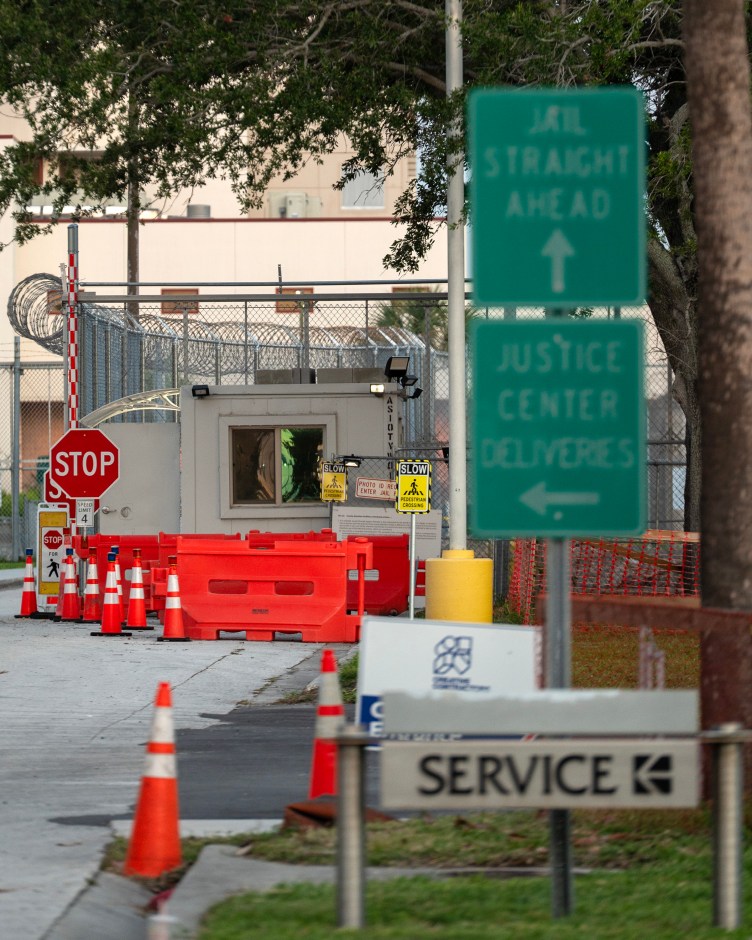
Legal experts say that the only real recourse for immigrants repeatedly rebooked or held for prolonged periods in a local jail is to file an emergency petition in federal court seeking relief from illegal detainment. ProPublica was able to determine that at least 29 of the immigrants held for ICE in Orange or Pinellas counties filed such petitions, called habeas corpus claims.
In response to the Brazilian woman’s habeas petition, the Pinellas County Sheriff’s Office claimed that she was in federal custody and that it didn’t have the power to release her. Federal appeals courts have found the opposite: Jails have the power to release ICE detainees after a hold expires and can be found liable if they don’t. Last November, a federal jury ordered Suffolk County, New York, to pay $112 million to more than 600 immigrants it found had been wrongly held. Suffolk County has appealed the decision.
Corporal Jamie Miller, a spokesperson for the Pinellas County Sheriff’s Office, told ProPublica that the facility holds people for ICE for only up to 72 hours before releasing them. The sheriff’s office declined further comment after ProPublica shared the findings from its analysis and sent a list of questions. The office declined requests for an interview with the sheriff.
In a written statement to ProPublica, a spokesperson for the Orange County Jail said it had eliminated “multiple bookings.” The statement referred further questions to ICE.
Our analysis shows that in Orange County, the rebooking practice stopped in early February. That change happened after widespread public opposition. In Pinellas, where opposition has been quieter, the rebookings slowed in January, but single stays exceeding 72 hours started to climb.
15 Rebookings at the Orange County Jail
Officials rebooked a Brazilian woman more than a dozen times during a nearly two-month stint.

Nov. 3
First rebooking
Oct. 31
Booked into the
Orange County Jail
64 hours
in custody
Time spent between
bookings at the jail or
at an ICE holding room
Nov. 15
Fifth rebooking
Officials rebooked her within minutes,
a pattern repeated throughout the
seven weeks
Dec. 1
10th rebooking
Dec. 16
15th rebooking
Dec. 19
Moved to an ICE facility
in southern Louisiana

Nov. 3
First
rebooking
Oct. 31
Booked into the
Orange County Jail
64 hours
in custody
Time spent between
bookings at the jail or
at an ICE holding room
Nov. 15
Fifth rebooking
Officials rebooked her within minutes,
a pattern repeated throughout the
seven weeks
Dec. 1
10th rebooking
Dec. 16
15th rebooking
Dec. 19
Moved to an ICE facility
in southern Louisiana

Oct. 31
Booked into the
Orange County Jail
Nov. 3
First
rebooking
64 hours
in custody
Time spent between
bookings at the jail or
at an ICE holding room
Nov. 15
Fifth rebooking
Officials rebooked her within minutes,
a pattern repeated throughout the
seven weeks
Dec. 1
10th rebooking
Dec. 16
15th rebooking
Dec. 19
Moved to an ICE facility
in southern Louisiana

Nov. 3
First rebooking
Oct. 31
Booked into the
Orange County Jail
64 hours
in custody
Time spent between
bookings at the jail or
at an ICE holding room
Nov. 15
Fifth rebooking
Officials rebooked her within minutes,
a pattern repeated throughout the
seven weeks
Dec. 1
10th rebooking
Dec. 16
15th rebooking
Dec. 19
Moved to an ICE facility
in southern Louisiana

Nov. 3
First
rebooking
Oct. 31
Booked into the
Orange County Jail
64 hours
in custody
Time spent between
bookings at the jail or
at an ICE holding room
Nov. 15
Fifth rebooking
Officials rebooked her within minutes,
a pattern repeated throughout the
seven weeks
Dec. 1
10th rebooking
Dec. 16
15th rebooking
Dec. 19
Moved to an ICE facility
in southern Louisiana

Nov. 3
First
rebooking
Oct. 31
Booked into the
Orange County Jail
64 hours
in custody
Time spent between
bookings at the jail or
at an ICE holding room
Nov. 15
Fifth rebooking
Officials rebooked her within minutes,
a pattern repeated throughout the
seven weeks
Dec. 1
10th rebooking
Dec. 16
15th rebooking
Dec. 19
Moved to an ICE facility
in southern Louisiana
Orange and Pinellas counties both stand out nationally for their volume of rebookings. But their differing politics contributed to different outcomes at their jails.
In majority-Democratic Orange County, religious groups, attorneys and a coalition of activists prompted officials and the courts to take action. In county commission meetings, community members told the stories of immigrants held in the jail and pointed out that the county was losing money every time it held someone for ICE.
County officials — caught between a state legislative mandate to cooperate with ICE, a national mass deportation push that was filling their jail with detainees and a vocal electorate that demanded change — wrestled with how to respond.
In August 2025, the Orlando Sentinel reported on half a dozen rebookings in the Orange County Jail. Months later, in late January, a defense attorney showed up at a county commission hearing to describe how the rebooking practice was still going on. She claimed she had multiple clients who’d been illegally held at the jail on behalf of ICE and that the rebookings violated due process.
A week later, County Mayor Jerry Demings sent a letter to ICE, informing it that “ICE inmates will be limited to one continuous housing period of up to 72 hours per immigration matter.” After the letter, the rebookings ceased, ProPublica’s analysis shows.
The day Demings sent the letter, Orlando federal judge Paul Byron criticized the rebooking practice at a hearing for an immigrant who’d claimed he was illegally detained.
“If the government is pulling a detainee out of jail to artificially reset the clock, that is wildly inappropriate,” Byron told Assistant U.S. Attorney Phillip Ragler. “What allows that?”
Ragler didn’t have an answer. Byron ordered the immigrant be freed.
Ragler recently told ProPublica that the experience led to a crisis of conscience.
“Being forced to defend ICE’s actions in a professional capacity caused significant moral and ethical conflicts for me personally,” Ragler wrote in a statement to ProPublica, adding that ICE gave the U.S. attorneys no reasoning or justification for detaining people, many of whom had no criminal record. He told ProPublica he resigned from the position shortly after the hearing, following almost a decade in the office.
Ultimately, Orange County renegotiated its contract with ICE so that immigrants could be held for only two days. Soon after, the number of immigrants in ICE custody booked into the jail plummeted, ProPublica’s analysis shows. Just two were booked into the jail in July, down from a high of 692 in January.
At around the same time that Orange County stopped repeat rebookings of immigrants, the number of rebookings in Pinellas started decreasing. But unlike Orange County, Pinellas then began holding more immigrants for longer than three business days in a single stay — and saw no dip in the number of immigrants it was booking overall.
Six months later, in July, Pinellas appears to have stopped repeat rebookings of immigrants, ProPublica’s analysis found. That same month, at least 12 immigrants booked in the jail were held for more than three business days. One Honduran man stayed for at least eight days.
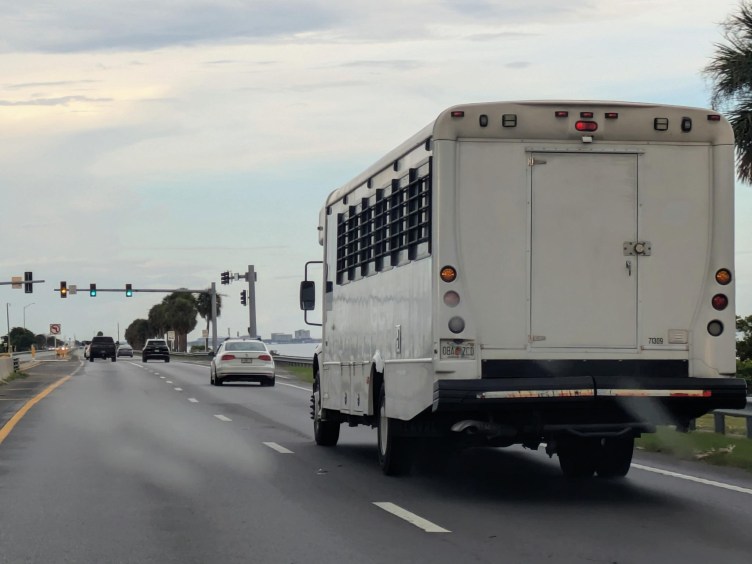
Pinellas County, unlike Orange County, trended Republican in the last presidential election. Pinellas Sheriff Bob Gualtieri has long advocated for his and other local jails to collaborate with the federal government on immigration enforcement. Over the past decade, he helped pioneer a type of contract with ICE that shields local jails from legal liability when they hold someone for the agency. He also helped create a federal-local agreement that lets jail staff serve ICE detainers on people held at the facility.
“For years, sheriffs have had to choose between releasing criminal illegal aliens from their jails back into the community, or exposing themselves to potential civil liability,” Gualtieri is quoted as saying in a 2017 ICE press release.
In the August 2025 Orlando Sentinel article, Gualtieri is quoted as saying that there’d been rebookings at his facility due to “a capacity issue” at the federal detention facility where they were supposed to be transferred.
In the summer of 2025, Gualtieri was part of a group of Florida sheriffs that proposed allowing ICE to take advantage of unused jail beds across Florida — and have Florida police transport the detainees. Since Trump took office in January 2025, Gualtieri’s own jail began to house a historically high number of them.
More than 7,000 immigrants have been detained for ICE in the Pinellas County Jail during the first 564 days of Trump’s second term, according to ProPublica’s analysis. That’s more than four times as many as during the last two years of the Biden administration.
The jail’s proportion of ICE detainees among its total bookings steadily increased over the course of 2025, from under 7% at the start of the year to 18% in December, according to ProPublica’s analysis of Pinellas jail booking data. In 2026, the proportion hovered around 20% from January through July.
Most of the immigrants ProPublica tracked in Pinellas and across the country, including Bensalah, ultimately were deported. After her fifth rebooking, she was transferred to the first of four ICE detention centers, then deported to France.
Paul Chavez, litigation director for Americans for Immigrant Justice, a legal nonprofit that litigates for immigrants’ rights, said repeat rebookings like Bensalah’s are clear examples of unconstitutional detention.
“If it was that easy to thwart, all we would have to do to thwart the Fourth Amendment was throw somebody in the backseat of a car, drive them to McDonald’s and then drive back,” he said. “I don’t know that the drafters of the Fourth Amendment would have found solace in that.”
How We Identified People Rebooked Into County Jails
ProPublica found immigrants ICE repeatedly rebooked into county jails by analyzing multiple federal and local detention databases.
To count immigrants rebooked two or more times at jails nationwide, we used federal immigration detention data obtained by the Deportation Data Project. The data assigns a unique ID to each person in detention and records the date and time each person is booked into and out of each facility. We calculated the length of each stay, as well as the period between leaving and returning to a single facility.
A detainee may leave ICE detention, such as when they are released on immigration bond or into U.S. Marshals’ custody and then return to ICE custody weeks or even months later. To avoid counting these cases, ProPublica counted a person as being rebooked only if their return to the same facility occurred within 24 hours. Detainees are sometimes rebooked into the same facility after longer periods, but our analysis found that 95% of detainees were rebooked within 12 hours.
The detention data covers a period from Oct. 1, 2022, through Aug. 6, 2026. We limited our analysis to local jails, where federal rules require jails hold ICE detainees for less than 72 hours unless jails sign a special contract with ICE and meet ICE’s detention standards, which include submitting to regular federal inspections. Because a single rebooking could be due to a failed transfer or a missed or delayed deportation flight, we counted only immigrants who had been rebooked two or more times. An expert familiar with ICE detention practices told ProPublica that was a better indicator of intentional rebookings made to extend detentions in a single jail.
Under federal regulations, weekends and holidays do not count toward a jail’s stay limit. ProPublica excluded these days when counting the number of hours each person spent in a county jail. We counted someone as having been rebooked only if their total cumulative stay reached at least 72 hours. When tallying the total stay of individual detainees, ProPublica counted all hours spent in jail, including weekends and holidays.
To count the number of rebooked detainees without criminal charges or convictions, ProPublica used ICE detention data released by the federal government under the Freedom of Information Act. Versions of this dataset were originally released to the Transactional Records Access Clearinghouse and The New York Times. This data ends in mid-December 2025. To determine that 27% of detainees rebooked two or more times had no criminal charges or convictions except for traffic-related offenses, we filtered by detainees charged with only traffic-related offenses or who were described as “other immigration violator,” a category used by the Department of Homeland Security when a detained individual has no other record of criminal charges or convictions.
ProPublica queried an unredacted copy of the Pinellas County Jail’s inmate search database it obtained to calculate the share of bookings at the jail that were ICE detainees. ProPublica verified the veracity of the unredacted database by comparing its booking records to those in Pinellas’ online search tool and by validating the booking dates and timestamps against the federal immigration datasets.
Don't Miss:
-
How Trump’s FBI Purge Saved Lindsey Graham and James Clyburn From a Bribery Investigation
-
Citing ProPublica, Lawmakers Introduce Bill to Help U.S. Citizens Sue ICE for Wrongful Detentions
-
This Cybersecurity Agency Is Supposed to Protect U.S. Elections. Officials Fear It’s Been Compromised by Trump.
-
Ken Paxton’s Anti-Abortion Influence Already Extended Beyond Texas. He Could Take It Further in the Senate.
-
He Tried to Set Limits on His State’s School Vouchers. Billionaires Helped Bankroll a Campaign to Unseat Him.