
 Sarah Anderson on the Twenty Largest Low Wage Employers
  Rachel Brewster on the Rise of Global FCPA Settlements
  Phillips 66 to Pay $8 Million Gets Prosecution Deferred No Monitor No Finding of Guilt No Corporate Probation No Press Release
 The Institute for Policy Studies last week released a new report on America’s twenty largest low wage employers.
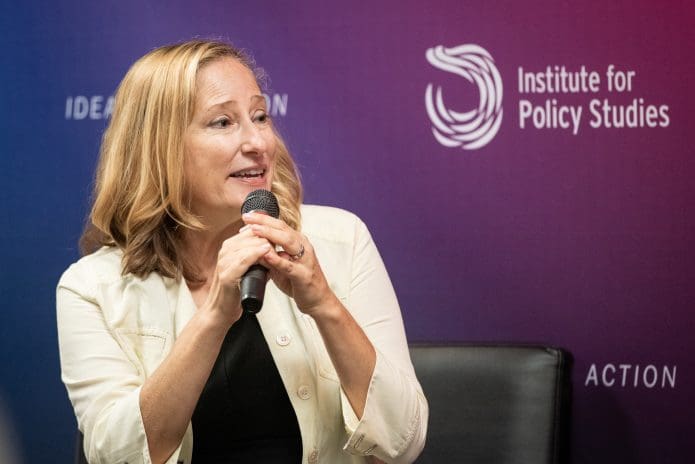
These are the twenty S&P 500 corporations with primarily U.S.-based workforces that have reported the lowest median wages.
The report provides detailed data on each of these firms, showing how they are enriching their CEOs while paying their workers so little that a significant share have to rely on SNAP and Medicaid for food and health care and struggle to afford other basic necessities.
The report found that the Low-Wage 20 are using public assistance as corporate welfare.
Fifteen of the Low-Wage 20 reported median pay in 2024 below the $35,631 income threshold for a family of three to be eligible for Medicaid in most states, while 13 of the 20 firms reported median pay below the $33,576 threshold for a family of three to be eligible for SNAP food aid.
In Nevada, a state with Medicaid enrollment and median income levels on par with national averages, Walmart had 4,574 employees (29.3 percent of all their employees in Nevada) enrolled in Medicaid in 2024.
Extrapolating Nevada data to the national level, the country’s largest private sector employer likely has around 468,800 employees on Medicaid.
Amazon, the second-largest U.S. private sector employer, had 8,951 employees on Medicaid in Nevada in 2024 (48.4 percent of Nevada employees).
If Nevada represents their national pay practices, roughly 577,000 Amazon employees are likely on Medicaid.
The average CEO pay at these 20 low-wage firms hit $18.6 million in 2024, just shy of the $18.9 million average for S&P 500 CEOs as a whole.
At least 16 U.S. billionaires owe their wealth to companies in the Low-Wage 20.
The Low-Wage 20 average CEO-median worker pay ratio stood at a staggering 899 to 1, compared to the S&P 500 average of 285 to 1.
The Low-Wage 20 combined spent $260 billion on stock buybacks between 2019 and 2024.
The report found that with the $32.5 billion these firms spent on buybacks in 2024 alone, they could’ve lifted more than one million workers making the Low-Wage 20’s average median wage of $29,087 up to the $59,600 income level needed to afford the U.S. average rent for a two-bedroom apartment.
“When corporations can get away with shifting their employees’ basic living costs onto taxpayers, this is a form of corporate welfare,” said report author Sarah Anderson, director of the Global Economy Project at the Institute for Policy Studies. “With the federal government slashing spending on anti-poverty programs, it’s even more important that major corporations in the world’s richest country pay their employees a living wage.”
How did the report come about and what are the key findings?
“There is a big debate about affordability,” Anderson told Corporate Crime Reporter in an interview last week. “And much of that debate focuses on how to get prices down. But it’s just as important to look at the other side of the affordability crisis and that is wage suppression.”
“If worker wages had kept pace with rising productivity over the past four decades or so, we wouldn’t have an affordability crisis. But they haven’t because companies have been able to get away with busting unions, stripping benefits – all kinds of tactics – to try and claim a larger share of corporate profits for executives at the top and wealthy shareholders.”
“If we had allowed workers to organize more freely and bargain collectively for better wages, we wouldn’t really have an affordability crisis. I thought it was important to shine a spotlight on these leading low wage employers in America. All twenty of them are household name companies and most of them are very profitable. And they are major contributors to the affordability crisis because they are paying many of their workers poverty wages.”
How did you determine what a low wage company is?
“Every year, companies have to report the gap between their CEO pay and their median worker pay – that’s the level of worker pay that is right in the middle – half of the workers make more than that and half make less than that.”
“This is publicly available information. And we looked at just the S&P 500 companies. These are the 500 largest companies in America. The twenty were the ones with the lowest median pay and most of their employees are in the United States. Some of the companies we looked at had low median pay because they are outsourcing most of their work to China or other low wage countries.”
“So the companies on this list have at least the majority of their workers here in this country. We thought that was important because we are tying this to the affordability crisis in the United States.”
“Last year, one company that stood out was Starbucks. The new CEO came in from Chipotle because he did such a good job preventing unionization at Chipotle. He came to Starbucks and got a pay package worth $95.8 million. Meanwhile, median pay at Starbucks was $14,674. In other words, the Starbucks CEO (Brian Niccol) made over 6,000 times median pay.”
“The rock bottom wage among the twenty companies was at Ross stores, where median pay was just $9,600.”
“Most of these companies rely heavily on part time labor because they don’t want to have to pay benefits. That’s what you are seeing at companies like Ross. A lot of their frontline employees in their stores are part time and that helps explain why their median pay is $9,600.”
You have a section of your report titled Using Public Assistance as Corporate Welfare.
“We looked at the twenty low wage companies. We found that at fifteen of them, median pay is below the income threshold for a family of three to qualify for Medicaid. At thirteen of them, that median pay level is below what you would need to qualify for SNAP food aid benefits.”
“So many workers at these leading U.S. corporations that are highly profitable are getting paid so little that they have to rely on public assistance. People should be outraged about that. That is a form of corporate welfare. We are subsidizing a poverty wage business model. And when these same companies hand out gargantuan CEO paychecks, it means taxpayers are also subsidizing their huge mansions, their private jets and all of the other trappings that go along with excessive pay for CEOs.”
“A big focus in this debate about affordability is – how do we create the pay structures at these companies so we can assure that everybody who is working at these companies can make a living wage to cover basic necessities instead of having so much of the value that they create for these companies extracted by those at the top of the company?”
Nevada has a law that requires the companies to disclose how many workers are on public assistance. No other state has that.
What did you find out about looking at that data?
“Nevada is the only state that publishes every year how many employees at the companies are on Medicaid. Walmart and Amazon came out on top – they are the country’s two largest private sector employers. But it’s still incredible that these companies have so many of their employees on public assistance.”
“Walmart had 4,574 employees on Medicaid – that’s 30 percent of their Nevada workforce. Extrapolating this out means that Walmart likely has around 468,800 employees on Medicaid.”
“Amazon had 8,951 employees on Medicaid in Nevada in 2024. That’s about 48 percent of all Amazon employees in that state. That projects out to roughly 577,000 Amazon employees who are likely on Medicaid.”
“Amazon has not one but two billionaires who made their billions off these low wage workers – Jeff Bezos and his former wife. Walmart has eight billionaires – the descendants of Sam Walton, the founder of Walmart – who made their fortune on this low wage worker model.”
“These companies are making a lot of money for certain people. But for a lot of the rest of the workforce, they are being paid so little that they have to rely on public assistance.”
I heard that Costco was one of the better employers on this list. Their minimum wage is now $20 an hour.
According to your report, the median pay at Costco is $47,000.
What can you say about Costco?
“Costco is not the worst of the worst on this list. Their median pay is the second of the twenty – after MGM. Costco does have the image of being one of the better employers of the big box stores. Their median pay has gone down in recent years, but much of that is attributable to the fact they lost many of their longer term employees – and higher paid employees – during the Covid outbreak.”
“But Costco could still do better. They look not so bad compared to Amazon and Walmart. But Costco’s median pay is $47,000. That means that half of their employees make less than that. That is way below what you would need in terms of income to afford the average two bedroom rent in this country. Many workers at Costco are still struggling, even if their wages are a bit better than at some of these other firms.”
To afford the average two bedroom rent in America, you would need to make about $60,000 a year. And of the twenty companies on your list, the highest median wage is not even $50,000 – that’s MGM Resorts.
“We looked at which of those twenty companies on our list had any unionized employees. And MGM, which has the highest median pay, has nearly sixty percent of their employees unionized. And Costco has eight percent. So the companies who are above rock bottom have some workers who are covered by collective bargaining agreements.”
Do these companies give their workers health benefits?
“Under the Affordable Care Act, companies above a certain size do need to provide some form of affordable health insurance. But they only have to provide that to workers who average more than thirty hours a week.”
“We tried to figure out – how many workers working less than thirty hours a week are being offered affordable health insurance at these companies? And that information is not publicly available. That’s the big loophole.”
“Most of these companies have a large share of their workforce working part-time. At Walmart, I believe that 32 percent of their frontline workers, their store associates, are part time. How many of those average less than thirty hours a week? We just were not able to determine that.”
“The way that we know for sure that many of them are not getting good health care through their employer is through the Nevada information. If Amazon has 48 percent of their Nevada workforce on Medicaid, that’s a clear sign that they are not being offered insurance for most of their workers.”
[For the complete q/a format Interview with Sarah Anderson, see 40 Corporate Crime Reporter 10(12), March 9, 2026, print edition only.]
Don't Miss:
-
Rachel Brewster on the Rise of Global FCPA Settlements
-
Phillips 66 to Pay $8 Million Gets Prosecution Deferred No Monitor No Finding of Guilt No Corporate Probation No Press Release
-
Kaleb Byars on the Double Standard in the Sentencing Guidelines
-
Nick Chater on the Nudge Movement and Blaming The Individual for Corporate Wrongdoing
-
UN Reports Detail Unjust Access to Justice for Women and Girls