
 New documents show how a retail chain’s sales practices helped put guns on US streets
  Singapore a battleground of commodities fraud lawsuits
  From Propagandist to Criminal
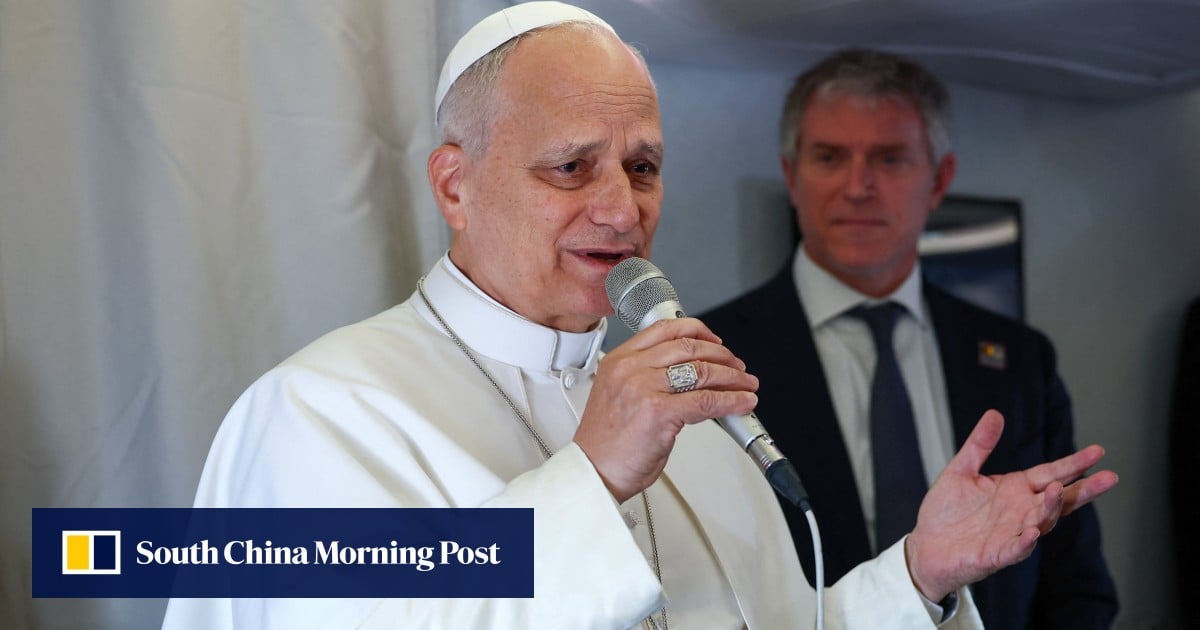
Pope Leo has said the world needs to hear a message of peace and coexistence, after US President Donald Trump attacked him for a second time this week on social media.
Speaking on Wednesday during his flight from Algeria to Cameroon for the second leg of a whirlwind 10-day Africa tour, the first US pontiff urged respect for all people and said his travels so far had shown the importance of pursuing dialogue between different communities.
“Although we have different beliefs, we have different ways of worshipping, we have different ways of living, we can live together in peace,” said Leo, referring to his two days in mostly Muslim Algeria, where the Catholic Church is a small minority.
Advertisement
“To promote that kind of image is something which the world needs to hear today.”
Trump, who attacked Leo as “terrible” on the eve of the pope’s tour, doubled down in a social media post late on Tuesday, despite widespread backlash from US Christians across the political spectrum.
Advertisement
Leo, who marks one year as leader of the 1.4-billion-member Church in May, kept a relatively low profile for a pope in his first 10 months but in recent weeks has become an outspoken critic of the US-Israeli war with Iran.
The pope said on Monday that he planned to keep criticising the war, regardless of Trump’s comments. US Vice-President J.D. Vance also said on Tuesday it was important for the pope “to be careful when he talks about matters of theology” when referring to conflict.
Don't Miss:
-
Former American Idol singer Caleb Flynn sentenced to life in prison for wife’s murder
-
Bogota mayor presses Chinese-led consortium for more metro workers as auditors flag delays
-
ICC unseals arrest warrants for 4 Taliban leaders wanted on gender persecution charges
-
Quebec votes in provincial election as separatist surge poses test for Canada’s PM Carney
-
“Here, We Confront Drug Traffickers Daily… And The U.S.?”