
 New documents show how a retail chain’s sales practices helped put guns on US streets
  Singapore a battleground of commodities fraud lawsuits
  From Propagandist to Criminal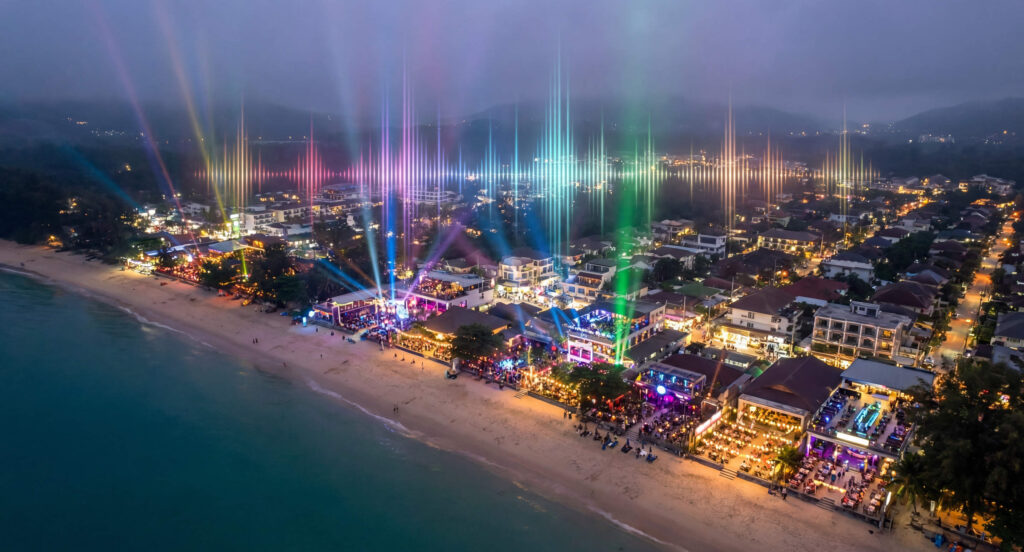
Thai media reports are beginning to echo what residents of Phuket’s Bang Tao area have been saying for months—what was once marketed as a tranquil coastal escape is rapidly turning into a lawless nightlife zone where regulations are ignored and authorities appear absent.
According to Thai media reports and community accounts, Bang Tao—traditionally considered a residential coastal zone—has experienced a noticeable rise in late-night entertainment activity. Beach clubs and bars are reportedly operating into the early morning hours, with elevated noise levels affecting nearby homes and accommodation facilities.
While Phuket has long accommodated nightlife in designated areas, the situation in Bang Tao is being described as a shift beyond established zoning expectations, bringing entertainment activity into close proximity with residential communities.
Reported Impact on Residents and Visitors
Coverage in Thai outlets highlights consistent complaints from residents regarding sleep disruption and ongoing noise exposure. Visitors have also begun to raise concerns, particularly those seeking quieter accommodations outside Phuket’s primary nightlife districts.
Public health considerations are increasingly part of the discussion. Prolonged exposure to high noise levels and sleep disturbance is widely associated with stress, fatigue, and longer-term health risks. For residents, the impact is cumulative and continuous.
Legal Framework and Enforcement Gap
Thailand maintains clear regulations governing environmental noise and entertainment venue operations. These include defined sound limits and enforcement mechanisms such as fines, operational restrictions, and license revocation.
However, Thai media reports frequently point to a perceived gap between regulation and enforcement. Despite the existence of legal controls, affected communities describe ongoing disturbances and limited visible intervention.
This contrast has become a central theme in coverage: not the absence of rules, but challenges in their consistent application.
Volume of Complaints and Public Response
Recent reporting indicates a significant increase in complaints linked to nightlife activity following extended operating hours in tourist areas. Noise-related grievances reportedly form the largest share of these complaints.
The scale suggests a broader systemic issue rather than isolated incidents, with similar patterns observed in multiple locations but particularly emphasized in Bang Tao.
Thai media coverage has also connected the Bang Tao situation to wider questions of governance and institutional accountability. Reports of inconsistent enforcement responses have prompted public debate over oversight mechanisms and administrative effectiveness.
These concerns are unfolding alongside separate, high-profile legal cases involving local officials in Phuket, which has intensified scrutiny of regulatory practices and transparency.
While no direct conclusions are drawn, the overlap of these issues has contributed to heightened public attention.
From an external perspective, the situation reflects a common challenge in high-growth tourism destinations: maintaining clear boundaries between entertainment zones and residential areas.
In Bang Tao, Thai reporting suggests that these boundaries may be increasingly blurred, leading to conflict between commercial activity and community expectations.
Implications for Tourism and Local Stability
Phuket’s international reputation relies on a balance between vibrant tourism offerings and a perception of order and livability. Thai media commentary has begun to note potential risks if that balance is not maintained, including:
- Shifts in visitor preferences toward quieter destinations
- Strain on local communities
- Questions long-term sustainability of tourism development
Conclusion
Based on Thai media reporting and local accounts, the situation in Bang Tao represents more than a localized disturbance. It highlights broader structural questions حول enforcement consistency, zoning clarity, and governance in one of Thailand’s most prominent tourist regions.
For external observers, the issue underscores the importance of aligning rapid tourism growth with effective regulation—an ongoing challenge not only for Phuket, but for many destinations experiencing similar pressures.
Don't Miss:
-
New documents show how a retail chain’s sales practices helped put guns on US streets
-
Singapore a battleground of commodities fraud lawsuits
-
From Propagandist to Criminal
-
On Indonesia’s fires, El Nino’s impact on the power sector, and other stories | Asia Sentinel Stories of the Week
-
WATCH: Inside the China Capital investigation — a live panel