
 From Iran to China: An Emerging Trans-Central Asian Corridor
  New documents show how a retail chain’s sales practices helped put guns on US streets
  Singapore a battleground of commodities fraud lawsuits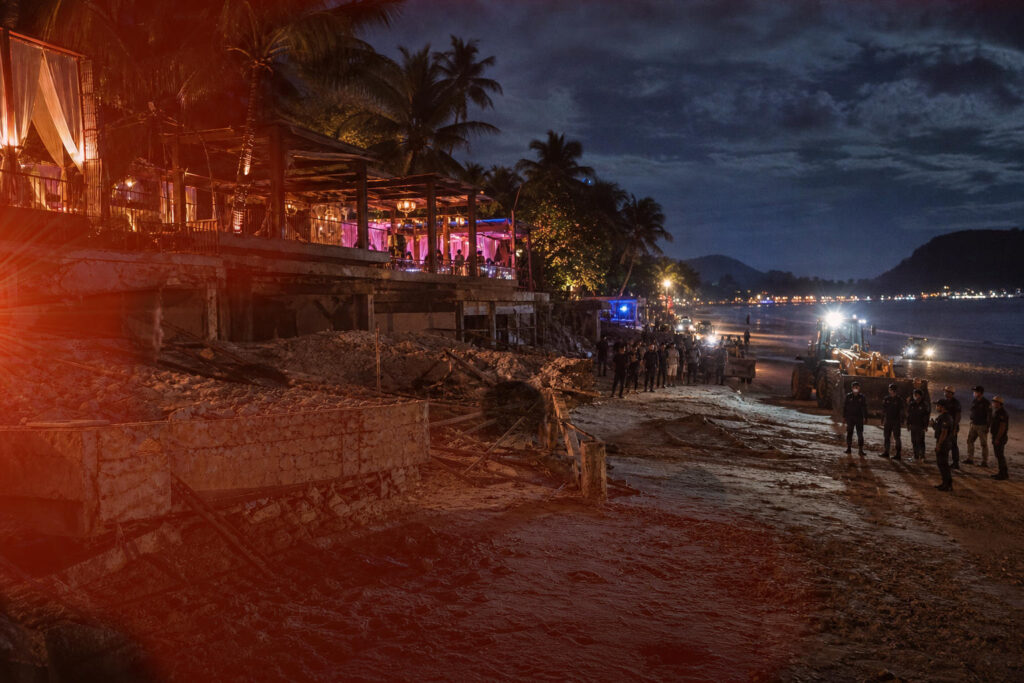
Phuket is no longer simply a tropical getaway; it has evolved into a high-stakes arena where huge profits, foreign capital, and public land are in direct collision. As officials move forward with plans to demolish unlawful structures and reclaim encroached coastal areas, the real question is not about policy design, but about the balance of power.
For years, wealthy elites and major investors have held Thai land for profit, often operating within legal grey zones with minimal resistance. The question now is whether this long-established pattern will finally be confronted—or quietly preserved. Will pressure from influential circles once again be enough to sway committees and ministries into looking the other way, allowing the status quo to continue unchanged?
Authorities deny such claims. When asked whether any investors or powerful individuals had attempted to interfere or lobby against demolition or legal enforcement, Natural Resources and Environment Minister Suchart Chomklin firmly dismissed the suggestion. “There are no influential figures,” he stated. “No one is above the people.”
Yet official remarks alone are unlikely to ease rising public doubt. The core issue remains whether the ministry will genuinely stand with ordinary Thai citizens, or ultimately align itself with commercial interests driven by profit and influence.
The issue goes beyond land encroachment alone. In several areas, especially Bang Tao, the effects are already visible. Establishments such as Maya Beach club, YUUHI Beach Club, Cafe Del Mar and others have been functioning effectively as unlicensed nightlife venues in residential zones, with loud music until around 03–04 AM daily in neighborhoods intended for living, not entertainment. Quiet residential areas have gradually been transformed into late-night party districts.
Both residents and visitors are increasingly forced to endure constant noise, sleepless nights, and growing concerns over safety. The rise of intoxicated crowds in these areas has made parts of Bang Tao feel less secure after dark, raising serious questions about enforcement, supervision, and accountability.
This situation is no longer limited to illegal construction – it reflects a broader breakdown in public order and the rights of local communities. Phuket’s rise as a global investment destination has brought significant economic growth, but it has also exposed weaknesses in governance and control.
Now, with demolition orders pending and legal action underway, the stakes are clear. Either the law is applied equally, or it is not. Either public land is returned to the people and law is equal for everyone, or it remains a playground for those with sufficient wealth and influence to claim it.
Phuket now stands at a critical crossroads. What follows will determine whether the idea that “no one is above the people” is a real governing principle—or merely a statement on paper.
Don't Miss:
-
From Iran to China: An Emerging Trans-Central Asian Corridor
-
New documents show how a retail chain’s sales practices helped put guns on US streets
-
Singapore a battleground of commodities fraud lawsuits
-
From Propagandist to Criminal
-
On Indonesia’s fires, El Nino’s impact on the power sector, and other stories | Asia Sentinel Stories of the Week