
 The US is letting a convicted Bolsonaro spy chief stay in Florida. Brazil wants answers.
  Rick Claypool on Pay to Play Corporate Crime Enforcement
  Labaton Launches Whistleblower Practice with Former SEC Acting Chair Allison Herren Lee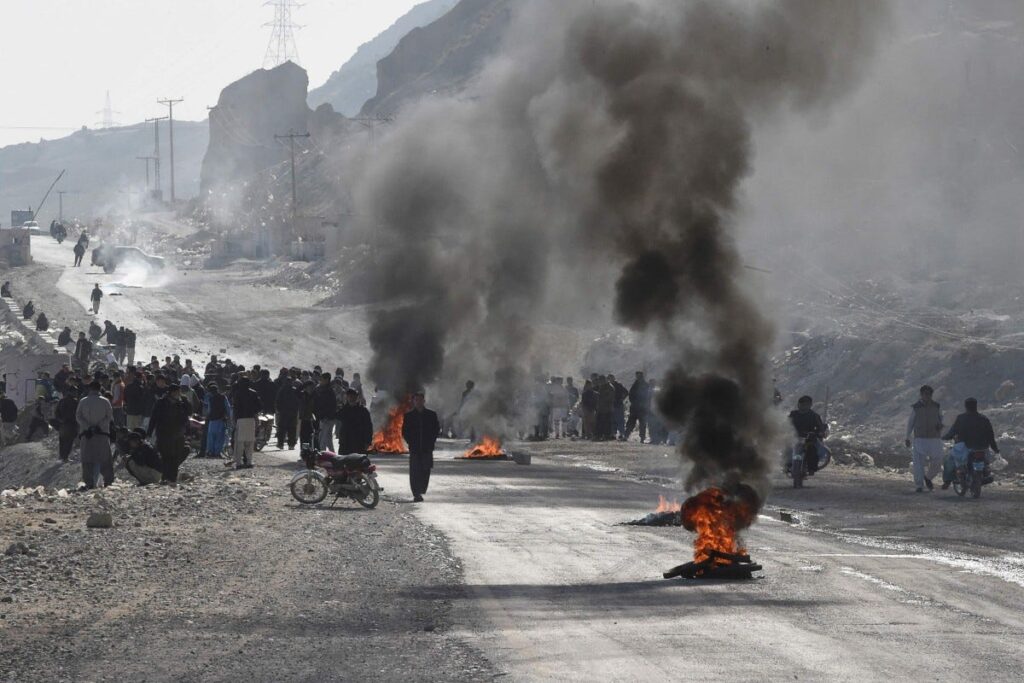
By: Salman Rafi Sheikh
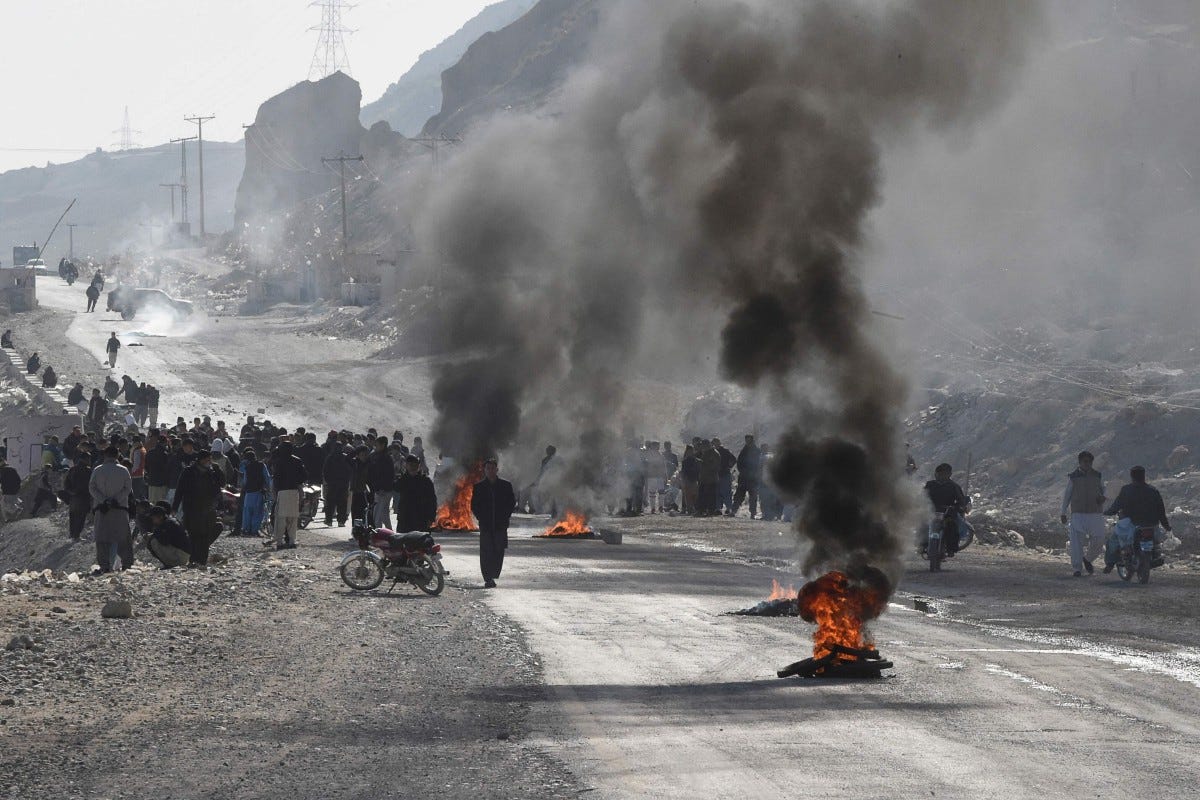
On May 24, a suicide car bomb tore through a military train near Quetta, the capital of Pakistan’s restive Balochistan Province, killing at least two dozen soldiers. Hours later, Pakistan’s army chief was in Tehran carrying diplomatic messages between Washington and Iran, seeking to broker international peace while fighting a full-scale insurgency on its own soil.
The contradiction is not incidental; rather it is the defining tension of Pakistan’s strategic moment. The Balochistan Liberation Army is no longer the peripheral irritant Pakistani officials have long sought to portray. In late January and early February, the BLA conducted synchronized, multi-pronged attacks across at least 0 to 12 locations including Quetta, Gwadar, Mastung, and Panjgur, striking security forces through suicide bombings, assaults on military posts and sabotage of critical infrastructure. The May 24 attack on the Quetta train was not an aberration; it was a continuation. The day before that bombing, the BLA publicly unveiled its first female commander and a formalized women’s fighting unit, a calculated signal that the insurgency has embedded itself across generations, classes, and genders.
Pakistan’s military response has been correspondingly massive. According to official government figures, security forces conducted more than 78,000 intelligence-based operations across Balochistan in 2025. Yet the same officials acknowledged that these operations resulted in the deaths of 202 security personnel and 280 civilians over the same period. The arithmetic is damning: operational intensity has not translated into strategic gains. More troubling, reports have documented civilian casualties from aerial strikes in towns like Zehri in Khuzdar district, each incident a potential recruitment tool for the next cycle of insurgency.
The security picture is further complicated by the BLA’s evolving alliances. Intelligence and security assessments indicate a growing tactical partnership between the BLA and the Tehrik-e-Taliban Pakistan (TTP) — two groups with wholly incompatible ideologies, united by a shared adversary. This convergence has coincided with a marked escalation in operational sophistication, shared logistics and coordinated timing of attacks. The Afghan Taliban, for their part, maintain strategic ambiguity — neither formally endorsing the BLA nor disrupting its movement through southern Afghan provinces like Kandahar and Helmand, treating the insurgents as useful leverage against Islamabad.
Geopolitical Vise Tightens Around Balochistan
Pakistan’s deteriorating relationship with Kabul compounds each of these threats. Last October, Indian External Affairs Minister S. Jaishankar held the first high-level bilateral meeting between India and the Taliban, after which New Delhi upgraded its technical mission in Kabul to a full embassy. It is not hard to understand that India is explicitly seeking to exploit divisions between Islamabad and Kabul. The Taliban’s own foreign minister, during his New Delhi visit, pledged that Afghan territory would not be used against India — a commitment conspicuously not extended to Pakistan.
Afghanistan, in other words, is now more strategically aligned with New Delhi than with Islamabad. This matters enormously for Balochistan, which shares a long border with Afghanistan and has historically served as a transit corridor for insurgent logistics. The BLA’s access to Afghan territory, where the IEA provides what analysts describe as a “sovereign shield,” is not a marginal factor; it is structurally embedded in the insurgency’s operational model.
Pakistan’s improving ties with Iran offer a partial counterweight. Pakistan and Iran are experiencing one of the most constructive phases of their bilateral relationship in recent decades, with over 25 high-level delegations exchanged and 25 agreements signed in the past two years. Better coordination on the Iran-Pakistan border could help interdict BLA movement along that flank. But it closes only one corridor. With the Afghan route open and the TTP alliance active, a partial fix does not constitute a solution.
Meanwhile, Pakistan’s extraordinary diplomatic exertions in West Asia — brokering the April 8 ceasefire between the United States and Iran, hosting Islamabad talks with US Vice President JD Vance, and dispatching Army Chief Asim Munir to Tehran as a back-channel envoy — have generated significant international prestige. That prestige, however, rests on a domestic foundation that is actively eroding. Balochistan sits at the precise intersection of South Asia, West Asia, and Central Asia. It is where China’s CPEC investments are most concentrated, where the Iran border is most porous, where the insurgency is most deeply rooted, and where Pakistan is actively seeking Saudi investment to build an oil refinery. A state that cannot stabilize its own strategic heartland will eventually find its credibility as a regional stabilizer questioned.
New Contract, not New Operation
The military logic has been tested to exhaustion. Despite 78,000 operations in a single year, a suicide bomber still reaches a military train in the provincial capital. The problem is not operational capacity; it is a strategic error. Pakistan has consistently treated Balochistan as a security problem requiring a military solution—a preference captured in the Chief of Defence Forces’ notion of a “hard state.”
Balochistan, however, is at its core a political problem that security operations can suppress but never resolve. A genuinely different approach would begin with an honest accounting of what decades of military primacy have produced: an insurgency that has grown more sophisticated, better networked, and more socially embedded with each passing year. It would then require concrete commitments on the issues that have driven Baloch alienation — an end to enforced disappearances, which have haunted thousands of families for two decades and remain one of the most potent sources of radicalization; genuine resource-sharing from the extraction of copper, gas and gold from Baloch soil, rather than arrangements in which local communities bear environmental costs while revenues flow elsewhere; meaningful political empowerment that gives Baloch representatives real authority over their province’s future; and a phased, deliberate demilitarization that replaces the logic of control with the logic of governance.
None of this is straightforward. Pakistan’s civil-military dynamics, its coalition politics, and the institutional interests of its security establishment all create structural resistance to precisely the kind of political concessions that a settlement would require. Recognizing Baloch grievances as legitimate — rather than simply reducing them to foreign-sponsored agitation — requires a rupture with decades of official narrative.
Yet the trajectory, absent that rupture, points in a discernible direction. The BLA is broadening its social base, formalizing its structures, and deepening external relationships in a geopolitical environment increasingly hospitable to its cause. Afghanistan’s alignment with India, the TTP alliance, and the UAE’s well-documented pivot away from Pakistan — freezing accounts, deporting workers, demanding early repayment of loans amidst deepening ties with India— collectively suggest that the external environment is changing in ways that could increase pressure on Balochistan. Pakistan’s window for a political solution is not permanently open. If Islamabad continues to govern Balochistan through the barrel of a gun, it may one day find that the gun is the only thing left.
Dr Salman Rafi Sheikh is an Assistant Professor of Politics at the Lahore University of Management Sciences (LUMS) in Pakistan. He is a long-time contributor on diplomatic affairs to Asia Sentinel.
Don't Miss:
-
The US is letting a convicted Bolsonaro spy chief stay in Florida. Brazil wants answers.
-
Rick Claypool on Pay to Play Corporate Crime Enforcement
-
Labaton Launches Whistleblower Practice with Former SEC Acting Chair Allison Herren Lee
-
Kremlin payment firm A7 has been pumping billions in ‘untraceable’ cash into global financial system
-
New US law requires dating apps to include warnings on romance scams