
 Manila’s EV ambitions confront economic and energy realities
  Tunisian court dismisses case to dissolve publisher of ICIJ partner Inkyfada
  Prabowo Faces Growing Discontent as Jokowi Revives His Political Ambitions
 [The content of this article has been produced by our advertising partner.]
As Hong Kong looks to develop all aspects of the sports sector, from grass-roots participation to elite-level competition, it is essential to have a strong and effective governance structure in place to oversee day-to-day activities, policy implementation and high-profile mega events.
Enter the Sports Governance and Integrity Alliance (SGIA), a new partnership between the Sports Federation and Olympic Committee of Hong Kong, China (SF&OC), the Independent Commission Against Corruption (ICAC), The Hong Kong Jockey Club (HKJC) and The Hong Kong Chartered Governance Institute (HKCGI).
Established in August 2025, the SGIA aims to enhance governance and integrity management across National Sport Associations (NSAs).
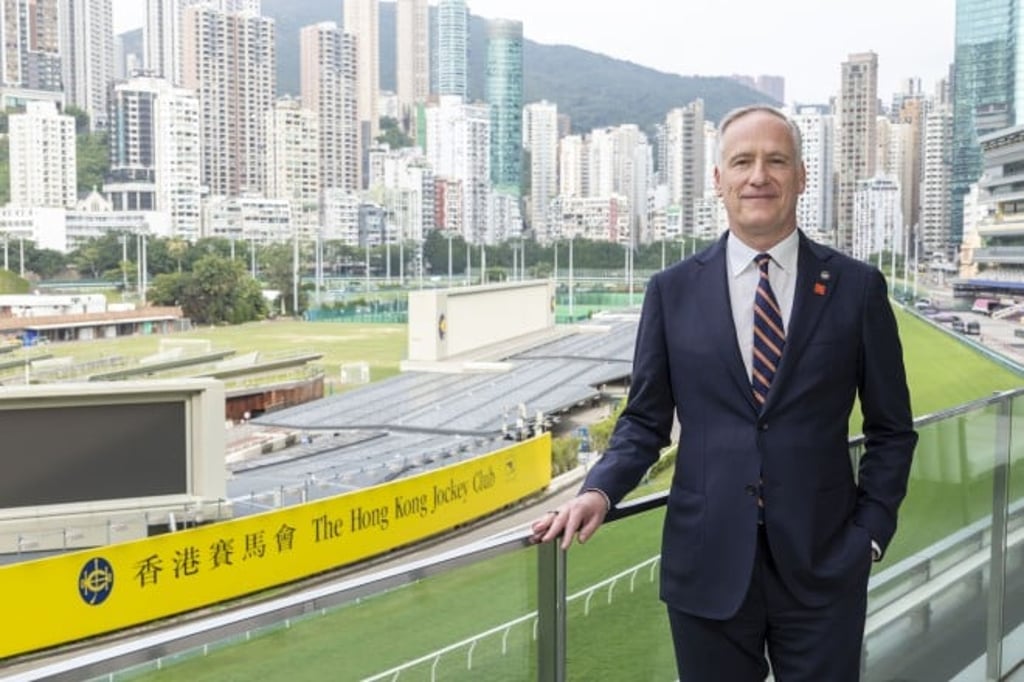
“On our side, it all started with our Charities Trust, which has contributed funding for the course, looking at overall sports development in Hong Kong,” says Moray Taylor-Smith, the HKJC’s executive director for security, integrity and information security.
“Governance is a key part of it and as a club we have always placed great emphasis on that in horse racing and tried to expand those standards into sport in general.”
He adds that devising the course was a coming together of like minds, all intent on taking things forward and with the longer-term goal of continuing to strengthen NSAs in terms of policy procedures, conduct, structures and the ways they need to go about their business.
The idea for the seven-module online programme, formally known as The Jockey Club HKCGI Sports Governance Certification Course, began to take shape in late 2024.
Prior to this, a government-mandated review of the organization and operation of the city’s NSAs had led to a new code of governance being issued by the SF&OC.
It set out clear guidelines and requirements for leaders and officials, with a view to enhancing transparency, accountability, integrity and overall efficiency.
Taking a comprehensive approach, the topics covered ran from board governance and general administration to membership, athlete selection and even coach and umpire management.
When framing the code, NSAs and other stakeholders were consulted, but the SF&OC also drew on the extensive relevant experience of the ICAC, The HKJC and HKCGI.
Working together, these parties saw the long-term value in launching a specialist course, not simply to reinforce understanding and implementation of the code among current NSA officials, but also to equip up-and-coming executives, managers and people keen to get into the sector.

“When developing the course, the question was how best to help implement the new code, especially for smaller NSAs, where governance isn’t a matter of ‘one size fits all’,” says Gill Meller, international president of the UK-based Corporate Governance Institute (CGI) and former president of HKCGI.
“We spoke to the CGI, which has a Sports Governance Academy that provides guidance on policy and resources, runs annual conferences and has an informative website. We tapped into that in putting together the certification programme.”
The course, which began in late March, is built around video lectures and case studies, amounting to around 18 hours of online learning. Each module ends with a quiz to ensure all the main points have been correctly absorbed, and everything concludes with an assessment in multiple-choice format.
The subjects dealt with range from the basic principles of good governance – including directors’ duties and responsibilities – to legal frameworks, leadership, financial management, communication and integrity.
More than 600 people registered for the course’s first cohort, the majority from NSAs, but with a significant number from other sports organisations and HKCGI.

On completion, participants will be equipped with the knowledge, skills and mindset required to implement best-in-class governance practices for their organisations. They will also have access to a network of qualified professionals and job-matching opportunities.
“Good governance is the foundation on which you build trust, whether selecting athletes to represent Hong Kong at the Olympics or running a local event,” says Meller, who recorded a session on stakeholder engagement for the course. “What we are teaching is fit for purpose and was designed with academic rigour in mind.”
She is confident that future iterations of the programme will be arranged with appropriate updates and additions. The next cohort is expected to start in the first half of 2027.
Some of the course’s key themes featured in the SGIA’s first International Symposium on Sports Governance and Integrity, held late last year, where the challenges, risks and consequences were discussed before a 150-strong international audience.
“This initiative is not a one-off, but a catalyst to get NSAs and the wider community to understand the importance of governance in sport,” Taylor-Smith says. “It is part of the journey to enhance the overall ecosystem. A lot of people have done a lot of work to get the ball rolling – many of them volunteers – so we don’t see it as just a compliance issue, but as something central to the way people think and act in the world of sport.”
Advertisement
Don't Miss:
-
Explosives Workshop Raided after Shootout in Balleza, Chihuahua
-
The Eccentric Extravagances of “Captain Sol”: 12 Properties, a Penthouse in Tulum, and Casino Spending
-
Fight at Mazatlán Prison Leaves 10 Dead: A 2-Year-Old Boy Died During a Family Visit
-
Veracruz Mafia vs. CJNG: The Fight for Veracruz
-
Former Michoacán Official Used AI for Extortion: Here’s How They Cloned the Voices of Politicians and Ministers