
 From Iran to China: An Emerging Trans-Central Asian Corridor
  New documents show how a retail chain’s sales practices helped put guns on US streets
  Singapore a battleground of commodities fraud lawsuits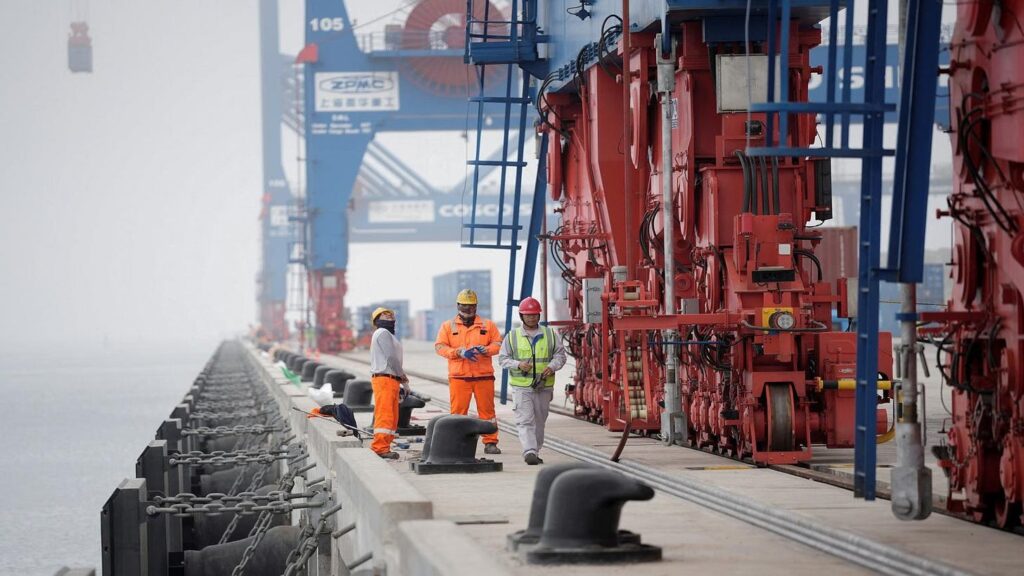
By: Toh Han Shih
The international rating service Moody’s has joined a substantial chorus warning of China’s growing influence in Latin America, an indication that US President Donald Trump’s “Donroe Doctrine” seeking to wall the US’s backyard off from outside influence is having little effect. Chinese overseas direct investment (ODI) in Latin America totaled US$116 billion between 2015 and 2025, making the region the third largest destination for Chinese capital outside Asia and Europe, according to Moody’s.
“China’s huge and soaring exports to Latin America are eroding the region’s manufacturing sector and increasing its dependency on China, said Moody’s in a June 8 report. “Imbalances in China’s industrial production pose direct competitive risks to Latin America’s domestic manufacturing base, particularly in sectors such as steel, vehicles, electronics and chemicals.”
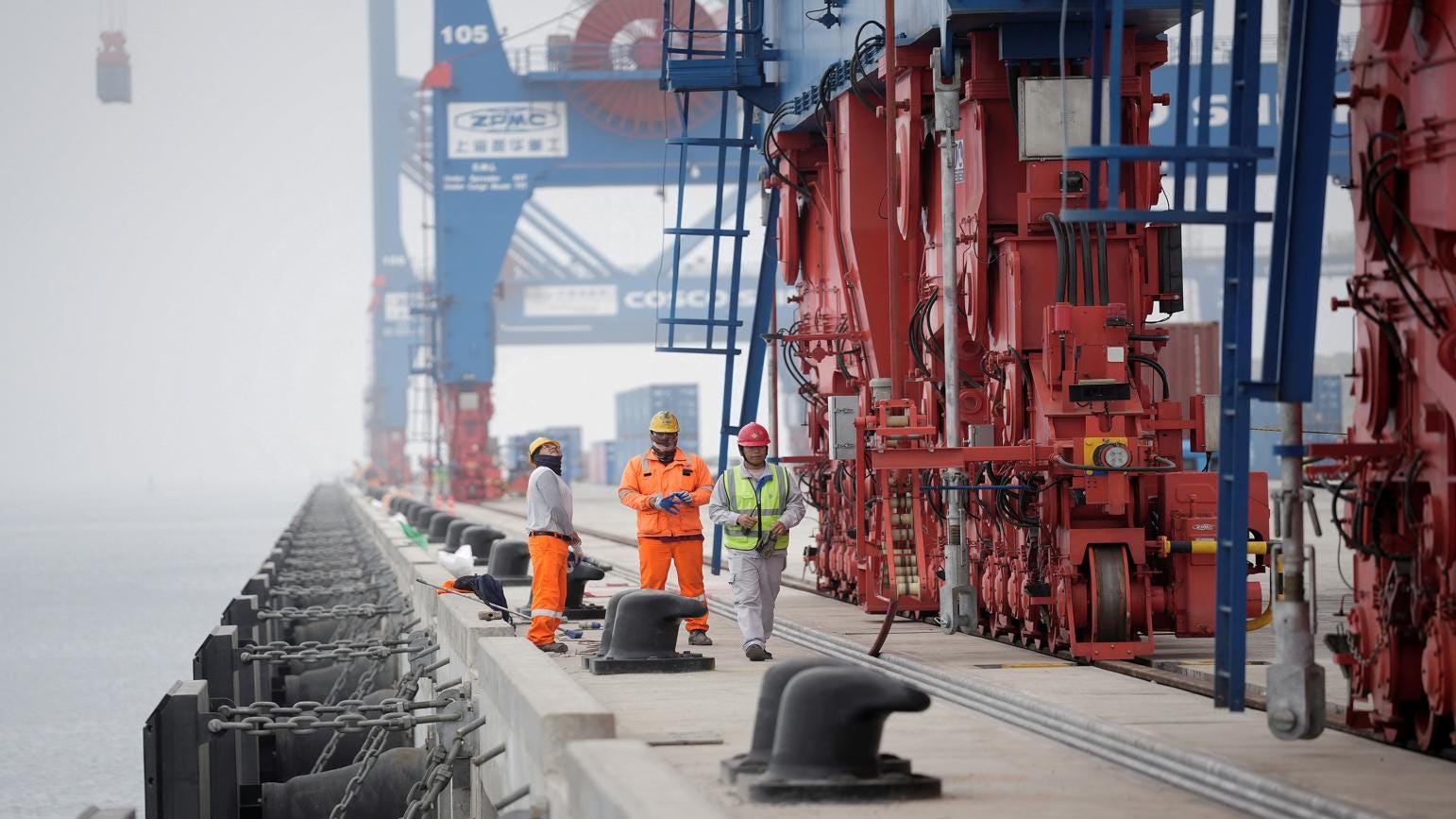
For more than a decade, warnings have been echoing about Beijing’s expanding regional footprint, focusing on economic dependency, critical infrastructure control, and technological vulnerabilities. Policymakers and security experts have highlighted primary risks including Chinese ownership of as many as a dozen port projects across South America and the Caribbean, including the Chancay megaport in Peru. Experts warn these dual-use facilities could serve strategic or defense purposes for Beijing. In addition, widespread adoption of 5G and smart city infrastructure from Chinese telecom and technology firms like Huawei raises fears of significant cybersecurity and espionage risks. Moodys is now warning that those investments are being joined by Beijing’s huge and growing exports to the region.
“Auto, electronics and machinery, as well as basic metals manufacturing (including steel) are vulnerable, driven by high displacement risk and increasing Chinese value added in exports,” said the Moody’s report. “Latin America’s export profile to China is becoming more concentrated in raw materials. The shift from refined to unrefined exports means the region captures less value added per dollar of trade, increasing its vulnerability to price and demand shocks, as well as protectionist policies.”
While Latin America exported about US$174 billion to China — close to 80 percent of which was raw materials — it imported US$252 billion in manufactured goods, the Moody’s report pointed out. “These facts represent a deeply asymmetric trade relationship: Latin America is dependent on China’s demand for commodities while China supplies manufactured products.”
Trade between China and Latin America jumped to a record exceeding US$500 billion in 2025, an increase of more than 2.5 times from $200 billion in 2010 and solidifying China as the region’s second most important trading partner behind the US and the top trading partner for Brazil, Chile and Peru, the Moody’s report noted.
“The 304 percent growth in Chinese transportation equipment and vehicles imports since 2018 for Mexico and an eighteenfold surge of Chinese EVs (electric vehicles) imported to Brazil in 2023 are signs of intensifying reliance on imports from China, displacing domestic production,” said the Moody’s report. “The accelerating competition from Chinese imports is adding to the risks of Latin America’s deepening dependence on commodities and geopolitical reorientation because of ongoing shifts in the trade landscape.”
Some Latin American countries have enacted policies to protect domestic industries. In January, for example, the Mexican Congress approved tariffs targeting countries that lack free trade agreements with it, including China, the Moody’s report cited.
However, China is localizing from export to local manufacturing in Latin America, for example, in the auto and auto parts sector, said Alice Sun, founder of OrcaMar Strategies, a Hong Kong consultancy which helps Chinese firms expand abroad, at a lunch talk at the Hong Kong Foreign Correspondents’ Club on April 27.
“We are helping Chinese companies find industrial parks in areas in Latin America where they can get electricity and water easily,” Sun disclosed.
Chinese manufacturers are investing in multiple regions like Latin America, Southeast Asia and Africa to avoid tariffs, Sun explained. “Chinese investments in Latin America in the past three years have been influenced by geopolitics.”
Sino-US rivalry over Latin America
Trump appears unconcerned.
“The Monroe Doctrine is a big deal, but we’ve superseded it by a real lot. They now call it the Donroe Doctrine…Under our new National Security Strategy, American dominance in the Western Hemisphere will never be questioned again,” Trump said at a press conference on January 3. The Monroe Doctrine, formulated by US President James Monroe in 1823, opposes the intervention in the political affairs of the Western Hemisphere by external powers.
For instance, the Panamanian government, likely backed by the US, seized two ports along the Panama Canal which were operated by CK Hutchison, a Hong Kong-listed conglomerate controlled by Hong Kong tycoon Li Ka-shing, in February. Trump’s raid on Venezuela in January is likely to strengthen the US petrodollar due to the US takeover of the nation’s abundant oil resources, Asia Sentinel reported on January 6.
“A core difference is how China and the US engage Latin America. China is very focused on the bigger markets in the region like Mexico, Brazil, Chile and Argentina. The US seeks to control strategic areas like Venezuela and Colombia. It’s very political, military and strategic. For China, it’s more economic. The US focuses on Guatemala, Guyana, Ecuador and the Caribbean because of strategic and military considerations,” Sun said.
US-China trade tensions are reshaping commodity flows (such as soybean purchases redirected from the US to Brazil), manufacturing supply chains (including Chinese factory investment in Mexico) and tariff structures, Moody’s said. “These shifts create both opportunities and risks for Latin American economies. Chinese investment is flowing into energy-transition sectors and critical minerals, contributing to regional economic growth, but the broader trend is a deepening dependence on China as a demand and supply hub, increasing the region’s exposure to Chinese industrial policy decisions and US trade actions,” the report added.
While Brazil and Argentina have benefited from US-China trade tensions and tariffs — exporting record levels of soybeans in 2025 — the US-China trade agreement completed by Trump and China President Xi Jinping in May includes soybean purchase provisions and could reverse that trend, the Moody’s report warned. “Slowing construction in China is reducing demand for traditional commodities like iron ore and steel even as activity remains high for now. The increasing role of raw materials in regional exports to China, with only minimal local transformation, suggests the region is moving down the value chain.”
The composition of Chinese ODI in the region has been undergoing a structural transformation since 2020, said Moody’s, quoting a Boston University Global Development Policy Center report that while overall Chinese ODI in Latin America slowed by approximately 9 percent from 2020 to 2024 compared to the previous five years, ODI in transition minerals more than doubled, solar and wind power generation surpassed hydropower as the leading energy ODI category and EV manufacturing now dominates Chinese automotive investment in the region.
“For Latin American economies, this recalibration carries dual implications. On one hand, Chinese capital is flowing into sectors critical for the energy transition, which is contributing to economic growth… On the other, the deepening dependence on Chinese demand and investment in a narrow band of raw materials and assembly-stage manufacturing raises structural vulnerabilities to shifts in Chinese industrial policy or US–China decoupling pressure,” the report added.
Previously, a lot of Chinese investment in Latin America was in mining and energy, but now there are smaller Chinese investments in fintech and auto parts in the region, Sun said. Formerly, Chinese state-owned enterprises led Chinese investment in Latin America, but now most of the investments come from private Chinese companies, she added. “Although private Chinese companies make smaller investments in Latin America, they are expanding in Latin America.”
“In the top part, there is a lot of tension between China and the US. Trump is doing lots of things, but in the lower part, there are positive things for Chinese companies and support from Latin American governments for Chinese companies,” Sun said.
Toh Han Shih is a Singaporean writer in Hong Kong and a regular contributor to Asia Sentinel.
Don't Miss:
-
From Iran to China: An Emerging Trans-Central Asian Corridor
-
New documents show how a retail chain’s sales practices helped put guns on US streets
-
Singapore a battleground of commodities fraud lawsuits
-
From Propagandist to Criminal
-
On Indonesia’s fires, El Nino’s impact on the power sector, and other stories | Asia Sentinel Stories of the Week