
 Rick Claypool on Pay to Play Corporate Crime Enforcement
  Labaton Launches Whistleblower Practice with Former SEC Acting Chair Allison Herren Lee
  Kremlin payment firm A7 has been pumping billions in ‘untraceable’ cash into global financial system
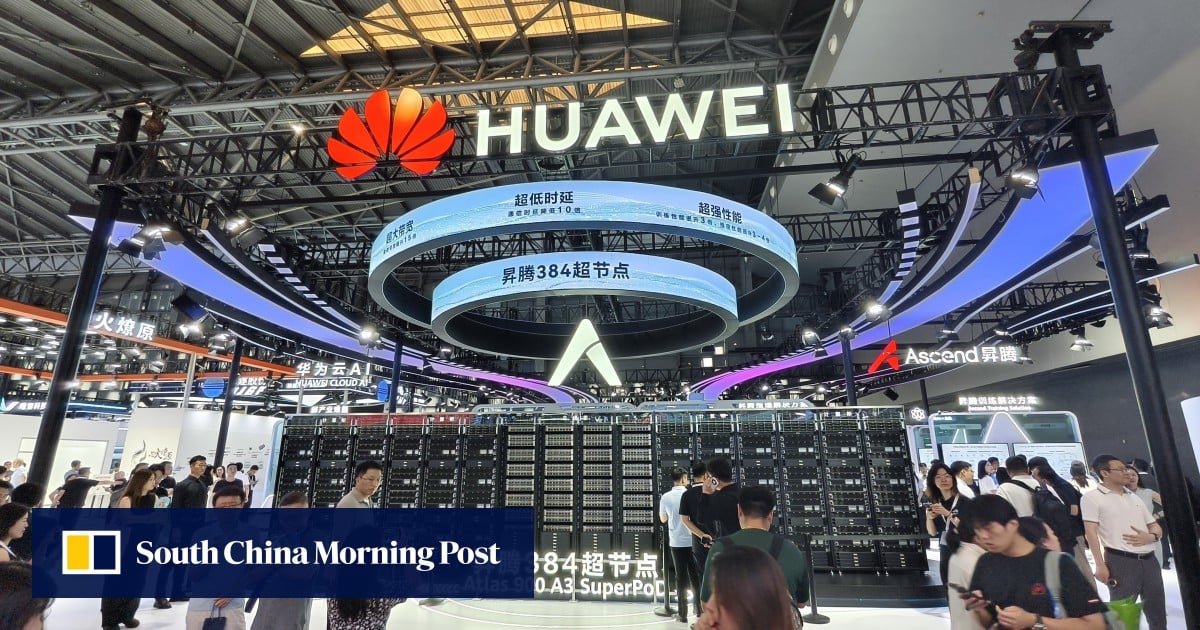
The hardware-software collaboration between the two Chinese firms underscores the progress China has made in tech self-reliance, a top national priority for Beijing amid US efforts to block its access to advanced semiconductor chips and chipmaking equipment.
During the livestream hosted on Bilibili and WeChat, Huawei engineers outlined the adaptation of its chips and flagship software system Compute Architecture for Neural Networks (CANN) – its equivalent to Nvidia’s dominant CUDA software – with DeepSeek’s latest model.
Advertisement
The company said its entire Ascend SuperNode product line was “fully adapted” to DeepSeek V4 for model inference, which had “significantly improved” due to the two companies’ close collaboration before the model’s release.
Inference refers to the serving and running of an AI model. While cutting-edge Chinese models are still reliant on advanced US chips for training, computational demand for inference was set to surpass training demand globally by 2030, according to McKinsey & Company.
Advertisement
Don't Miss:
-
A Total of 13 Mass Graves Have Been Found in Viesca Containing the Charred Remains of Men and Women
-
Jorge Luis Zambrano, alias “Rasquiña”
-
El Taliban Fell In Mazatlán… And What He Confessed Ties Everything Together
-
Inside the Camp at the Heart of Honduras’ Garífuna Land Struggle
-
This Is How the MataZetas Captured and Executed the Zetas