
 When Great Powers Talk, Who Speaks for Asia
  About the China Capital investigation
  Frequently asked questions about the China Capital investigation
For more than 30 years, the unemployed ex-wife and ambitious son of Italian drug trafficker Giacomo Tamburello relied on an international network of bankers, lawyers and brokers to amass a $230 million fortune and shield it from authorities, according to Italian prosecutors.
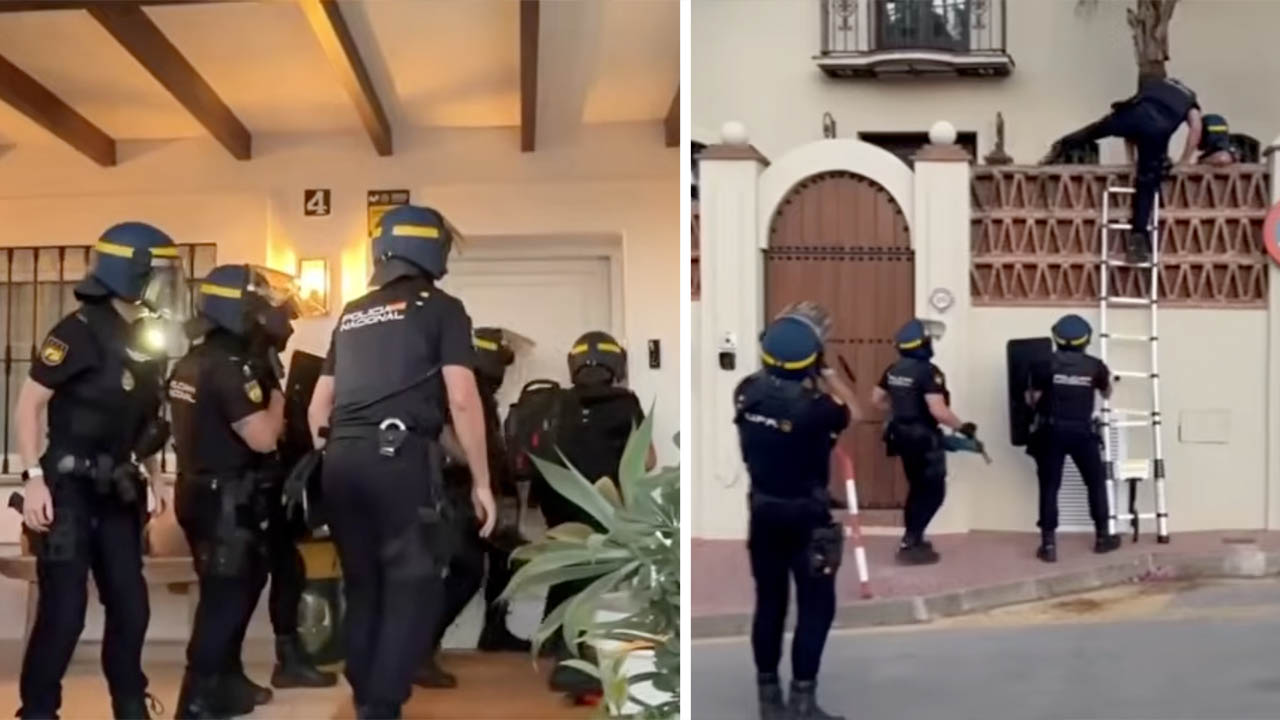
Their recent investigation — which has made international headlines because of Tamburellos’ alleged links to one of Italy’s most powerful mafia clans — led to the trio’s arrest in May and the seizure of assets spread across nine jurisdictions.
Prosecutors found that Tamburello earned millions primarily through the illicit trade of hashish from Morocco and shared 10% of the revenues with Matteo Messina Denaro, a notorious mafia boss until his capture and death in 2023. Starting in the 1980s, Tamburello allegedly laundered the funds with the help of his then-wife Maria Antonina Bruno and, later, their son Luca Tamburello, who studied banking and international finance at elite European business schools.
“This operation represents a result of extraordinary importance in the fight against organized crime and the financial networks fueled by drug trafficking and international money laundering,” Chiara Colosimo, the president of the parliament’s Antimafia Commission, told Italian media.
The 327-page judicial document demanding the arrest and asset freeze reads like a manual on how — and where — to hide and allegedly launder illicit money. Over the years, the fortune grew to include:
- 36 pounds of gold in the vault of a Swiss bank.
- A Porsche Carrera, a Land Rover Defender, three smaller cars and a maxi-scooter.
- About two dozen properties, including an apartment in Western Sicily and villas and commercial real estate on Spain’s Costa del Sol.
- Shell companies in the secrecy jurisdictions Panama, Gibraltar and the Cayman Islands.
- 50 accounts at a dozen European financial institutions, including in the tax havens Luxembourg, Monaco and Andorra.
- Shares in a Lebanese bank worth $89 million.
- Investments in Bitcoin and other cryptocurrencies.
The high-profile case sheds light on the underbelly of a global financial system that has long enabled criminals to enrich themselves by defying international rules meant to prevent financial crimes.

Leaked records obtained by the International Consortium of Investigative Journalists as part of the 2021 Pandora Papers investigation also provide new insights into the role played by financial services providers working for the Tamburellos in Panama, Andorra and Spain. The records show how these professionals facilitated the family’s lucrative investments while rarely questioning the origin of their funds.
Giacomo Tamburello is currently in prison in Italy. Bruno and Luca Tamburello are in Spain and have appealed an extradition request from Italian authorities. Through their lawyers, Bruno and her son denied wrongdoing and told ICIJ’s media partner L’Espresso that the seized assets were the result of successful investments and not linked to her ex-husband’s activities. They added that “the decision to place the proceeds of certain investments abroad … does not in any way reflect an intention to conceal the funds.”
Michele Riccardi, an expert in organized crime and money laundering, told ICIJ that the Tamburellos managed their wealth like a typical family office, exploiting some financial services providers’ “mix of complicity and complete lack of awareness.” He added that the family mostly chose banks in jurisdictions outside European anti-money laundering regimes and invested heavily in the poorly regulated property sector.
“I was not surprised when I saw each jurisdiction being misused for exactly the vulnerability they have,” said Riccardi, the deputy director of the Transcrime research center at the Università Cattolica del Sacro Cuore in Milan. For Italian mafias, he said, the family is still “the most trust-based social unit.”
“Much easier than a bank of unknown people.”
One red flag after the other
After failing as a clothing retailer, Giacomo Tamburello began to make a name for himself in the drug trafficking business in 1983 when he joined a criminal organization that smuggled cocaine, heroin and hashish into Italy through Spain and Switzerland.
By the 1990s, he was a wanted man. While he evaded authorities, his wife became his financial proxy, setting up shell companies in Gibraltar, opening bank accounts in Monaco and acquiring Spanish real estate, prosecutors found.
Even after Tamburello was arrested for the first time in 1994 for drug trafficking and other crimes, the family could count on professional enablers to multiply their assets.
Leaked Pandora Papers records show that the same year her husband was arrested, Maria Antonina Bruno became a client of Gestoria Pascual, a Marbella consulting firm that remained by her side for years, providing legal documents that helped her open companies in offshore jurisdictions. The firm’s representative told El País and ICIJ in an email that Bruno “ceased all dealings with our office many years ago, and no documentation regarding her remains on file.”
Tamburello and Bruno divorced during his 14 years behind bars. Yet their fortune continued to grow.
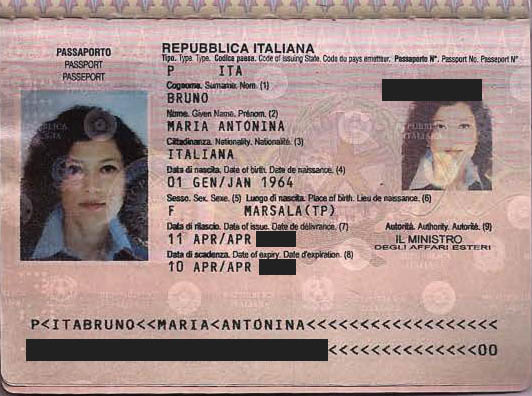
Bruno set up a Panama-based investment firm, Inversiones Oro Rey, in 2002 to hold shares in companies that owned luxury properties on Costa del Sol, a coastal region in eastern Spain known as the “Florida of Europe” for its sandy beaches and resort towns.
She then became a resident of Andorra — a small principality north of Spain that was notorious for not cooperating with international authorities — and opened bank accounts for herself and her Panamanian firm. In 2005, Bruno and her then 21-year-old son, Luca Tamburello, moved about $2.6 million from a Monaco bank to Banca Privada d’Andorra, according to the recent investigation. Around that time, she declared herself a widow with an annual income worth a little more than $2000.
It was in those years that Luca Tamburello, now 42, emerged as the leading force in the family’s financial dealings, prosecutors found, after gaining experience as an investment analyst at prestigious private banks in London and New York.
In 2015, the U.S. Financial Crimes Enforcement Network, designated the Andorran bank as a financial institution of “primary money laundering concern,” after finding that senior managers had facilitated transactions for Russian and Chinese organized crime groups as well as corrupt individuals.
When Banca Privada d’Andorra shut down, Bruno moved her funds to another local bank and a former Andorran subsidiary of Sabadell, one of Spain’s largest financial groups. In a statement to ICIJ’s media partner El País, a spokesperson for Sabadell — which sold the subsidiary in 2021 — said that the bank applies all due diligence measures according to laws against money laundering and terrorism financing.
In the meantime, leaked records reveal, a financial services provider that had helped Bruno run the Panamanian firm, Inversiones Oro Rey, resigned. In need of a new registered agent for her company, Bruno approached the Panamanian law firm Alcogal with the help of an Andorra-based consultant.
ICIJ’s Pandora Papers investigation revealed in 2021 that Alcogal had established more than 200 shell companies in Panama and other jurisdictions at Banca Privada d’Andorra’s request, including some allegedly used to siphon public funds in a Venezuelan corruption scheme.
Leaked emails show that Alcogal officers were initially suspicious about taking Bruno on as a client. One noticed that a representative for Bruno at the Andorran bank had approached the law firm two years earlier but the registration had stalled when she was unable to provide the necessary documents.
“This company does not have an accountant, notary, or lawyer,” the bank representative had told Alcogal in a 2015 email.
Alcogal also required Bruno to disclose the ownership of her Panamanian firm’s bearer shares but accepted a self-declaration when she said that the certificates had been lost. Such shares are currently illegal or restricted in most jurisdictions because ownership rests with the person who physically holds the share certificate at a particular point in time, making them prone to abuse.
Bruno listed her job as “manager of personal assets,” declaring that the company operated on a “global scale” and that the origin of the funds was “heritage.” It is not clear if Alcogal required any proof. Sabadell bankers and the Marbella consulting firm, which had been working for her since the 1990s, vouched for her, the records show.
“To date, the business relationship that Ms. Bruno has maintained with our firm has been satisfactory, proceeding without incident and with her consistently meeting her payment obligations,” the consulting firm’s director wrote in a letter.
Alcogal accepted Inversiones Oro Rey as a client. The Tamburellos used the company to own and manage properties in Spain until 2019, when they closed it, according to the recent probe.
Responding to ICIJ questions in 2021, Alcogal denied any wrongdoing and said that it “had no reason whatsoever to suspect that BPA Andorra was providing banking services to some questionable clients.”
Gold, stocks and a bank
Giacomo Tamburello was arrested again for drug trafficking in 2019. But the family’s asset management continued to thrive.
His son’s real estate company in Marbella rebranded in 2020 after becoming a franchisee of Berkshire Hathaway HomeServices, a property management firm affiliated with Warren Buffett’s corporate behemoth headquartered in Omaha, Nebraska. Israel Kreps, a spokesperson for BHHS, told ICIJ that it “takes great pride in the value of its name and does not tolerate any associations with nefarious activities.” Kreps added that BHHS is cooperating with the authorities and has ended any business relationship with Luca Tamburello.

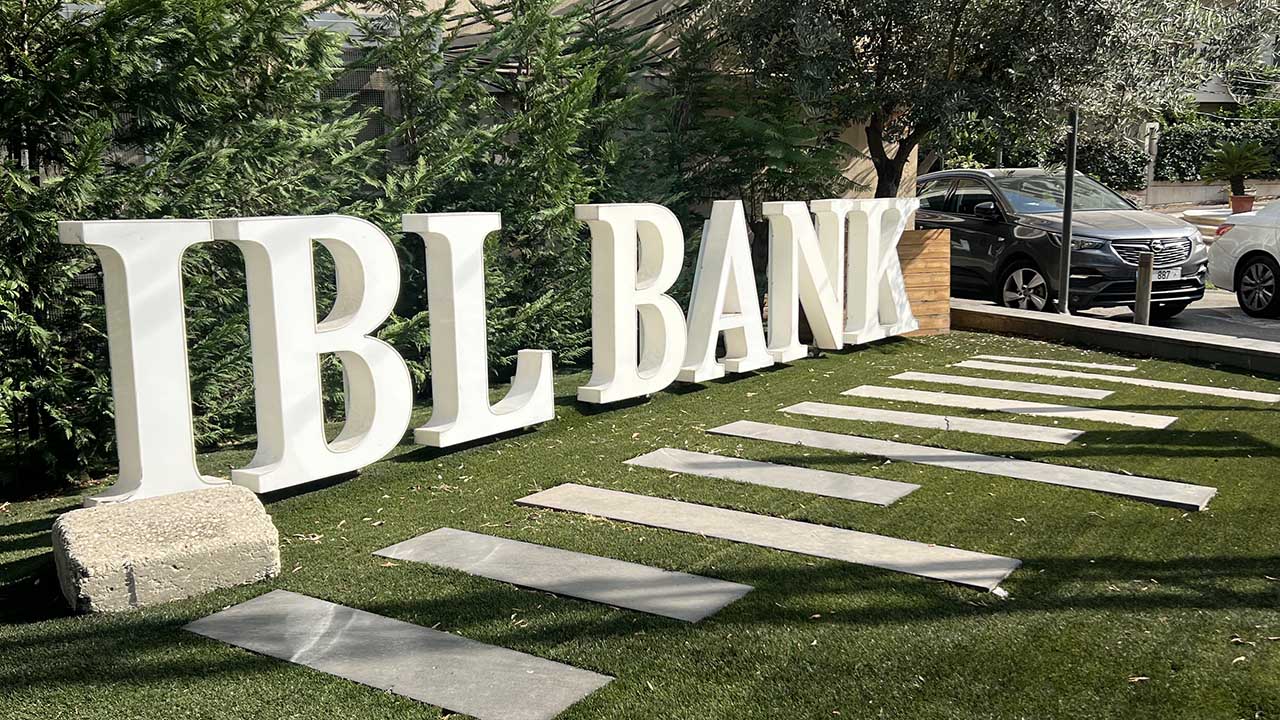
In 2021, the Tamburellos also used their Cayman Islands firm — described by investigators as a “safebox” — to buy a 3.5% stake, worth about $89 million, in the Beirut-based IBL Bank from a British Virgin Islands company, the prosecutors found.
This placed them among the bank’s top 10 shareholders, according to records from Lebanon’s banks association. It is unclear who owned the BVI firm that sold the shares in the politically connected Lebanese bank. IBL didn’t respond to comment requests from ICIJ’s Lebanese media partner Daraj.
Last year, while Giacomo Tamburello was still serving a 12-year sentence, an officer of a Monaco private bank advised Luca Tamburello on how to sell 36 pounds of gold — worth more than $1 million — and move the proceeds to the bank. In a phone conversation recorded by law enforcement, Tamburello told the banker that his mother had physically transported the gold bars from Switzerland to Luxembourg years before. The banker remarked that, in his entire career, he had never heard of anything like that, describing it as worthy of a movie scene. The Monaco bank did not respond to ICIJ’s requests for comment.
The Tamburellos’ empire began to crumble in 2023, when Andorran authorities became suspicious about Bruno’s $20 million fortune transiting her local bank accounts. Then, last year, a wiretapped conversation between Luca Tamburello and an officer at a Spanish bank gave Italian prosecutors the crucial evidence linking the family’s fortune to his father. Asked about his mother’s job and income source, Luca Tamburello told the banker she was a pensioner who had inherited some money from her ex-husband.
At that point, prosecutors found, Luca Tamburello had been planning to move to the United Arab Emirates, where authorities are reluctant to cooperate with foreign agencies and anti-money laundering controls are lax.
According to Riccardi, the money laundering expert, it’s common for suspected criminals to move jurisdictions when they feel law enforcement closing in.
The only way to prevent organized crime from exploiting the financial system is to create regulations that are consistent across all jurisdictions, Riccardi said. “Not just in the EU, but also outside.”
Contributing reporters: Paolo Biondani, Gloria Riva and Leo Sisti (L’Espresso), Daniele Grasso (El Pais), Hala Nasreddine (Daraj.)
Don't Miss:
-
When Great Powers Talk, Who Speaks for Asia
-
About the China Capital investigation
-
Frequently asked questions about the China Capital investigation
-
ICBC promoted corrupt executive, ignored employee misconduct as it pursued global expansion
-
Chinese bank helped Huawei spirit $1B out of London days after US indictment of the tech giant