
 When Great Powers Talk, Who Speaks for Asia
  About the China Capital investigation
  Frequently asked questions about the China Capital investigation
 By: Tim Daiss
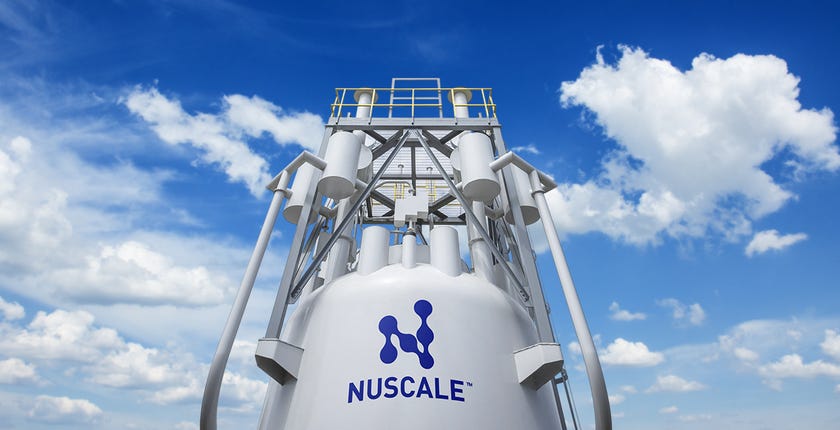
For decades, nuclear power has occupied an uneasy place in Southeast Asia’s energy future. Governments periodically embraced it whenever electricity demand surged or fossil fuel prices spiked, only to retreat as construction costs mounted, financing evaporated, or public opposition resurfaced. Today, however, the conversation has returned with renewed momentum, driven not by conventional gigawatt-scale nuclear plants but by a new generation of small modular reactors (SMRs), championed by Microsoft founder Bill Gates, Rolls Royce, NuScale and a growing list of governments eager to commercialize the technology.
The question is no longer whether Southeast Asia is interested in nuclear power. It clearly is. The more important question is whether enthusiasm is beginning to outrun commercial reality. That matters. Unlike traditional nuclear reactors, SMRs generally produce up to about 300 megawatts (MW) of electricity and are designed to be factory-built before being transported to project sites for assembly. However, a 300 MW nuclear power project is considered small by industry standards. Average-sized nuclear plants generate about 1,000 MW or more. A 300 MW plant is only about one-third the size of a standard reactor and can power around 300,000 homes.
Supporters continue to argue that their smaller footprint, modular construction, and passive safety systems could dramatically reduce both construction risks and upfront capital costs while making nuclear power accessible to countries with smaller electricity grids. The technology also offers greater flexibility, allowing utilities to add generating capacity incrementally rather than committing billions of dollars to a single massive project.
For Southeast Asia, where electricity demand continues to rise alongside industrialization, urbanization, and rapidly expanding middle-class economic expansion and consumption, that proposition is understandably attractive. Coal still dominates much of the region’s electricity generation, while natural gas remains vulnerable to volatile international prices and geopolitical disruptions. Renewable energy is expanding rapidly, but governments continue to wrestle with intermittency, transmission constraints and storage limitations. Against that backdrop, SMRs increasingly appear to offer an enticing middle ground: carbon-free baseload electricity without the enormous financial commitment associated with conventional nuclear plants.
Several governments in the region have already begun exploring precisely that possibility. The Philippines has perhaps moved furthest politically. After decades of debate surrounding the dormant Bataan Nuclear Power Plant, Manila has revived its nuclear ambitions, strengthened its regulatory framework and signed multiple civil nuclear cooperation agreements with international partners. While no SMR project has yet broken ground, policymakers increasingly view smaller reactors as a more practical entry point than conventional nuclear stations, particularly given the country’s archipelagic geography.
Indonesia, Southeast Asia’s largest economy, has pursued nuclear options for years, but interest has intensified as the country seeks reliable low-carbon electricity for its rapidly expanding economy. Officials have openly discussed SMRs as a better fit for remote islands and industrial clusters where massive conventional reactors would be difficult to justify economically. Meanwhile, Vietnam, after shelving its earlier nuclear program nearly a decade ago, has reopened discussions as electricity demand accelerates and long-term energy security climbs the political agenda. Thailand has also begun studying SMRs as part of its long-term power planning while continuing to evaluate the technology’s commercial viability.
Yet despite the growing excitement, the region should resist assuming that smaller reactors automatically translate into easier deployment because that assumption remains largely untested. Although SMRs have attracted enormous political attention and billions of dollars in research and development, commercial deployment remains limited. Russia and China currently operate the world’s most advanced examples, while several Western designs, including TerraPower’s Natrium reactor backed by Bill Gates, remain under construction or in various stages of regulatory review rather than full commercial operation.
The obstacles facing Southeast Asia extend well beyond reactor design. Every country considering nuclear power must first establish an independent regulator capable of overseeing licensing, operations, inspections and emergency preparedness, while simultaneously building a highly trained workforce of engineers, operators and safety specialists. If they can’t develop the necessary expertise in time, most can’t, then more foreign assistance will be needed. Even more critically, nuclear waste management also remains politically sensitive, while financing continues to present perhaps the greatest hurdle of all. Even if SMRs eventually prove cheaper than conventional reactors, they still require substantial upfront investment, long planning horizons, and strong government commitment before producing a single kilowatt-hour of electricity.
Public confidence also represents another challenge that can’t be overlooked. Although SMR advocates emphasize passive safety features and simplified designs, public opinion throughout Asia continues to be shaped by problematic memories of the Fukushima, Chernobyl and Three Mile Island nuclear disasters. Convincing local communities that smaller reactors are fundamentally different from their larger predecessors will likely require years of regulatory transparency and sustained public engagement rather than engineering improvements alone.
Yet, none of this suggests that SMRs lack promise. Quite the opposite. For many Southeast Asian countries, they may ultimately prove far better suited than traditional nuclear plants. Smaller electricity grids, island geography and steadily rising demand make modular deployment conceptually attractive, particularly in archipelago nations like the Philippines and Indonesia. If construction costs decline through standardized manufacturing, as advocates predict, SMRs could eventually become another important tool alongside renewables, natural gas and energy storage in helping governments balance energy security with decarbonization goals.
However, that future hasn’t arrived yet, while the numbers are telling. Governments across Southeast Asia are increasingly discussing SMRs, signing cooperation agreements and commissioning feasibility studies, but very few projects have advanced beyond planning, regulatory preparation or preliminary site evaluation. Interest is real, political momentum is building, and technological progress continues. Commercial deployment, however, remains several steps behind.
Ultimately, the debate is becoming less about whether small modular reactors can generate electricity and more about whether they can generate investor confidence. Southeast Asia certainly needs additional low-carbon power sources, and SMRs may eventually earn a meaningful place in the region’s energy mix. SMRs may eventually become part of Southeast Asia’s energy future. But for now, governments should view the technology as a promising opportunity rather than an immediate solution.
Don't Miss:
-
When Great Powers Talk, Who Speaks for Asia
-
About the China Capital investigation
-
Frequently asked questions about the China Capital investigation
-
ICBC promoted corrupt executive, ignored employee misconduct as it pursued global expansion
-
Chinese bank helped Huawei spirit $1B out of London days after US indictment of the tech giant