
 Why Pakistan Cannot Become a Middle Eastern Power
 ‘Bought-off, corrupt’: Argentine president attacks ICIJ member Hugo Alconada Mon
 Youth Protests in India Continue
PEÑAS BLANCAS, COSTA RICA – It was after midnight when we finally reached Peñas Blancas. We could not have timed it worse. The area is the primary border crossing for commercial truck drivers going north on the international highway between Costa Rica and Nicaragua. It is also a criminal hotspot—one of the worst places to sit, waiting in a truck, in Central America.
We had been driving for over ten hours since departing from Paso Canoas on Costa Rica’s southern border with Panama, but now our headlights lit up the trailer in front of us as we approached the end of the two-kilometer line of semi-trucks waiting to pass into Nicaragua.
“Two kilometers is nothing,” said Irvin Pérez, a Panamanian trucker who has been transporting cargo since 2017. “Sometimes it’s between 15 and 20 kilometers long and takes four days just to cross this border. They rob us while we wait.”
The only drivers who can sleep easy in this line are those whose companies pay for private security teams to guard their trucks while they rest. Irvin was one of those fortunate drivers, and a security guard with a bulletproof vest and a 9mm pistol was sitting in the passenger seat.
“Customs will reopen at 6 a.m.,” the guard said. “We’ll be outside the truck. Call us if you need anything.”
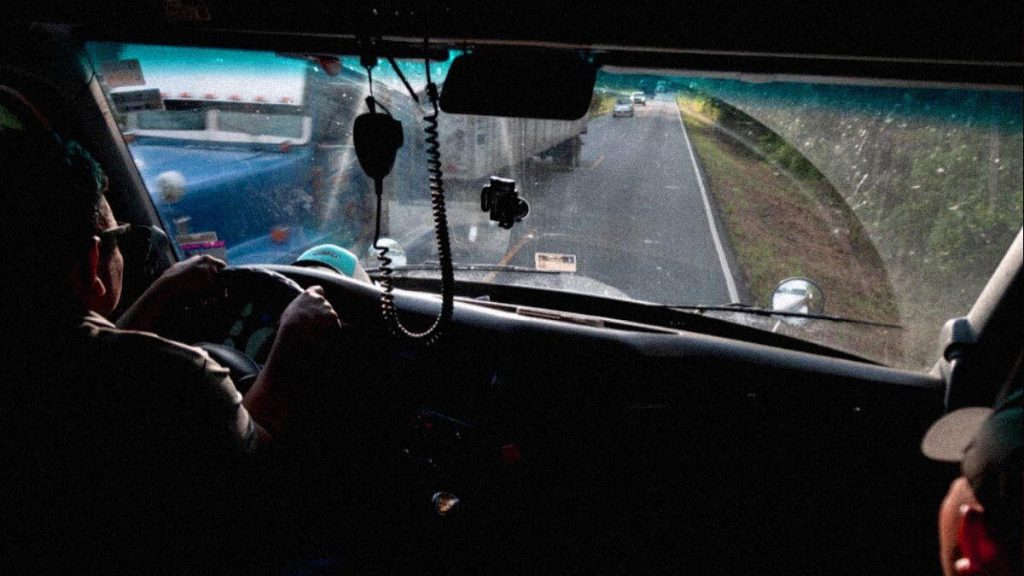
A hot, humid breeze from the nearby jungle stirred the stagnant air in the cab as he opened the door and climbed outside to join three more guards protecting two other trucks in the line.
The truckers I spoke with had similar stories about this border. Sometimes they only steal the truck’s outer accessories, such as hubcaps, or siphon gasoline. Sometimes they smash the truck’s windows to gain access to the cab, hold a pistol to the driver’s head or a machete to his throat, take his money, phone, and other valuables, and then leave him tied up in the back of the truck. Thieves even steal the barrier arms blocking the entrances to truck parking areas designed to prevent such robberies.
But the border crossing at Peñas Blancas is only a small part of the growing insecurity within Costa Rica’s commercial transportation system. Irvin’s security detail was not only there to facilitate a safe border crossing into Nicaragua. They were there to guard against the greater threat of cargo theft, a thriving illicit business run by criminal groups specializing in highway robbery on Costa Rican roadways. The groups were just the start of a vast, illicit resale distribution chain stretching into informal markets around the country.
Fact Box
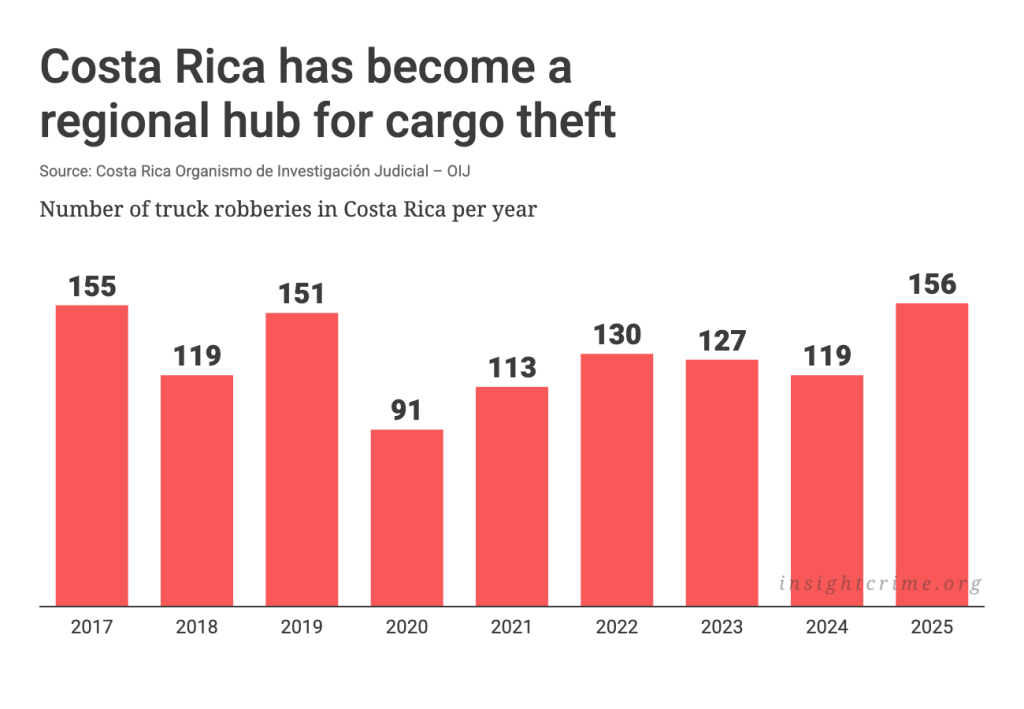
Gangs robbed at least 156 truckloads in 2025, making Costa Rica Central America’s leader in cargo theft
Private security increases cost per container by up to 25%
Gangs target trucks with high-value loads of between $100,000 and $500,000. Popular products include clothing, electronics, kitchen appliances, alcohol, and tires.
Panama–Guatemala runs that once took three or four days can now take up to six as drivers avoid night travel
Stolen goods are fenced in small markets, bodegas, and storefronts, where they sell for as little as half the normal retail price.
Violent gangs and porous control behind Costa Rica cargo theft boom
I flew to Panama City in early February 2026 after hearing criminal gangs were targeting trucks carrying goods from Panama’s Colon Free Trade Zone (Zona Libre de Colon – CFZ), Latin America’s largest tax-free shopping and trade area. Gangs have targeted trucks throughout Central America for years, especially in the northern countries like Guatemala, Honduras, and El Salvador, but in recent years Costa Rica has become an epicenter of cargo theft in the region. In 2025, gangs robbed at least 156 truckloads of merchandise—about three trucks per week. Through July 2026, there were 71 robberies, putting it on a pace similar to 2025.
The Judicial Investigation Department (Organismo de Investigación Judicial – OIJ), Costa Rica’s version of the FBI, has been gathering data on cargo theft since 2016, when gangs robbed at least 121 trucks. Criminal groups target trucks that contain the most value, usually carrying between $100,000 and $500,000 worth of cargo, or those that contain popular resale items such as clothing, electronics, kitchen appliances, alcohol, or tires.
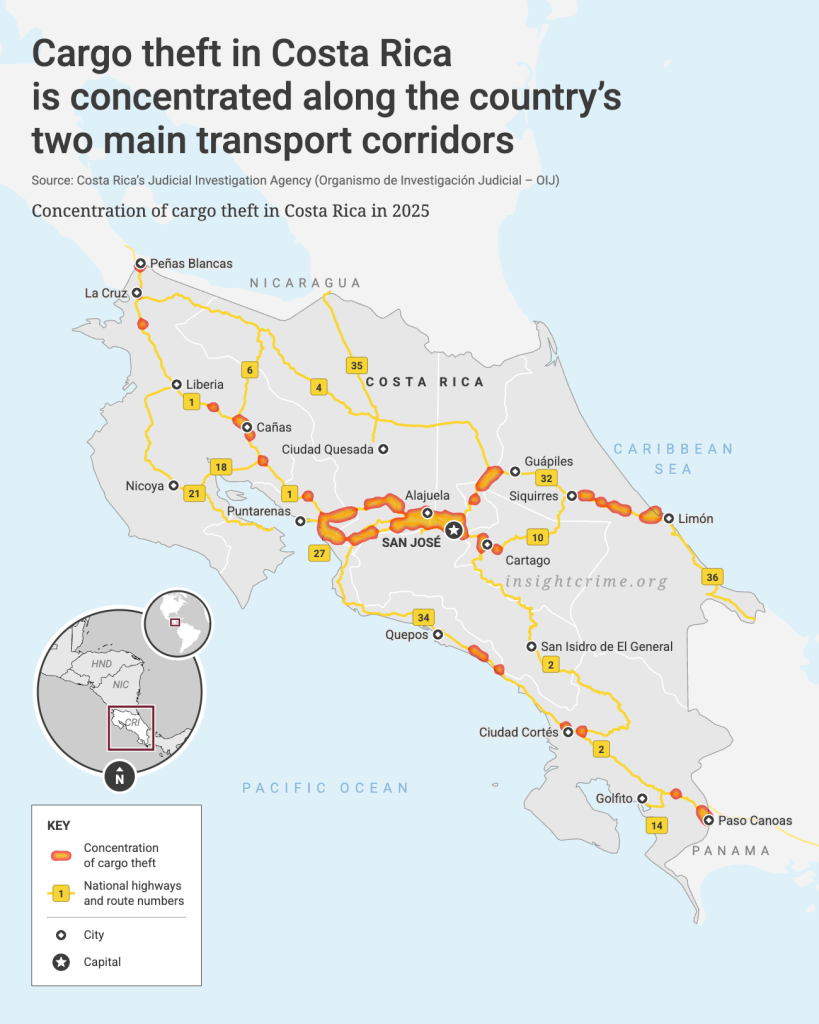
Over the last decade gangs have robbed over 1,300 trucks along two primary transport corridors cutting through Costa Rica. I organized a ride-along on one of those corridors: a 520-kilometer mix of highways stretching the length of the country from Paso Canoas to Peñas Blancas. A freight forwarding company in the CFZ had connected me to the owner of a trucking company outside of David, Panama, who had a truck go missing in December 2025. He introduced me to Irvin, one of his drivers, who graciously agreed to give me a ride through the countryside.
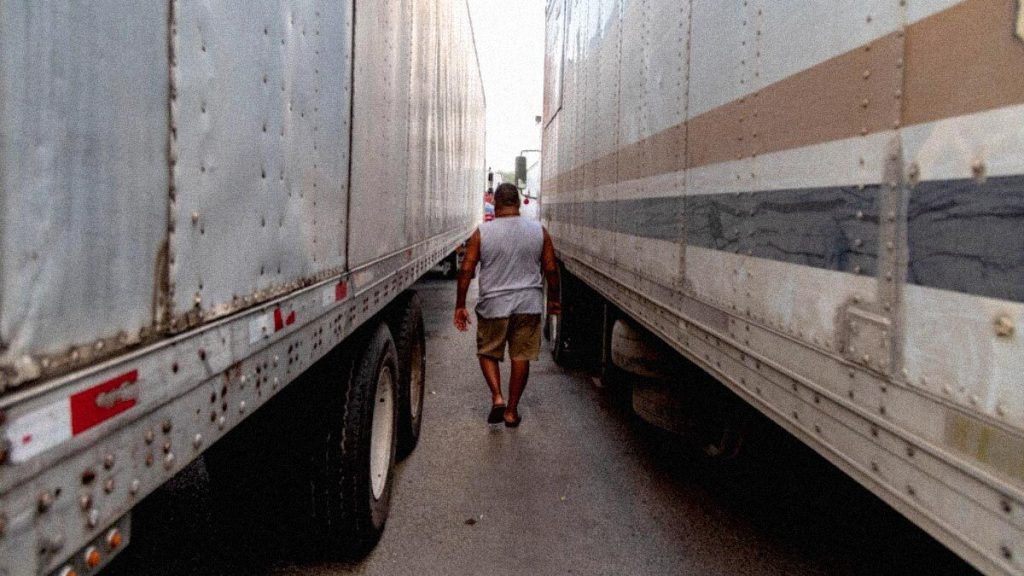
I met Irvin in his white and red truck near the customs checkpoint outside of Paso Canoas. I opened the door to be greeted by a broad-shouldered man wearing a gray polo shirt and a pair of sunglasses resting on top of his short, black hair. “Once security arrives, we’ll leave,” he said. That was supposed to be at 10 a.m. so we could avoid driving during the night when most of the robberies occur, but due to a paperwork infraction, it was after 2 p.m. by the time we hit the road.
Crossing the border left our truck exposed. Cargo theft gangs have lookouts on the borders to tip off robbery teams with information about the truck and its contents. They also obtain information from customs systems. Gangs use Costa Rica’s cargo tracking system, the Information Technology for Customs Control (Tecnología de Información para Control Aduanero -TICA) to target trucks with specific goods and values. And they can identify targets by accessing an online system called the Single Central American Declaration (Declaración Única Centroamericana – DUCA). Once the information is entered, customs officials in every country through which that truck passes have access to the truck’s contents, the value of the load, the license plate, the registration number, and the driver’s name and passport credentials. The system is accessible to freight companies as well as customs officials, and while the information should be protected, it can be leaked to bad actors.
“These gangs often have access to customs information. So, they already know which truck is carrying what. The system itself is vulnerable. Anyone who knows how to use the system can look up a truck’s license plate and see its cargo,” said Marjorie Lizano, the president of the Costa Rican Chamber of United Transporters (Cámara Costarricense de Transportistas Unitarios – CCTU).
Lizano said there have been plans to transition to a new system, but it hasn’t been implemented yet.
“For now, the current system remains quite porous,” she added.
The border itself is also porous. The only other checkpoint along the Inter-American Highway is 35 kilometers after Paso Canoas. It is often not manned during the night, and if it is raining, officers sometimes suspend operations altogether.
The gangs know this. In 2025, a group commandeered a Panamanian truck from a rest area in Paso Canoas while the driver was sleeping. The thieves drove the truck straight past the Costa Rican customs checkpoint, which is located off the side of the highway, with no physical barrier preventing trucks from entering the country from Panama. The empty trailer was eventually recovered in Alajuela province, some 350kilometers from where it was stolen.
From hijacking to fencing: the Costa Rica cargo theft chain
From the Panama crossing, Irvin and I headed northwest along Highway 2. I sat on the bottom bunk of the sleeper cab. The 500-horsepower engine rumbled steadily under the high-pitched whirring sound blowing from the portable fan Irvin had strapped to the back of his seat. The jungle’s deep green foliage shook and swayed as we rumbled past. The warm air was thick, but a cool drizzle of rain kept the cab bearable.
Our progress was tracked by the trucking company. Transporters have tried to mitigate the risk of robbery by installing GPS trackers on their trucks and trailers and by traveling in convoys during the day. But the gangs use jammers to block the signal and have split convoys by squeezing their vehicles in between the trucks or surrounding them with multiple vehicles. After the gangs stop them, they typically hold the driver at gunpoint and steal the rig.
“There are gangs that travel in two to three cars,” explained Andrés Muñoz, the treasurer of Panama’s National Chamber of Freight Transport (Cámara Nacional de Transporte de Carga de Panamá – CANATRACA). “They box in the truck, restrain the driver, gag him, put him in the sleeper cab, and keep him there for a while. Then they move him to one of those three cars and drive him away and dump him while they take the trailer.”
“They are professionals, not just amateurs who randomly show up, because the guy who takes the truck can drive just as well as, or even better than, the original driver,” Muñoz added.
The trailers, if they are not recovered, can cost transporters up to $14,000. The merchandise generally disappears entirely, swallowed by a parallel, informal economy where the goods are resold.
According to Yeric Vega Blanco, an officer with OIJ who is investigating the robberies, brokers sell the stolen goods to loosely controlled retail outlets, where they are then fenced in small markets, bodegas, and storefronts.
“The main indicator is how low the price is,” Vega added. “Sometimes it is less than half price.”
Tires that normally cost 50,000 colones (about $110 might be sold for 25,000; or 60-inch TVs sell for 100,000 colones when they are normally 350,000 to 400,000. In 2025, Costa Rica passed law 10736, increasing prison penalties for receiving high-value stolen merchandise. But the illicit resale market persists.
Security needs drive rising freight costs
Our 53-foot trailer carried agricultural goods that were commonly sold in Costa Rica, which is why we needed an armed security detail to join us, Irvin told me, gesturing and smirking at Josué, our security guard for the first leg of the journey.
The increased security comes with a price. When a freight forwarding company hires a private security company, the cost to transport a container through Costa Rica can increase up to 25%, from $2,000 to $2,500 per trailer load.
For transporters unable to spend the extra cash for security and unwilling to risk driving through the night, they lose valuable time. Routes from Panama to Guatemala that used to take three or four days now can take up to six when the drivers refuse to drive during the night. When a trailer is robbed, some freight forwarding companies pay out again to hire private investigators to track down the missing merchandise.
Around 5 p.m., we stopped in front of a small single-lane bridge spanning the Coronado River. Cars crossed from the other side, and Irvin squirmed in his seat.
“I hate stopping at bridges like this,” Irvin said under his breath, peering at his rearview mirrors. “If someone is trailing you, they can climb into your truck while you wait to let cars pass. I’m constantly checking my mirrors to see if the same car has been following me.”
Truck robbery has become so normal in Costa Rica that it haunts life along its highway corridors. While our cab talk was often filled with jokes and laughter, the conversation was also punctuated with disturbing stories of shootouts and drivers being robbed, beaten, and discarded on the roadside.
Josué told us about the two times he has faced off with hijackers.
“I fired warning shots so they knew there was armed security, and they backed off,” he said. “But some of them carry assault rifles, and when you only have a 9mm pistol, at that point there is nothing you can do.”
For those without protection, it’s far worse. Late one night at a David maintenance yard filled with semi-trucks in various stages of repair, I met Ovidio Martínez, who had just delivered a cargo shipment from Colón. He described to me how a gang had assaulted him and hijacked his rig in 2012.
Martínez had been delivering a $560,000 load of Puma and Nike sneakers to a client in San José, the capital of Costa Rica, when a green Nissan Sentra blocked a roadway intersection, causing him to slow the speed of his truck to a near stop. A man walking on the side of the road jumped onto the truck, opened the driver door, and pointed a pistol in his face. Another man hopped out of the Sentra, opened the truck’s passenger door, and got in. They forced Martínez into the sleeper cab, tied him up with his shoelaces, and gagged him. Then they drove off.
“I couldn’t see anything because they had me in the sleeper compartment, face down. At one point, the weight of my own body made me feel like I was suffocating.” Martínez told me. “The one sitting with me kept telling the driver he wanted to kill me, but the other one told him to leave me alone because I wasn’t resisting, and there was no need.”
Martínez was lucky. After the criminals detached the trailer and tried to drive away, the driver collided with a motorcyclist on the road. In the scramble that followed, they abandoned the truck with him inside. Soon after, someone found him tied up in the cab and called the police. They later located the still fully-loaded trailer in a parking lot in a town 40 kilometers from where the gang assaulted Martínez.
Frustrated police, defenseless drivers
We drove into El Roble soon after 9 p.m. El Roble is near the Pacific Port of Caldera, a connection point for two major cargo transport corridors in Costa Rica: our northwesterly route to Nicaragua and the roughly 250-kilometer east-west route connecting Caldera to Limón, a major Caribbean port city and drug trafficking hub. It was in El Roble that hijackers murdered Panamanian driver Krevith Holbart Shaw Beitia in 2024, shooting him in the head during a robbery.
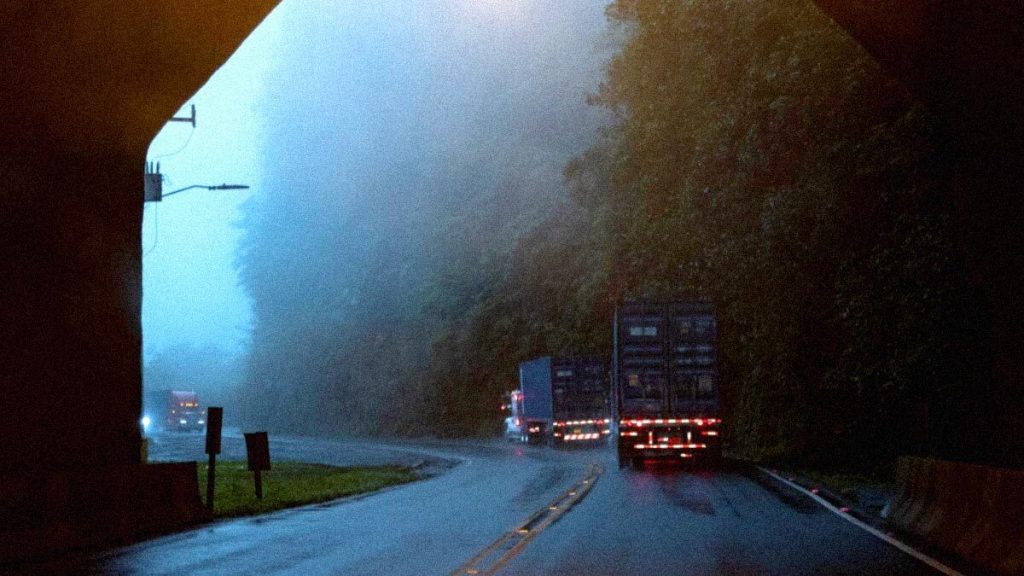
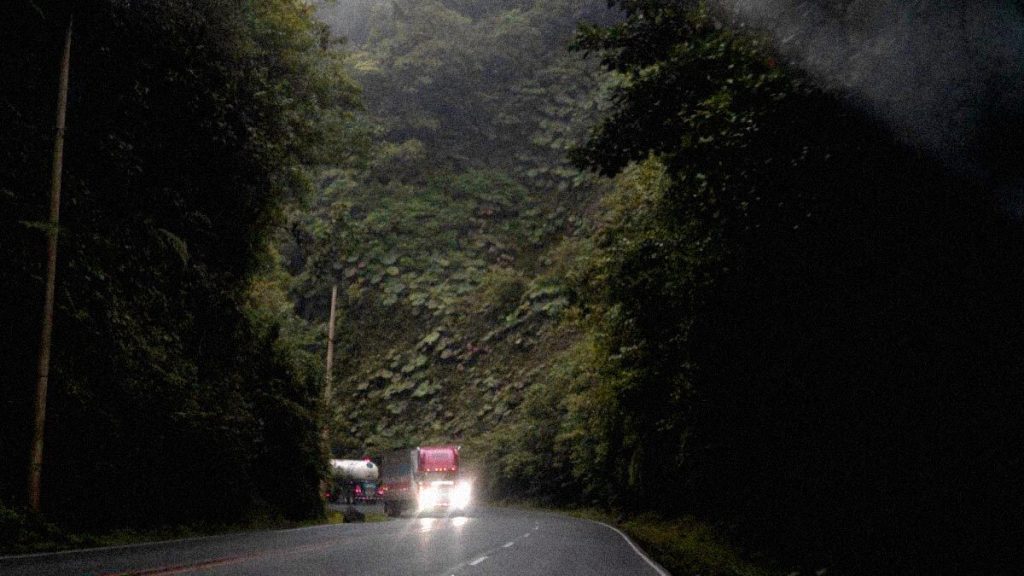
Local Costa Rican truckers transporting goods between the two port areas are frequently targeted on the highway that runs through the rugged mountains of Braulio Carrillo National Park, where the peaks rise to nearly 3,000 meters and the cell phone service is sparse. The cloudy jungles between San José and Limón provide excellent cover to discard trailers and truck drivers. When a truck fails to arrive at its intended destination, this is one of the first areas that friends, colleagues, and police search.
The OIJ’s Vega has worked these robbery cases for years. He described the criminal groups behind them as agile and said that some were connected to more powerful networks involved in the drug trade. Vega was frustrated. The OIJ, he said, was spread too thin to deal with this issue, especially as officials were already scrambling to deal with the recent spike in organized crime violence.
His frustrations are shared by the truckers, who feel defenseless. Transport companies have met with Costa Rican officials who have promised to put more resources towards quelling the problem, but organized cargo theft persists.
“The government tells us, ‘Let’s see what happens, let’s see what solutions we can find,’” said Martínez, the trucker who was robbed in 2012. “But meanwhile, we continue living with the risk of being killed.”
Faith in the transport sector is also waning. Some believe the trucking companies themselves might be complicit.
“It stains your reputation badly,” said Martínez. “People start wondering whether the transport company might have been involved or whether it truly was just a robbery. And mistrust begins to grow between the commercial sector and the transport sector.”
It is having an impact. Some clients have begun to transport their products via ocean-going vessels from the Colon Free Trade Zone directly to ports in Honduras and Guatemala to avoid Costa Rican highways, despite the slower travel times.
From El Roble, Irvin and I spent the next few hours snaking our way towards the border, and soon we were sitting in the queue in Peñas Blancas. After our bodyguard began his rounds, we were able to grab a few hours of sleep in the cab’s bunk beds. Not long after first light, the line started moving again. Before we crossed, I said goodbye to Irvin. He later messaged me, letting me know he had passed safely into Nicaragua, but still had two more days of driving until he could deliver his cargo in Honduras. Then, he would finally head home.
InSight Crime works directly with companies and industry bodies to help them understand and manage organized crime risks, including cargo theft and many other threats across Latin America and the Caribbean. Drawing on the same field research and investigative networks behind this story, we offer tailored diagnostics, briefings, and route- or country-specific analysis and monitoring services. If cargo theft or other criminal threats affect your operations, we’d be glad to talk about how we could support you. Contact us at [email protected]


Don't Miss:
-
The Navy Kills Jesús González Peñuelas, “El Chuy,” in Sinaloa
-
Ariadna Montiel’s Meeting with El Guano
-
Former Copalillo Official Accused of Extortion and Linked to Los Tlacos Is Arrested
-
From Criminal Federation to Gang Wars: Rasquiña’s Legacy
-
Gangs, Fintechs, and the Amazon: The Crime Agenda Awaiting Lula’s Fourth Term