
 ICIJ journalist Micah Reddy freed after 4 days in secretive Djibouti custody
  IMDB’s China Connection
  Trump administration gave firm with ties to ballroom donor the green light to do business with a sanctioned Russian bank
 The first case of the screwworm parasite in livestock has been detected in the United States, highlighting the ongoing consequences of contraband cattle smuggling from Central America into Mexico.
The Department of Agriculture’s (USDA) Animal and Plant Health Inspection Service (APHIS) confirmed the case on June 3. Health officials said the New World screwworm (NWS) parasite was detected in the umbilical area of a three-week-old calf in Zavala County, located in southern Texas between San Antonio and the US-Mexico border city of Eagle Pass.
SEE ALSO: Cash Cows – The Inner Workings of Cattle Trafficking from Central America to Mexico
Following the announcement, US Agriculture Secretary Brooke Rollins said the USDA and local animal health officials in Texas were taking “immediate action to contain and eradicate NWS from the area.” Among other things, they established a 20-kilometer quarantine area surrounding the cattle ranch and released millions of sterile NWS flies.
The so-called “sterile insect technique” of releasing sterile male insects into the wild to mate with female insects is the only way to eradicate the NWS, according to the USDA, and was utilized to eliminate the parasite in 1966 and again in 2017 during a small outbreak in Florida. This prevents its spread because adult females mate only one time.
From Contraband Cattle to Animal Health Crisis
Every year, tens of thousands of heads of cattle are illegally raised in protected nature reserves in Nicaragua, Honduras, and Guatemala. A large share of those animals are then smuggled into Mexico through irregular border crossings to meet the country’s domestic demand, according to InSight Crime’s field investigations. Some of the processed beef is also mixed into exports to international markets, including the United States.
This dynamic makes it increasingly difficult to identify and stop the spread of parasites like the New World screwworm. After first being detected on a ranch near the Mexico-Guatemala border at the end of 2024, the virus spread north, eventually reaching the US-Mexico border and now the United States.
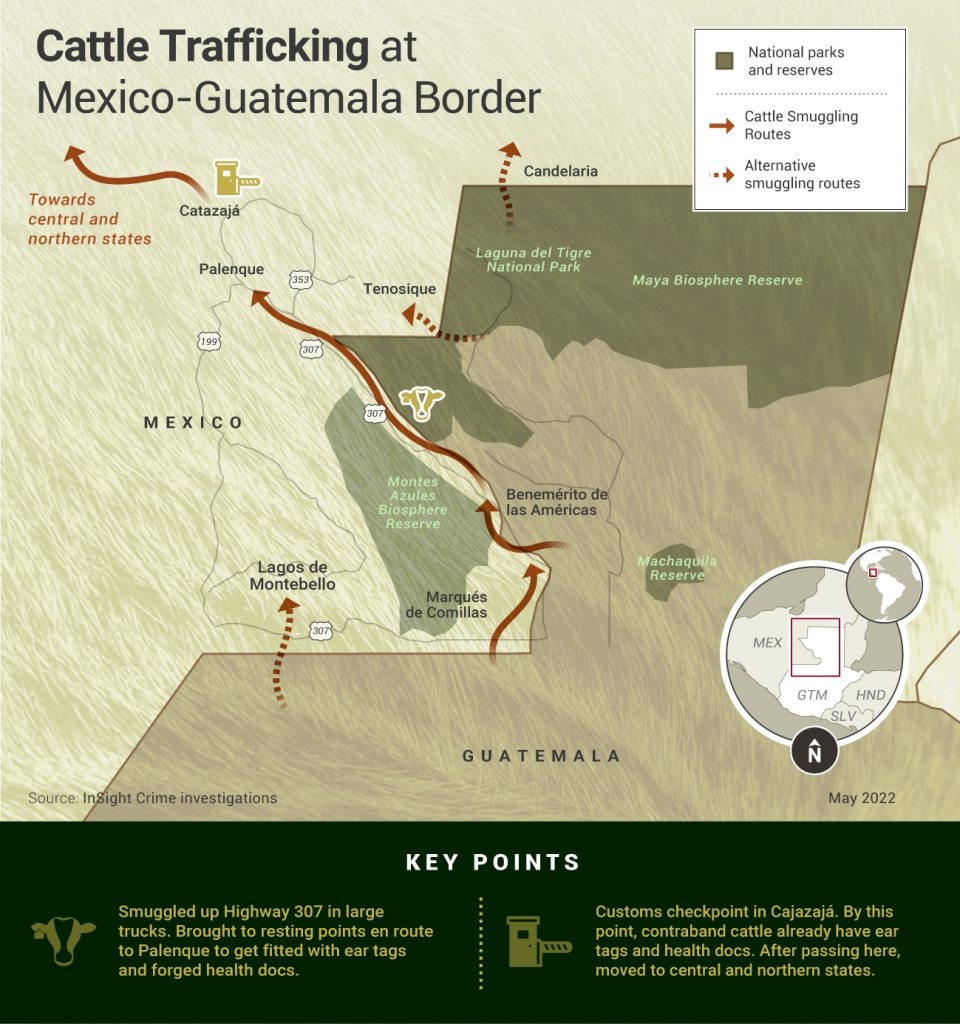
On paper, cattle are supposed to come from certified ranches, have proper vaccinations and health certificates, and wear ear tags that track their movement from birth until slaughter. In practice, the contraband cattle trade in Mexico is facilitated by a lack of traceability, falsified health documents, and a thriving trade in black market ear tags. This also gives meat companies plausible deniability should issues arise with cattle they’ve purchased or meat they’ve exported.
SEE ALSO: How Black Market Ear Tags Help Flow of Contraband Cattle
While official health documentation can easily be falsified by veterinarians who are paid off, ear tags contain specific codes that register the animals in a government database. As a result, smugglers look to corrupt members of local cattle ranching unions who sell the ear tags they receive legally. It is a lucrative system. Ear tags sold on the black market can go for as much as 10 times the legal price of around $2.50.
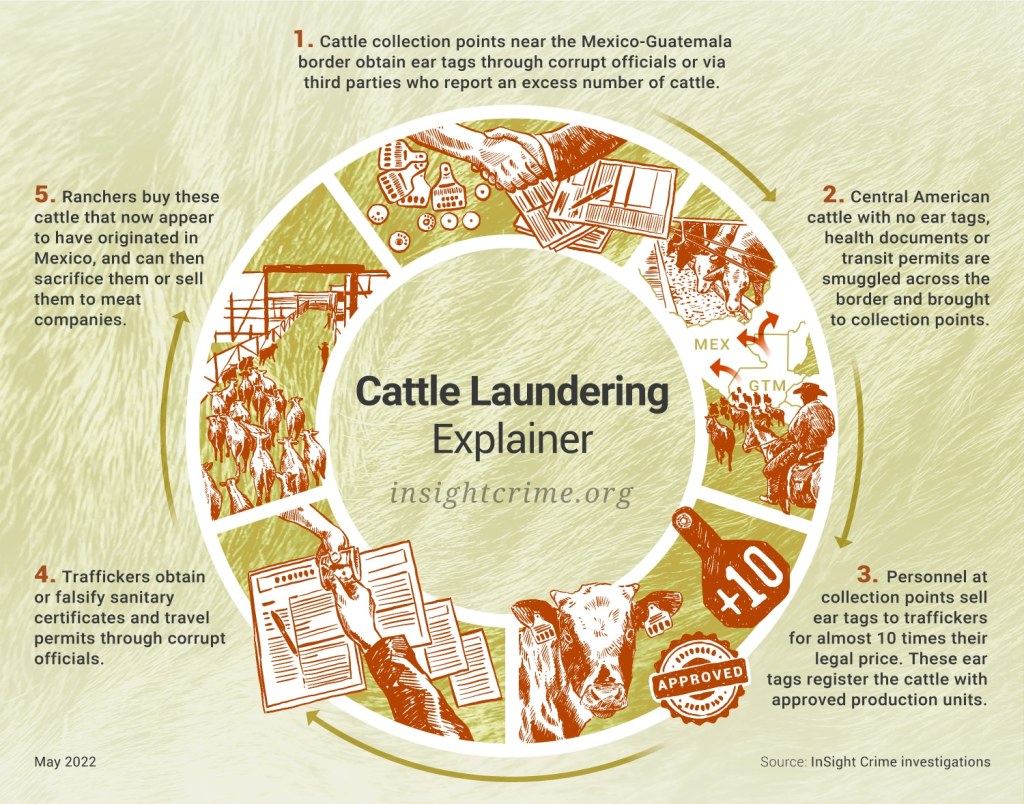
After obtaining official documents and ear tags illegally, the cattle are officially laundered into the Mexican system, and any evidence of their true origins in Central America is erased. Unsuspecting ranchers then purchase the cattle to sell to meat companies that feed Mexico’s domestic market or export to international markets like the United States.


Don't Miss:
-
CUHK economist apologises over talk that examined women ‘marrying for money’
-
Trump defends Iran war, touts ‘America is back’ agenda in UN speech
-
Learning from Ukraine war, Chinese military doctors target injuries from drones
-
China names new Tibet party chief as Communist Party reshuffles regional leadership
-
Hong Kong workforce to shrink by 20,000 yearly as key sectors face shortages