
 Prabowo Faces Growing Discontent as Jokowi Revives His Political Ambitions
  Five years after the Pandora Papers, transparency laws lose their teeth
  How Hungary’s richest man funneled millions into Orbán’s propaganda machine
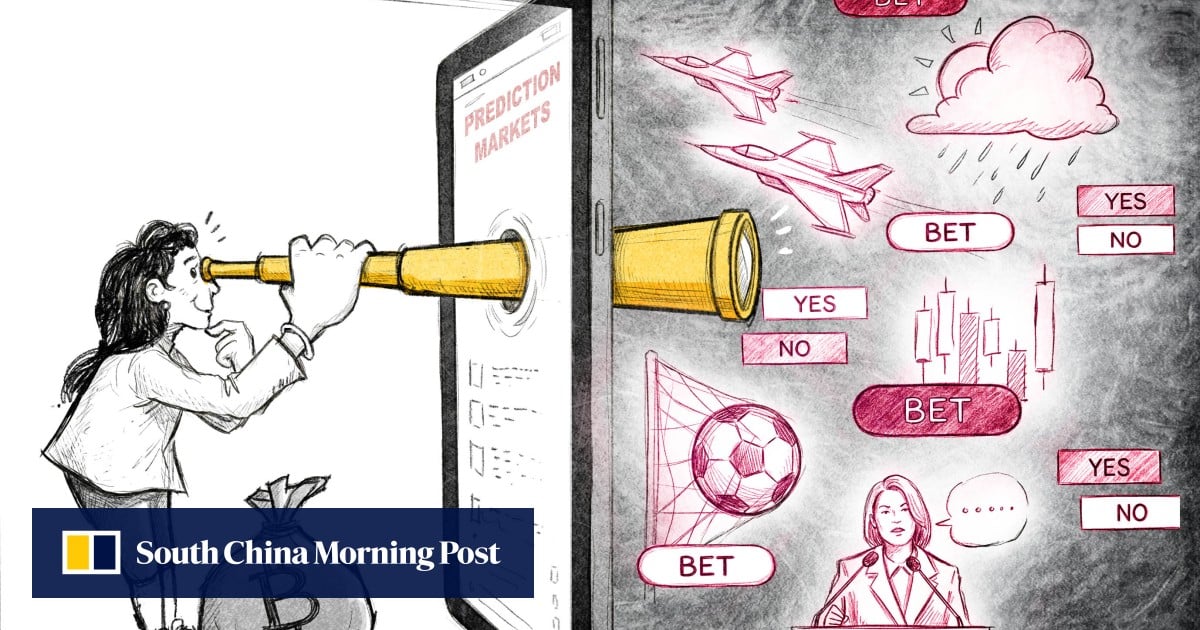
When 25-year-old Jean Pierre* started betting on Polymarket last year, his reasoning was simple: “I was just looking to see if I could make some money easily,” he told the South China Morning Post.
The French freelance video creator, who has lived in Hong Kong for five years, said he was drawn to the prediction market platform because of the various betting options it provided.
Advertisement
Rather than betting on sports or stocks – which he had no background in – he could instead wager money on political outcomes, such as whether Sanae Takaichi would become Japan’s prime minister or whether Ukrainian President Volodymyr Zelensky would be seen wearing a suit before a certain date.
Eventually, he started putting money into popular cryptocurrency-related wagers, such as whether the value of bitcoin would go up or down over the next five minutes.
Advertisement
He said he had wagered about HK$1,500 (US$190) of his own money over the past year and, at one point, had almost tripled his winnings to as high as HK$4,000. But shortly thereafter, he lost everything.
Asked whether he felt betting on prediction markets amounted to gambling, he said: “I mean, of course, it is gambling. You have no way of knowing what will happen.
Don't Miss:
-
Two Years On, the Sinaloa Cartel War Changes Shape | The InSight Take
-
US wraps up military mission in Iraq, giving Baghdad room to strengthen China ties
-
As China and the EU begin crunch trade talks, optimism is in short supply
-
Data centre opposition is growing in Australia. Is there a middle ground?
-
Helper arrested for allegedly slapping 5-year-old boy after he refuses to eat