
 Two more journalists murdered in Latin America, prompting press freedom concerns
 Raskin Massie and Luttig to Headline Constitutional Law Briefing for New Members of Congress
 Democrats Campaign for Medicare for All, Settle for Medicare for Some
With Medicare for All moving up the popularity charts, the question now becomes – what kind of Medicare for All?
Popular Resistance
Its two lead champions in Congress – Senator Bernie Sanders (I-Vermont) and Pramila Jayapal (D-Washington) – are backing off full Medicare for All and are now pushing Medicare for Some.
No one in Congress is pushing for full Medicare for All – as laid out in HR 676 – the original bill sponsored twenty years ago by Congressman John Conyers (D-Michigan).
Now, it’s all about Medicare for Some.
Congresswoman Jayapal went from something similar to HR 676 – HR 3069 – which she was pushing until just a couple of weeks ago when she introduced – along with Congresswoman Debbie Dingell (D-Michigan) and others – HR 10875 – which she said would lower the Medicare eligibility age to 50 from 65 and make major coverage improvements.
The Democratic aligned public interest groups that support Medicare for All – groups like Progressive Democrats of America, Public Citizen, Physicians for a National Health Program (PNHP), Healthcare Now – they will all fall in line and support the Democrats in Congress – instead of pushing for full Medicare for All legislation like HR 676.
We asked Robert Weissman of Public Citizen why the Democrats are backing off of full single payer and whether Public Citizen supports the move.
“They are not backing off of Medicare for All,” Weissman said. “They are looking at interim steps that take us in the direction of Medicare for All – improving Medicare (dental, hearing, vision, no or lower copays) and expanding Medicare (lowering age).”
“Public Citizen is hard core for Medicare for All and we also support interim measures that take us in the direction of Medicare for All and/or address abuses in the current system – for example, private equity.”
There’s only one public interest group that rejects this step by step approach – and that’s a relatively new group called National Single Payer.
“Congress must do everything possible to alleviate the immiseration suffered by millions in this country as a result of our inequitable health care system,” said Ana Malinow of National Single Payer. “If there are quick fixes, I’m all for them. But don’t call them ‘steps in the direction of Medicare for All’ if they move us away from improved Medicare for All. If the ‘fix’ covers more people but enriches the private insurance companies – such as the Affordable Care Act – we are arming our opposition. If the ‘fix’ covers more people but blows up the Medicare budget – such as lowering the age of Medicare without reaping any of the savings required to cover more people – we embolden our opposition. If the ‘fix’ confuses voters who just gave Congress the largest mandate in recent history to achieve Medicare for All, leading us to believe that what we are getting is ‘something’ when we aren’t, then we deliver a blow to the movement. Congress was given a mandate to achieve National Improved Medicare for All. H.R. 3069 would do that. Why not use this legislation to get us all the way to Medicare for All?”
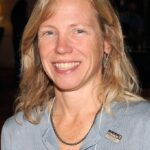
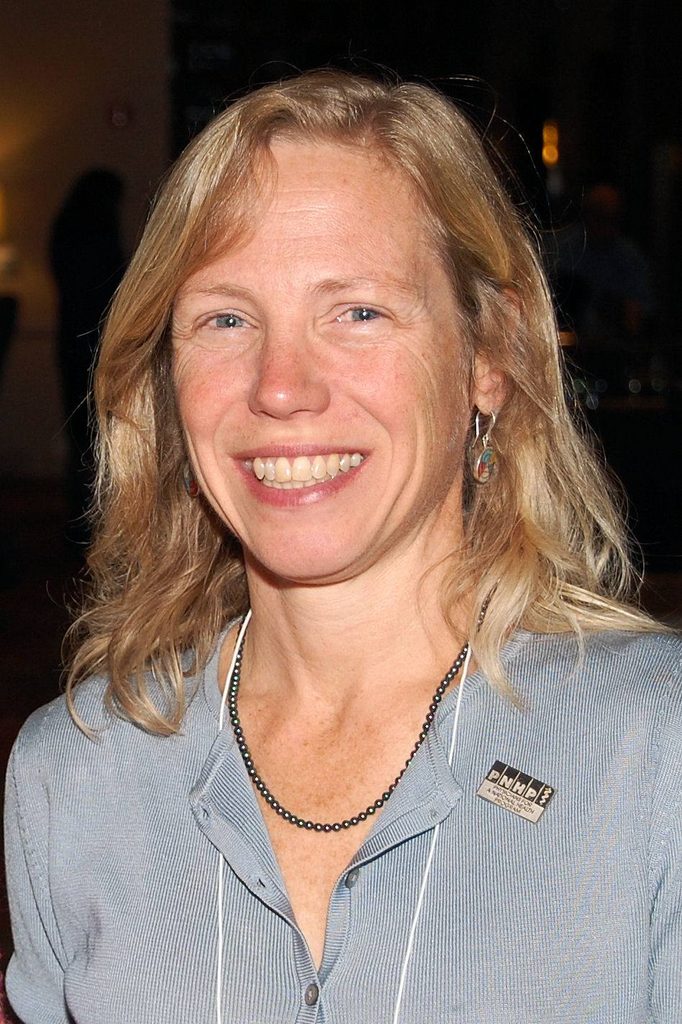
Margaret Flowers is a pediatrician aligned with National Single Payer. She is the director of Popular Resistance.
We are hearing now from the intelligentsia that Medicare for All is going to be front and center on the political landscape over the next two years, and probably a major issue in the presidential election in 2028.
Do you agree with that?
“Well, it is definitely making a comeback,” Flowers told Corporate Crime Reporter in an interview last week. “We’re hearing more candidates in the 2026 election talking about Medicare for All. The healthcare crisis in the country is continuing to worsen. There was a little bit of a reprieve with the passage of the Affordable Care Act 16 years ago, but it really didn’t solve the problem in any way at all.”
“And as we expected, it’s deteriorating, and people are still struggling to afford health insurance. Health professionals are struggling to be able to provide the care their patients need. So, yes I anticipate that it will be an issue going into the next presidential election.”
In addition to Physicians for a National Health Program, there’s National Nurses United. There’s also a group called Healthcare Now. What is your take on those groups?
“I know Healthcare Now. I used to be on the board of Healthcare Now. And we all worked closely together, along with National Nurses United, back in 2008 to 2010 when health reform was a big national issue. Going into the first term of President Obama, we all were pushing for National Improved Medicare for All. But one of the big problems of that movement was that so many of the groups were friendly or allied with the Democratic Party. And many of those groups didn’t want to compromise their relationship with the Democratic Party. Healthcare Now was one of those groups. And Progressive Democrats for America was one of those groups. And PDA is one of the groups behind the push right now to undermine the movement for National Improved Medicare for All.”
Are they opposed to Medicare for All?
“I wouldn’t say they’re opposed to it, but unfortunately, they’re tying their agenda to the Democratic Party. In 2009, we saw a very sophisticated effort. It started actually in the summer of 2008, when the Democratic Party-aligned groups launched something called Healthcare for America Now, which was very similar to the grassroots single-payer group Healthcare Now. This is a typical tactic that Democrats use to try to cause confusion, and they convinced people that we couldn’t get Medicare for all, national and permanent Medicare for All. They said it was too big of an ask and they said they would push for some nebulous thing called a public option.”
“That was the Democratic Party plan. Then they worked with these grassroots organizations to undermine single payer and put the public option in place, knowing full well that the Obama administration never intended to put that into the final legislation.”
“We know that specifically because the House version, which passed first, had a very very weak public option in it, but the Senate bill did not. And when people were pushing the Senate to put a public option in, the White House actually sent people down to lobby the Democrats to not do that.”
“And so they did not put in a public option in the Senate bill, which meant when they went to conference to reconcile the bills, they were able to pass a bill without a public option. So it was a ruse from the very, very beginning to convince people that they were asking for too much and they should take what the Democrats would give them. And the ultimate legislation – the ACA – was a huge bailout of the private insurance industry and a big boon to the pharmaceutical companies and other private providers in our healthcare non-system.”
You mentioned two groups – Healthcare Now, which is a Democratic Party aligned grassroots group and Healthcare for American Now, which appears to be more of a corporate friendly organization.
“Yes, Healthcare Now was a very small coalition of grassroots organizations that had some backing by National Nurses United and PNHP and groups like that.”
I want to focus on those Democratic Party aligned groups – groups like Healthcare Now, PNHP, Public Citizen, and Progressive Democrats for America. They are very tight with the Democratic Party.
If the Democratic Party is now saying – we’re not going to do full Medicare for all – they’re going to go along with it, and they did go along with it,
“And they are providing the political cover. That’s what is happening right now.”
“Unfortunately, National Nurses United had a lot of control over healthcare. Now that’s one of the reasons that I left Healthcare Now. Medicare for All is a huge organizing tool for National Nurses United. It’s a way for them to grow their union – and that’s what they’re about: growing their union.”
“Those of us who understand that the imperative of a National Improved Medicare for All, that we cannot compromise on that, we’re not going to solve our healthcare crisis if we compromise – we became kind of persona non grata because we were actually pushing for the real deal.”
“You see it in the media. You see Dean Baker the economist just put out a piece saying – we need Medicare for All, and these are all the reasons why we need it. And then in the last paragraph he says – we can’t do it all in one fell swoop. And that’s what the Democrats are doing. They want to lower the age of eligibility for Medicare and then cover a certain number of children.”
“And that was part of the Sanders legislation in 2017. Sanders ran for president in 2016 on Medicare for All, and then as soon as the election was over, he told the Medicare for All movement, “I’m not going to introduce a bill.’”
“So we organized. At that point, it was Healthcare Over Profit for Everyone (HOPE). We organized actions. We did calls into his office, protests in his office, and we said, ‘No, you ran on this. You need to be pushing for this in Congress now.’”
“He created a bill that was terrible. It was very complex. It was like health policy soup. He let every Senator who wanted to add something into it, so it didn’t make sense. And one of the pieces of that was covering children and lowering the age of Medicare. And so that’s what they’re doing now.”
“And of course, you and I understand that that will fail. It won’t work. If you want to cover everybody, we need to have the funds to do that, and you do that by putting everybody into the same system, pooling the money, getting the private insurers out, getting the profits out of it, and then you have sufficient money to cover everybody in the U.S. with comprehensive care.”
“If you leave those private insurers in, you’re leaving one of the largest costs of our healthcare system – which is the administrative cost, and that money goes to paying paper pushers who are blocking care, not going to actually cover the cost of care.”
On the one hand, you have the Democratic Party aligned groups. I know you’re still an advisor to PNHP, but unfortunately, PNHP is in this group of Democratic Party-aligned groups. So it’s PNHP, Public Citizen, Healthcare Now, National Nurses United. Who else?
“Progressive Democrats of America.”
They are not going to upset the Democratic Party apple cart. There’s only one group pushing for single payer – and that’s this new group – National Single Payer?
“I believe that’s accurate.”
And then you have the Democratic Party gatekeepers like Ezra Klein at the New York Times who just recently did a Medicare for All podcast. He interviewed Sarah Longwell at the Bulwark. She has held hundreds of focus groups with Trump voters and found this wave of support for Medicare for All. But Klein then said this –
“The left of the Democratic Party has moved off the idea that Medicare for All means abolishing all private health insurance, so they have moved off the more dangerous political position.”
“That doesn’t surprise me,” Flowers said.
And Longwell says she wouldn’t be surprised if you’re going to see some Republicans in the presidential campaign talk about universal health care. You and I know that universal health care or Medicare for Some are code phrases for – anything but Medicare for All.
“If you’re not being specific about what you want, then you’re undermining it. It’s very easy to be vague and say, ‘Oh, I think everybody should have health care.’ But that might mean – I think we should give more billions of dollars to health insurance companies to get them to try to cover more people. That’s not a solution that’s going to solve our healthcare crisis. The three lessons I took out of the time that I spent in Congress in 2009, 2010 was we have to be independent of political parties. We can’t tie our agenda to a political party. They’re just trying to get more money and get reelected. We have to be clear about what we’re asking for.”
“We have to say – we want National Improved Medicare for All. Everybody in, nobody out. Right from day one. And we have to be uncompromising because that’s the smallest incremental step we can take to fix our healthcare system.”
“There’s a lot more to do once we get everybody into the system. We have been losing hospitals. We have been losing primary care physicians. There is a lot of work to do to build our healthcare system back up again, so it can serve the public. But National Improved Medicare for All is the smallest incremental step that we can take.”
“Everybody’s going to be inundated by all these so-called experts telling them that that’s too much, and you’re going to have to settle for something less, and that’s exactly the public option all over again”.
On November 17, there’s going to be a strategy meeting by Progressive Democrats for America. What’s your concern with PDA type groups?
“They are supporting Sanders and Jayapal in taking this false solution. It won’t solve the crisis, but they’re going to give the Democrats the political cover to do that. They’re trying to organize grassroots support for that. So they’ve compromised before we’ve even gotten out of the gate.”
“All the groups are now saying – we can’t get this done in one fell swoop, so let’s do these baby steps. And it’s scary to see so many groups lining up behind that. Fifteen years ago, they were pushing for full Medicare for All.”
“Japayal’s new bill HR 10875 places the financial burden for Medicare on those aged 50 to 64 and it relieves employers of covering the cost of covering these 62 million new Medicare enrollees. The cost will be massive. The private insurance industry will continue to control healthcare, while all the savings that comes with Medicare for All are missing.”
[For the complete q/a format Interview with Margaret Flowers, see 40 Corporate Crime Reporter 45(12), November 16, 2026, print edition only.]
Don't Miss:
-
Two more journalists murdered in Latin America, prompting press freedom concerns
-
Raskin Massie and Luttig to Headline Constitutional Law Briefing for New Members of Congress
-
Sarawak and the Unfinished Promise of Development
-
Courtney Hostetler on the Big Tech Accountability Act
-
Vietnam’s Effective Diplomacy Should be matched by Institutional Reform