
 Courtney Hostetler on the Big Tech Accountability Act
 Vietnam’s Effective Diplomacy Should be matched by Institutional Reform
 ‘He used Pornhub as the gun’
Last month, Congressman Jim McGovern (D-Massachusetts) introduced the Big Tech Accountability Act to protect Americans’ online privacy and personal autonomy and hold powerful technology corporations accountable for the harms caused by their platforms.
Free Speech for People
“Big Tech companies have an enormous amount of power over what we see, what we share, and what happens to our personal information – and for too long, the rules governing that power simply haven’t kept pace,” McGovern said. “These platforms should not get a free pass to exploit people’s private data or design systems that knowingly push dangerous content because outrage and division are good for business. This bill is an effort to put some reasonable guardrails in place, give people more control over their own information, and make sure enormously powerful corporations can be held accountable for the choices they make.”
McGovern said that a handful of Big Tech corporations have enormous influence over how Americans communicate, consume information, and participate in public life. At the same time, their business models rely heavily on collecting and monetizing personal data and using algorithms designed to keep users engaged – often by promoting increasingly inflammatory or sensational content.
The Big Tech Accountability Act provides a framework for addressing both concerns: protecting Americans from the commercial exploitation of their personal information while establishing greater accountability when technology companies actively target and amplify fraudulent disinformation, threats, or criminal violence.
The bill is backed by Free Speech For People, a national nonpartisan nonprofit organization that works to limit the influence of money in politics and protect our democracy.
“By protecting the biggest social media companies from accountability, current federal law allows them to profit with impunity from amplifying threats of violence and disinformation and exploiting personal information,” said Ben Clements, Chairman and Senior Legal Advisor of Free Speech For People.“While this model has made billions for the world’s largest corporations and their owners, it has come at a grave cost to our democracy, to the ability of government to function in the 21st Century, and to the dignity, safety, and privacy of our people. By subjecting the big social media companies to the same accountability that applies to the rest of us, the Big Tech Accountability Act is a long overdue step toward putting people, not corporations and billionaires, first.”
The Big Tech Accountability Act would establish stronger protections for Americans’ personal information and limit the ability of technology companies to exploit that information for profit. It would also create greater accountability when social media companies actively target and amplify fraudulent disinformation, threats, or criminal violence through their algorithms.
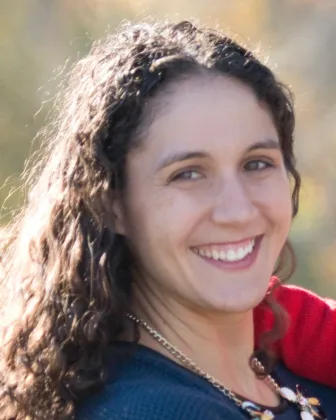
We interviewed Courtney Hostetler, legal director at Free Speech for People on October 26, 2026.
Last month, Congressman McGovern of Massachusetts introduced the Big Tech Accountability Act. What does the law do and what role did Free Speech for People play in that legislation?
“Free Speech for People drafted the model legislation,” Hostetler told Corporate Crime Reporter in an interview last month. “We’re so pleased and proud of Congressman McGovern for introducing this bill. It is one that we have championed for a number of years now, and we’re so pleased to see it in Congress. We’re hoping it can go the distance.”
“The idea is to amend the Communications Decency Act Section 230 (CDA 230), which creates blanket immunity for internet companies. It is something that made sense when it was created in the 1990s.”
“It has since been expanded by the courts beyond what is in the language of the law to create this blanket immunity for corporations and social media platforms to have unfettered control over what people see and immunity for the consequences of their actions.”
“That’s step one of the law. Step two is it creates new federal civil and criminal liability for these internet companies if they amplify disinformation and threats of violence. It also bans targeted advertising on the internet.”
Let’s say I go onto Twitter and I make a violent threat against someone – that’s clearly a crime. Section 230 would give Twitter legal immunity. The idea was – why should Twitter be responsible for the millions of people who are posting those kinds of threats online?
“Let’s go back to pre-Twitter. Because this is a pre-Twitter law. People were putting up websites and they were serving as platforms, places where people could engage with one another and engage with ideas. These were not billionaire platforms. The concept of something like Meta or Twitter was just not something on people’s minds.”
“These were smaller entities, and Congress wanted to create a situation or a system in which the moderators could, in fact, operate to remove illicit and illegal and threatening materials without then becoming liable or responsible under the law for anything that remained.”
“We don’t live in that landscape anymore. It’s not simply that Twitter is allowing tweets to be posted in chronological fashion. Twitter is putting their own algorithms over everything that’s posted and making very profit-maximizing decisions over who sees what. And they are amplifying that. It’s not that one violent tweet that escaped a censor. These sorts of tweets are being amplified by these platforms to reach anybody who might make Twitter money if it reaches them.”
“And so that’s the real damaging issue here. It’s not that maybe they missed a post or two, or they didn’t act quickly enough to remove something. It’s that these companies are making massive amounts of money by amplifying disinformation, by amplifying violence, and those are choices that the company is making.”
“That is something that they are responsible for. And the internet is just simply not the place it was when CDA 230 first came on the scene. If there is a platform out there that simply is going to allow posts to appear chronologically, and their only intervention is going to be removing posts that violate rules about violent posts or things like that, then that’s fine. But again, that’s not what we’re seeing, and that’s not how these corporations became the billionaire platforms that they are today.”
Your organization is called Free Speech for People. One of your senior legal advisors, Ben Clements, wrote an article in the Western New England Law Review titled – The Big Tech Accountability Act: Reforming How the Biggest Corporations Control and Exploit Online Communications.
He points out that under the Constitution, free speech is not unlimited and quotes Supreme Court Justice Court Justice Oliver Wendell Holmes as saying – “The most stringent protection of free speech would not protect a man from falsely shouting fire in a theater and causing a panic.” You can’t libel someone. You can’t commit fraud. There are all kinds of limits on the First Amendment.
What would be an egregious violation of this law that you’ve proposed that would require civil or criminal remedies?
“A big part of social media is replete with examples of how violence is being amplified. We know it’s happening, and we know that the social media companies have a lot of control over who sees what.”
“In terms of specific examples, it’s hard to say. Gonzalez v. Google is a Supreme Court case having to do with companies platforming ISIS recruitment videos. In those kinds of cases, the courts are blocking any corporate liability no matter what kind of violence was being amplified, who it reached, what the purpose of that was. It’s all being washed away under CDA 230 because they’re immune so it doesn’t matter.”
“And that’s very dangerous and it’s particularly dangerous when we live in an era where there’s massive amounts of disinformation about public health, about vaccines. And the fact is that disinformation is big business for these social media companies.”
“And there’s no way for a plaintiff to get into court to discuss it because CDA 30 has been read by the courts to give this massive blanket immunity over anything they do, regardless of the profit-maximizing algorithmic control that these companies have over who sees what.”
What do you make of critics like Glenn Greenwald, who are critical of Democrats in the Congress for going after CDA 230?
“I am also concerned about censorship but CDA 230 is not where the main concern is. The main concern is book bans in our libraries and schools. That sort of censorship is happening everywhere in a lot of hometowns.”
“Again, this is not about censoring social media companies. This is about holding them accountable for the decisions they make, for the disinformation and amplifying violence.”
“If we as individuals go out there and we make specific threats against somebody, we can be held accountable for that. There could be a civil suit against the person. There could be criminal enforcement. And again, we have our ability to defend ourselves in court. One argument we might make may be around free speech. And there’s a whole host of case law out there by courts that have looked carefully into this and determined where the line is between protected speech and speech that can in fact be curtailed by criminal and civil laws.”
“The problem is that CDA 230 gives immunity to these corporations that have massive amounts of power not only over what gets posted, what gets amplified, what makes it into everybody’s thread, regardless of whether or not you’ve gone looking for it. They control the algorithms.”
[For the complete q/a format Interview with Courtney Hostetler, see 40 Corporate Crime Reporter 42(12), November 2, 2026, print edition only.]
Don't Miss:
-
Vietnam’s Effective Diplomacy Should be matched by Institutional Reform
-
‘He used Pornhub as the gun’
-
Bangladesh built the power plants, now it can’t afford to run them
-
London’s Indian art summer ends in the Serpentine’s pitch-black gallery
-
With the new shift in the U.S. Congress, time is running out on bills targeting drug patents