
 Trump administration gave firm with ties to ballroom donor the green light to do business with a sanctioned Russian bank
  Claire Sylvia on the Constitutionality of the False Claims Act
  School shootings in the Philippines put gun access under scrutiny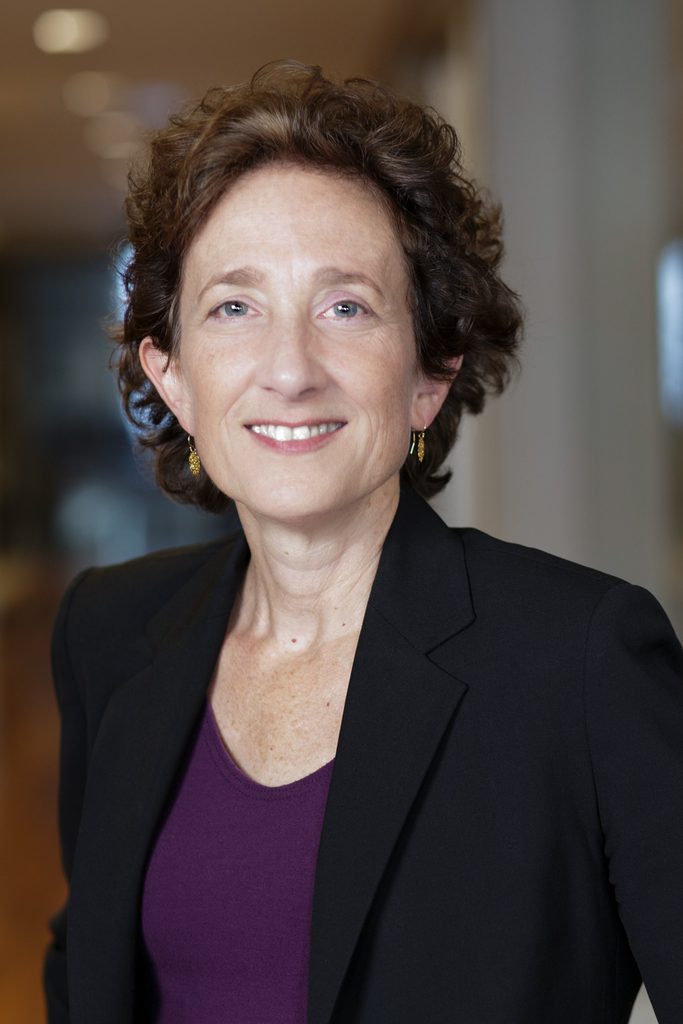
Earlier this month, in United States ex rel. Zafirov v. Florida Medical Associates, Inc., the Eleventh Circuit joined four other circuits in holding that the qui tam provisions of the False Claims Act do not violate the Appointments Clause of Article II of the Constitution.

Phillips & Cohen
The court held that private relators are not officers of the United States, and do not have to be appointed by the President, because they hold a temporary position, do not receive continuing compensation, and have only personal, not continuing, duties.
The much anticipated decision vacated a 2024 district court decision that was the lone case to hold that the qui tam provisions violated the Appointments Clause and which other courts had described as an “outlier.”
The Eleventh Circuit remanded the case for the district court to consider the defendants’ arguments that the qui tam provisions are unconstitutional because they violate the Take Care and Vesting Clauses of Article II, which assign certain powers to the Executive Branch of government.
All of the circuit courts that have considered those questions have concluded that the qui tam provisions do not violate those provisions either.
“Qui tam actions have a long history in the United States, with laws authorizing such actions adopted before and immediately after the adoption of the Constitution,” said Claire Sylvia, a whistleblower attorney and partner at Phillips & Cohen. “The Supreme Court found that history nearly ‘dispositive’ when it held in 2000 that allowing qui tam relators to pursue cases on behalf of the government does not violate the Constitution’s limits on standing. The Eleventh Circuit’s decision in Zafirov, while narrowly focused on the Appointments Clause, is consistent with that longstanding history.”
How did this case come about?
“After the 1986 amendments were passed, there were immediate challenges to the Constitutionality of the False Claims Act,” Sylvia told Corporate Crime Reporter in an interview last week. “A number of issues were raised at the time – the Appointment Clause question, whether relators had standing to sue. There was a lot of litigation over those issues in the 1990s and early 2000s. The issue went to the Supreme Court and the Court decided the standing question, but did not address the Appointments Clause or the executive branch powers under the Take Care Clause of the Vesting Clause.”
“After the Court decided the Standing issue, people thought the Constitutional issues were resolved. It has only come back more recently because Justice Thomas raised some questions about the Appointments Clause in a dissent in the Polansky decision.”
“After he raised those questions, in almost every case, defendants have raised this Appointments Clause issue on appeal. The only court where it got traction was a court in the Middle District of Florida where the court decided that the False Claims Act violated the Appointments Clause because relators are officers of the United States and they are not appointed in a way that the clause requires.”
“That brought us to the Eleventh Circuit to resolve that issue. And then in a decision this week, the Eleventh Circuit decided that relators are not federal officers. They are not holding office, they don’t have continuing duties, they don’t receive continuing payment – they don’t have any of the indicia that officers of the United States have.”
“So, the decision is important for the practice because other courts had already found that before. If this latest decision had gone the other way, there would have been a circuit split and that would have very likely gone to the Supreme Court.”
Had the case gone before the Supreme Court and the Court decided the other way, would that have gutted the False Claims Act?
“Had the Supreme Court decided this the other way, it would have fundamentally changed the False Claims Act. Obviously the government can move forward with False Claims Act cases on its own. But the real value is holding out the award for whistleblowers to come forward, because they are the ones who bring the government the information.”
“Since the 1986 amendments, the law has taken off and it has added value to the government. The government has recovered billions of dollars based on information being brought to them by whistleblowers. That’s not to say that the federal government can’t bring these cases on its own. But the real engine has been whistleblowers.”
There has been a severe downturn in major corporate crime cases being brought by this administration. But the False Claims Act cases for some reasons are still being pumped out of the Justice Department. How do you explain that?
“Whistleblowers have great information. And the cases they bring to the government are cases that the government should want to bring and does want to bring. The Trump administration has been very supportive of the False Claims Act. They intervened in the Zafirov case to defend the constitutionality of the statute. They intervened in another case in the Fifth Circuit.”
“The Department of Justice values these whistleblower cases because the whistleblowers bring them great cases that they probably wouldn’t otherwise have.”
But the big corporate crime cases were often based on solid information, sometimes from whistleblowers. But we are seeing a severe downturn in those major corporate crime cases.
“I don’t have an explanation for that. Maybe the Department of Justice does. But civil cases have a lower standard of proof. That may be a factor. I don’t know why they are not pursuing the major corporate criminal cases.”
You have secured many multi million dollar False Claims Act settlements. What proportion of those major settlements also resulted in a corporate criminal prosecution?
“I would say that the majority do not. We have had a number that have involved criminal recoveries as well, but it’s a small percentage.”
Let’s look at the Phillips & Cohen’s intake process. Of all the calls you get from whistleblowers, how many do you end up taking?
“With respect to intakes, we are contacted by thousands of people seeking representation each year. We consider all of them and we take a very small number – roughly five percent.”
How does your intake process work?
“Most of our cases come in through our website. They fill out a form or they call us. We do a conflict check to make sure we don’t have other cases involving the same issues. We call them, check in with them, review what they submit and evaluate whether we think it would be a strong case that the government would be interested in.”
“It involves legal research, talking about the facts, what they know, how they know it. We are looking for cases that will interest the government because of the quality of the information and the impact of the case. Does it involve patient harm? Does it involve serious harm to a particular program?”
What is the difference between the False Claims Act and other government whistleblower programs like the SEC, CFTC and IRS whistleblower programs?
“In the non False Claims Act programs, you don’t file a lawsuit. You provide a tip to the government and help the government if they need help. But you do not file a case. The government chooses to bring a case or not. It doesn’t have quite the same action forcing mechanism of filing a case and having a court oversee it. But you do bring the tip. And if the government chooses to bring a case and it is successful, then the person who provided the tip receives an award. But you are not a party to a lawsuit. You can’t participate in the actual litigation.”
But the overwhelming number of your cases are False Claims Act cases?
“Actually, we have dozens in each and the balance between programs fluctuates.”
In earlier years, there were well known U.S. Attorneys offices that had well established False Claims Act units – offices like Boston and Philadelphia. And False Claims Act lawyers who go to those offices to bring their cases.
Is that still the case?
“There are many active districts. And Boston and Philadelphia are still offices that are very active.”
Let’s look at the False Claims Act bar. How many lawyers are practicing in this area, do you have a sense?
“I don’t have a sense. But what I can say is that the bar has grown over the years. The Anti-Fraud Coalition. During the early 1980s, it was a very small group of people. Now it’s hundreds of lawyers. There has been a huge growth in the number of firms that do this work. It’s a much bigger bar than when it started.”
Is the Anti Fraud Coalition exclusively plaintiff side lawyers?
“Yes, but on the defense side, the bar has grown rapidly also. This is a great area for the defense bar – many more firms are involved with it now than there once were.”
There must be whistleblowers who come in the door where you immediately know that this is a case you are going to take. What are the indicators of that kind of whistleblower?
“I don’t know that you can tell you are going to take a case when it comes in the door. But we look for a person with very good inside information and the person is well placed. That could mean they are highly placed within the organization or it could mean they were in a position to see details about what was going on. The inside information is the kind of information the government can’t get their hands out without the whistleblower. In a data case, they might know a lot about the data, but they won’t know what the company knows. The inside information is important.”
“The other factors that flag whether we take the case or not are factors like – Is patient harm involved? Is the conduct egregious? Is there harm to a particular program that is of concern? Is there harm to military service people or potential harm?”
“And then you look at the size of the harm – are we looking at large numbers against Medicare Advantage, for example? The magnitude of the harm can be important.”
“It really comes down to the quality of the information. That’s the thing that the government doesn’t have and that the whistleblower can provide to the government.”
[For the complete q/a format Interview with Claire Sylvia, see 26 Corporate Crime Reporter 35(12), September 14, 2026, print edition only.]
Don't Miss:
-
Trump administration gave firm with ties to ballroom donor the green light to do business with a sanctioned Russian bank
-
School shootings in the Philippines put gun access under scrutiny
-
Statement on missing ICIJ journalist Micah Reddy
-
TRANSCRIPT: ‘China Retains Levers for Long-Term Territorial Ambitions’
-
On Indonesia’s new oligarchy, China’s state bank, and other stories | Asia Sentinel Stories of the Week