
 Anwar Ibrahim: The Man Who Became the Compromise
  The US is letting a convicted Bolsonaro spy chief stay in Florida. Brazil wants answers.
  Rick Claypool on Pay to Play Corporate Crime Enforcement
 Chinese researchers have found a way to extract uranium from seawater at several times the target rate set by the US Department of Energy, putting China at the forefront of a global quest to tap into a vast source of nuclear fuel.
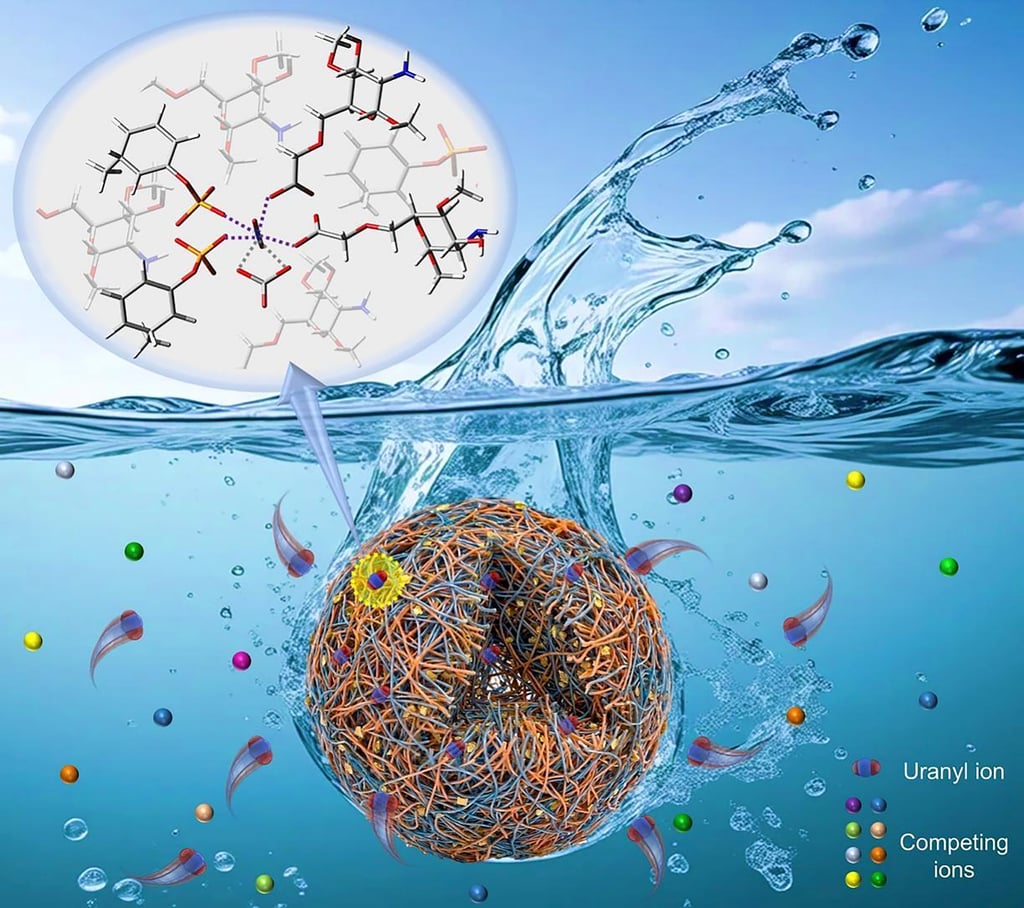
The team from the Chinese Academy of Sciences in Qingdao did this using a material they developed called PhosCage – a sponge-like molecular structure filled with phosphate groups that act as chemical traps.
In a statement, the researchers said they had recovered up to 50.4mg of uranium for every gram of the adsorbent from natural seawater samples – more than eight times the US target of 6mg per gram.
They then turned PhosCage into millimetre-sized beads that are easier to deploy and retrieve in the open ocean. The beads captured 22.55mg per gram and continued to work through seven cycles of reuse.
“This work opens up a novel approach to extracting uranium from seawater and lays the groundwork for adsorbents that can capture more uranium and eventually be used on a large scale,” the team from the CAS’ Qingdao Institute of Bioenergy and Bioprocess Technology said in the statement.
The technology could be particularly important for China, which has sizeable uranium reserves but uses far more than it produces as it expands the use of nuclear power.

Don't Miss:
-
Organized Crime Postponed Democracy in Haiti, Again
-
Organized Crime Postponed Democracy in Haiti, Again | The InSight Take
-
Unstoppable Violence in Michoacán: 31 Police Officers Killed, and Criticism of the Government Mounts
-
A Total of 13 Mass Graves Have Been Found in Viesca Containing the Charred Remains of Men and Women
-
Jorge Luis Zambrano, alias “Rasquiña”