
 The US is letting a convicted Bolsonaro spy chief stay in Florida. Brazil wants answers.
 Rick Claypool on Pay to Play Corporate Crime Enforcement
 Labaton Launches Whistleblower Practice with Former SEC Acting Chair Allison Herren Lee
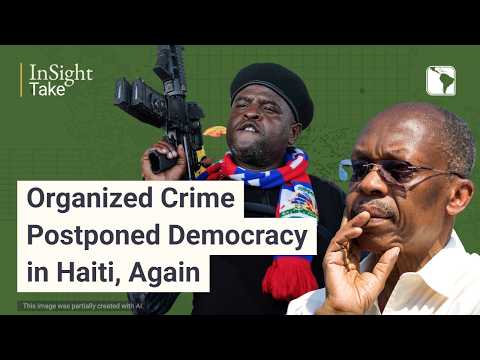
As criminal governance becomes entrenched, the question about Haiti’s return to democracy is not when but how.
In a briefing on October 19, the United Nations’ top delegate to Haiti, Carlos Ruiz Massieu told the UN Security Council that the country is still far from holding its first national elections since 2016.
“Setting new dates for elections without a realistic assessment of their feasibility will only erode public confidence and the credibility of Haitian institutions,” he told the council.
The stark assessment came just two weeks after the country’s electoral council (CEP) cancelled the general elections, the first round of which was set for December. No new date has been established for elections that have been postponed multiple times since Haitian President Jovenel Moïse was ambushed and killed by a group of Colombian mercenaries in July 2021. The assassination has been attributed to a fight among elites, but it is the country’s gangs that remain on the forefront of the battle for control over Haiti.
And with each postponement, these gangs seem to notch another chaotic hole in their belts. The United Nations’ Security Council’s Panel of Experts said in its final report issued in September that the gangs control 70% of the nation’s capital and have spread deep into the countryside. Violence has become particularly acute in the province of Artibonite, the country’s second-largest electoral district behind the capital, Port-au-Prince, where massacres and hostages are commonplace, the United Nations says.
Forced displacement and rape have also become go-to tools of war. The UN says 1.5 million people have fled their homes, one-fourth of the country’s population; among these internal refugees are nearly 800,000 children. In final report, the UN catalogued nearly 2,500 cases of sexual assault, 64% of which they said were cases of “gang rape.”
At the forefront of this gang violence is Viv Ansanm, the coalition that formed in 2023 by the G9 and the GPèp, then the country’s most formidible alliances. Another gang, Gran Grif, which operates independently in Artibonite, has surged in recent months to compete with Viv Ansanm. Both groups have been declared foreign terrorist organizations (FTOs) by the United States government.
The gangs are not operating on their own. In an annex of its final report to the UN Security Council, the Panel said close to a million rounds of ammunition from the stocks of neighboring Dominican Republic’s police were found in 2024, and it chronicled persistent connections and support from Haitian security forces. It added that political and economic elites, among them several former senators, were supplying Viv Ansanm with weapons and ammunition, as well as political and judicial top-cover.
Among these former legislators is Youri Latortue. Latortue was called as a witness in the Moïse case but was cleared of any wrongdoing. Indeed, while there have been several convictions of alleged hitmen and some ancillary figures, the case has stalled as prosecutors seek the intellectual authors.
The case got a break in September when Haiti extradited Joseph Félix Badio, a former anti-corruption prosecutor. US prosecutors say Badio coordinated the attack via radio, gave the Colombian mercenaries their weapons, and paid off enough Haitian presidential guards to open the path to the presidential suite where Moïse was killed. Badio was captured in 2023, after spending two years in hiding, and the hope is he may cooperate with US authorities to crack the case.
Meanwhile, a so-called “National Pact,” cobbled together with what is left of Haiti’s political parties after the Transitional Presidential Council’s mandate expired in February, tries to keep order. Ironically, its mandate is dependent on its ability to engineer the country’s first elections in a decade.
But how those elections will happen remains an open question. Haiti’s National Police has been decimated by departures and deaths of both on- and off-duty officers. The US has been scrambling to train new police, and the United Nations is trying to replace the Keynan police it once saddled with fighting the gangs with a so-called Gang Suppression Force. Private security, armed with drones, have also joined the fray.
The results have been deadly and less than affirming. The UN Panel of Experts said in May that government and private security forces were responsible for 69% of the deaths and injuries during the first three months of 2026. But that ratio swung the other way in the second quarter, the UN said, illustrating the tit-for-tat nature of this conflict and the distance Haiti still must travel before its next democratic elections.
Don't Miss:
-
Unstoppable Violence in Michoacán: 31 Police Officers Killed, and Criticism of the Government Mounts
-
A Total of 13 Mass Graves Have Been Found in Viesca Containing the Charred Remains of Men and Women
-
Jorge Luis Zambrano, alias “Rasquiña”
-
El Taliban Fell In Mazatlán… And What He Confessed Ties Everything Together
-
Inside the Camp at the Heart of Honduras’ Garífuna Land Struggle