
 How Hungary’s richest man funneled millions into Orbán’s propaganda machine
  How Real Is the US Withdrawal from the Middle East?
  From Iran to China: An Emerging Trans-Central Asian Corridor
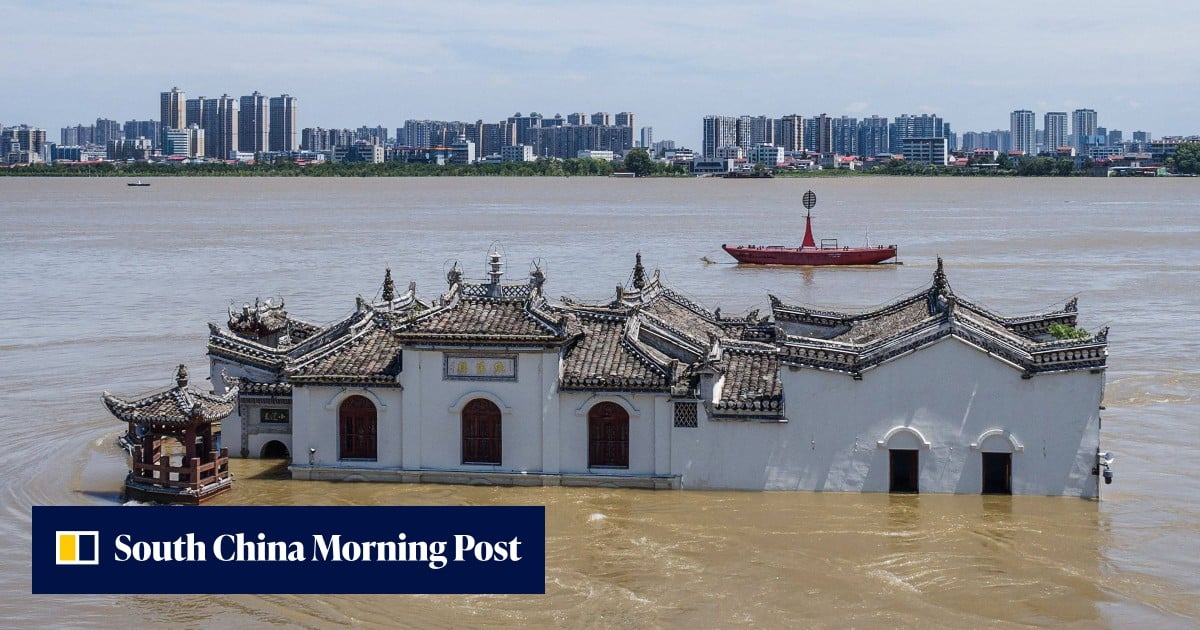
But a new study has uncovered a paradox: some human interventions may have inadvertently worsened the very flood risks they were built to mitigate.
“We show that flood frequency peaked during the Little Ice Age [1500−1850] … and that human interventions, particularly embankments and lake reclamation, amplified climate-driven flood magnitudes,” a group of scientists in China and Europe wrote in a paper published on Monday in the Proceedings of the National Academy of Sciences of the United States of America.
They found that while climate remains the primary driver of flood occurrence, human interventions on the Yangtze River actually intensified climate-induced flood risks, rather than mitigating them.
Their analysis showed that constructing embankments and lake enclosures for agricultural use amplified the magnitude of 100-year floods, which have a 1 per cent chance of happening in any year, by 18 and 8 per cent respectively.
Don't Miss:
-
US wraps up military mission in Iraq, giving Baghdad room to strengthen China ties
-
As China and the EU begin crunch trade talks, optimism is in short supply
-
Data centre opposition is growing in Australia. Is there a middle ground?
-
Helper arrested for allegedly slapping 5-year-old boy after he refuses to eat
-
Workers, mostly Indian, building US consulate in Milan agree to record settlement