
 Anwar Ibrahim: The Man Who Became the Compromise
  The US is letting a convicted Bolsonaro spy chief stay in Florida. Brazil wants answers.
  Rick Claypool on Pay to Play Corporate Crime Enforcement
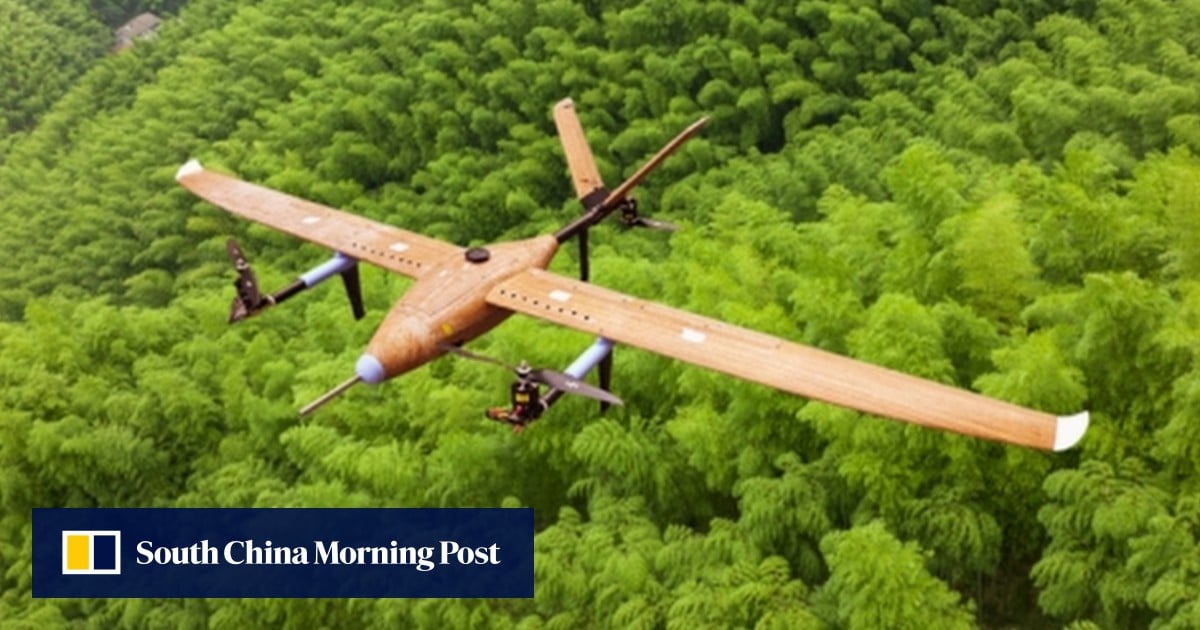
Unlike conventional airframes made of composite materials, bamboo structures introduce low-frequency vibrations – typically in the 8–20 hertz range – that standard flight controllers struggle to handle.
Advertisement
According to the team’s paper, published on February 28 in Heilongjiang Science, existing commercial flight controllers are either closed-source and inflexible, or open-source but poorly adapted to local development needs, limiting the industrialisation of bamboo-based UAVs.
Advertisement
More significantly, they redesigned the control algorithms to match bamboo’s structural properties.
By tuning an extended Kalman filter and leveraging bamboo’s natural vibration-damping characteristics, the system reduces control latency from 15 to 20 milliseconds to as low as 8 to 10 milliseconds – improving responsiveness while maintaining stability.
Don't Miss:
-
Organized Crime Postponed Democracy in Haiti, Again | The InSight Take
-
Unstoppable Violence in Michoacán: 31 Police Officers Killed, and Criticism of the Government Mounts
-
A Total of 13 Mass Graves Have Been Found in Viesca Containing the Charred Remains of Men and Women
-
Jorge Luis Zambrano, alias “Rasquiña”
-
El Taliban Fell In Mazatlán… And What He Confessed Ties Everything Together