
 Questions swirl around US plans for record $15B Prince Group crypto seizure
  Donate to ICIJ
  Chelsea FC fined millions over secret payments under Abramovich ownership
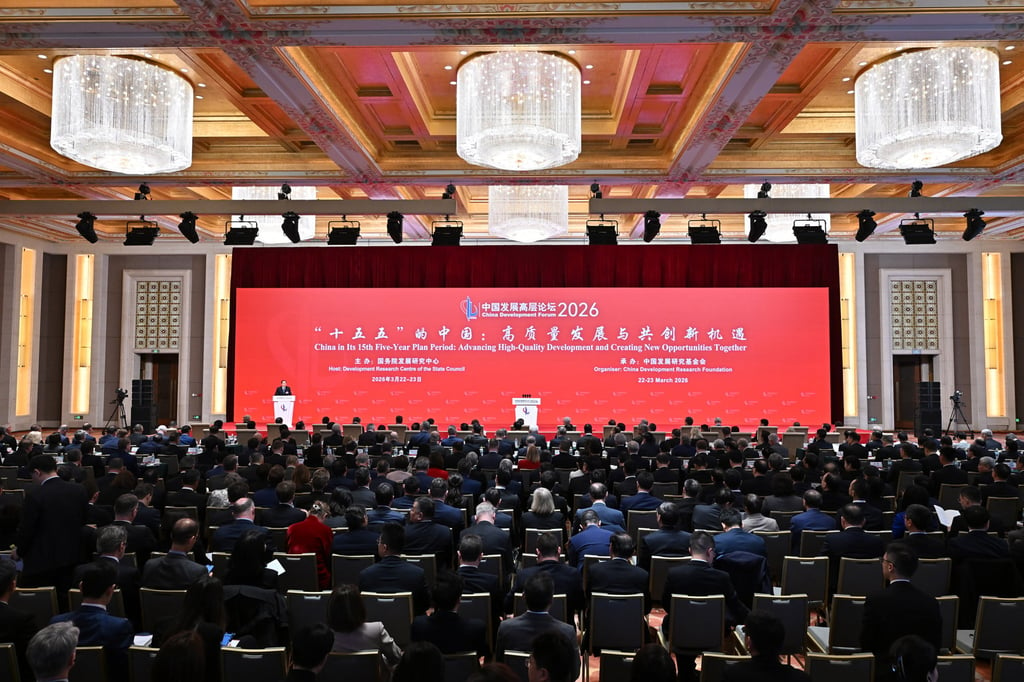
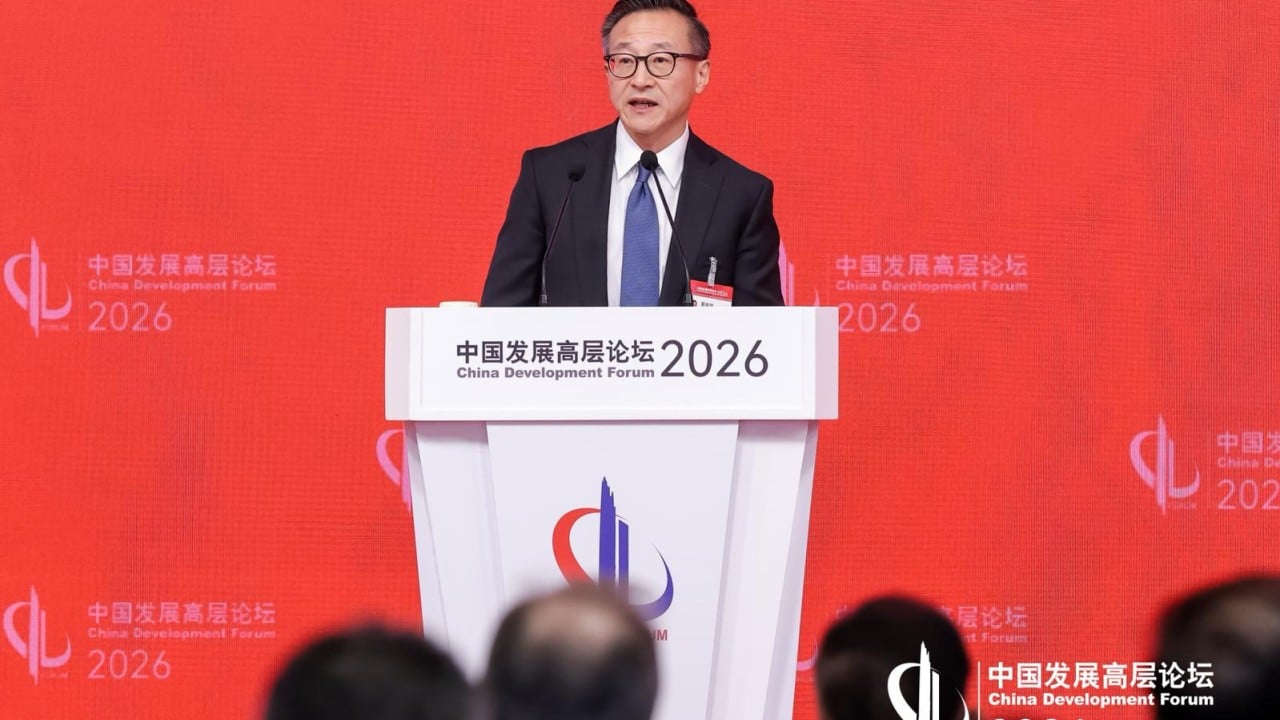
 “Currently, geopolitical complexities are deeply affecting supply chain security and the sharing of technological achievements,” Tsai said in a speech on Sunday at the China Development Forum 2026 in Beijing. “In this era and environment of uncertainty, China’s technology sector is both willing and capable of providing certainty.”
Over the past decade, China had continuously increased investment in power transmission, with annual spending in recent years averaging US$90 billion – the highest in the world – leading to newly installed power generation capacity last year that was 10 times that of the US, he said.
Advertisement
“In the AI industry, which is extremely energy-intensive, such massive investment has directly translated into advantages in ample supply and [low] cost, forming a solid foundation for us,” Tsai said.
The ultimate goal of developing AI was not to build the most cutting-edge models but to proliferate its application to benefit society, he said.
Tsai said open-source models had enabled China’s AI sector to break down barriers, “ensuring that AI is no longer the privilege of a few giants”. He added that widespread adoption would “drive shared global economic growth and improvements in living standards, achieving a win-win outcome”.
Advertisement
Don't Miss:
-
Hormuz crisis underlines vulnerability of global trade chokepoints
-
2 women climb out of window to flee Hong Kong building fire that injured 3 others
-
US hub in Iraq targeted overnight by Iranian drones, rockets
-
1,200 musicians set Guinness World Record at concert in Hong Kong
-
Chinese social media is awash with criticisms of the US, but is it possible to go too far?