
 TRANSCRIPT: ‘China Retains Levers for Long-Term Territorial Ambitions’
  On Indonesia’s new oligarchy, China’s state bank, and other stories | Asia Sentinel Stories of the Week
  ‘Tinder Swindler’s’ plan for a dating app sparks industry backlash
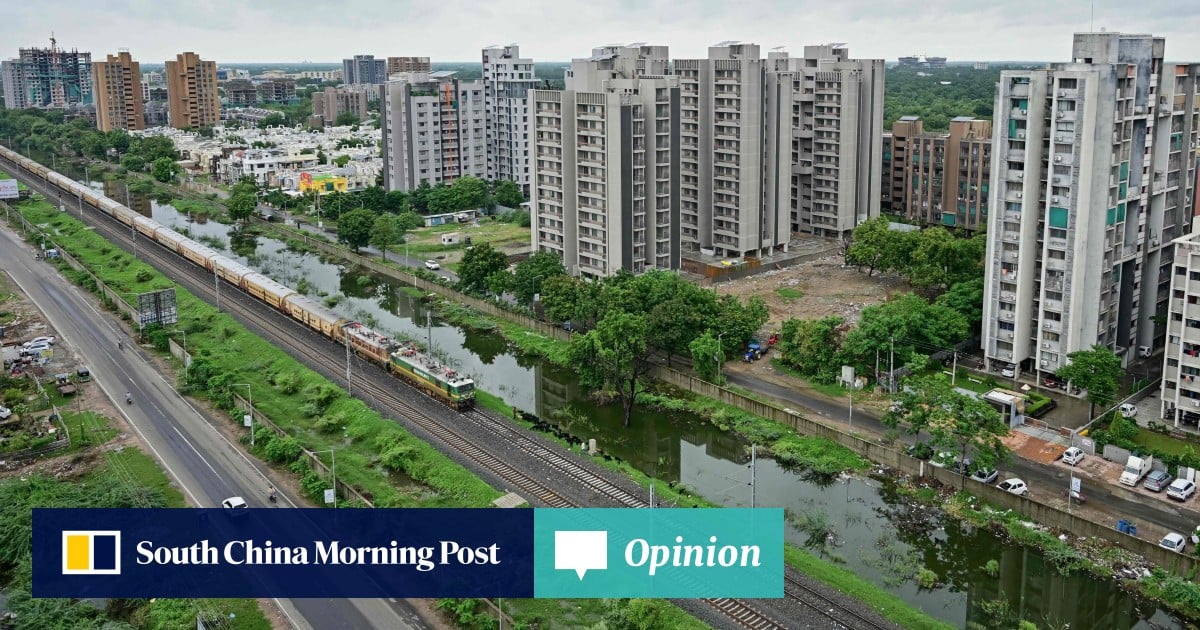
India’s property market has gone from strength to strength. All the main sectors continue to perform extremely well. Last year, take-up of shopping centre and warehouse space reached record highs. In the first half of this year, office leasing volumes rose to their second-highest level for the period on record, while new flat sales in the eight largest cities delivered one of the strongest half-yearly performances in 12 years.
Even the institutional investment market, the least liquid among the largest economies in the Asia-Pacific, has taken off. In 2024-25, transaction volumes reached nearly US$20 billion, more than double the amount recorded in 2021-22.
However, the boom in Indian real estate masks a vulnerability that has become more acute in recent years. As India struggles to capitalise on its much-touted demographic dividend and fears about artificial intelligence-induced disruption to the nation’s pivotal information technology (IT) services and outsourcing industry intensify, the dramatic supply crunch in the low-to-mid-end of the housing market is coming under scrutiny.
In 2018, flats priced below 5 million rupees (US$52,000) accounted for 52 per cent of launches in India’s largest cities, according to data from Knight Frank. By the end of last year, the share stood at just 17 per cent.
What is more, flats in the 5-10 million rupee price bracket constituted 22 per cent of sales in the first quarter of this year, down from 37 per cent two years ago, according to data from JLL. The premium and luxury segments of the market, by contrast, are thriving. Sales of flats above 10 million rupees accounted for 71 per cent of transactions, up from 48 per cent in the first quarter of 2024.
In a country where urbanisation is accelerating rapidly – 71 cities are expected to have populations of 1 million people or more by 2030 – the need for accessible, quality homes has never been greater. Knight Frank puts the current shortage of affordable housing in India at 9.4 million units.
Don't Miss:
-
Middle powers don’t have to wait for a Trump-Xi-Putin summit
-
Woman dies after suspected dog attack in Hong Kong’s Yuen Long
-
Murder trial of slain Hong Kong socialite Abby Choi’s former relatives to begin
-
University calls for government funds for shared sites in Northern Metropolis
-
‘Staunch patriot, close friend’: Beijing official hails Tung Chee-hwa’s legacy