 Nearly half of powerful .50-caliber ammo seized by Mexican government came from US Army plant, defense minister says
  As crypto industry expands, U.S. slashes office examining dirty money safeguards of cryptocurrency exchanges
  Hong Kong firms feed European tech to Russia’s war in Ukraine, report says
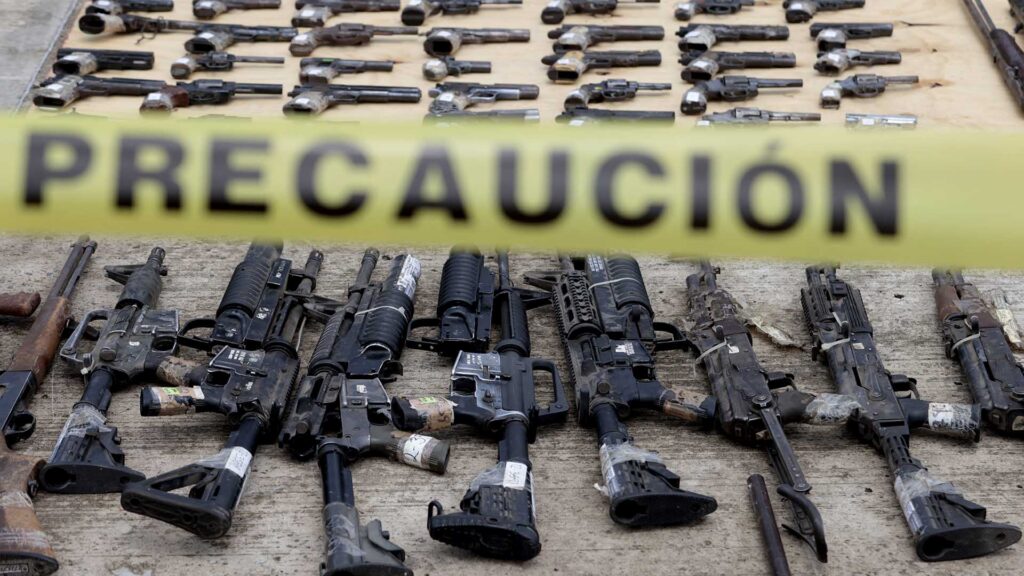
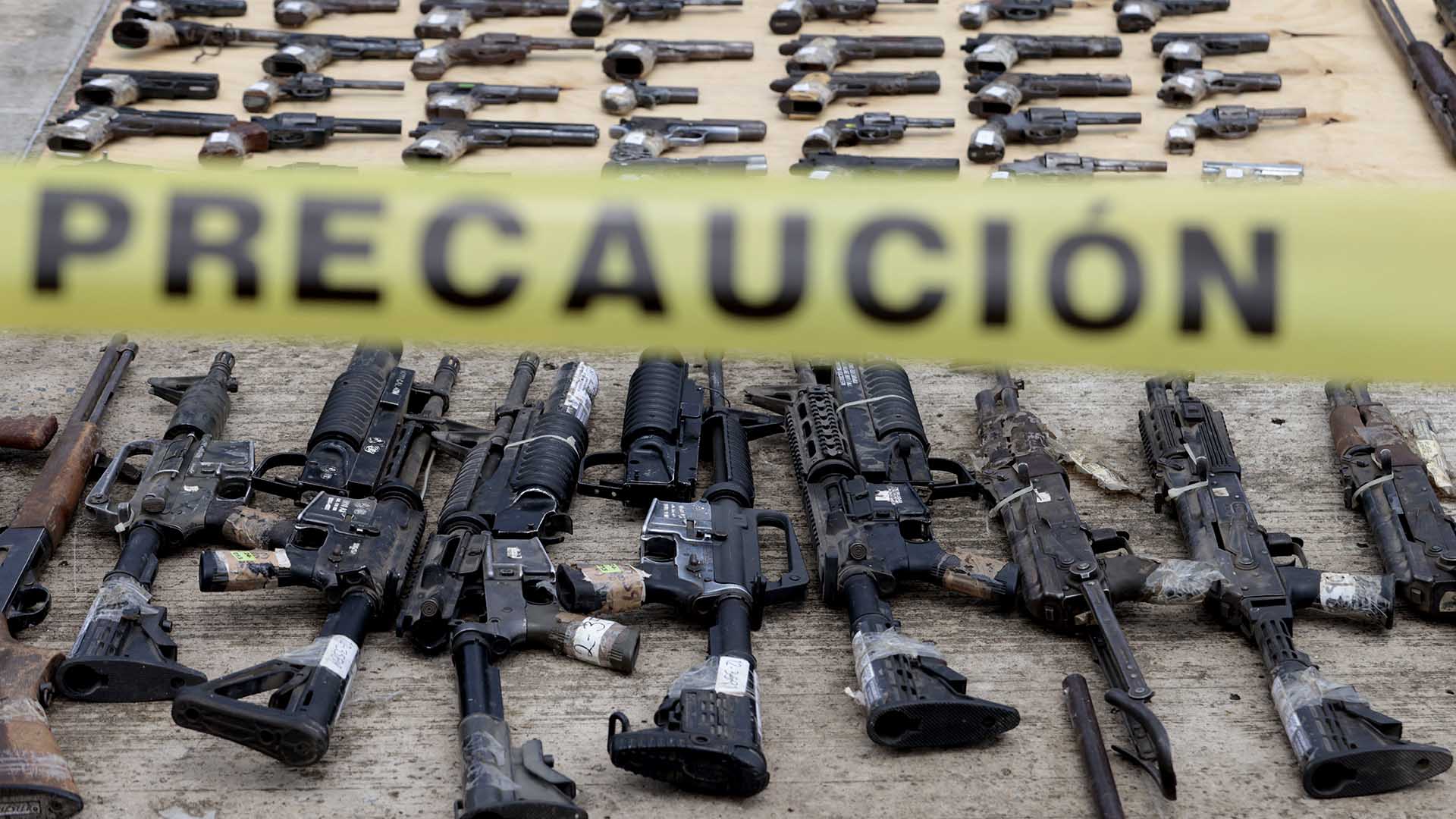
National governments must take stronger measures to stop arms trafficking and allow legal remedies for their harms, according to a newly issued opinion by the Inter-American Court of Human Rights, a long awaited finding that comes as Mexico is pressuring the United States to stop the illegal flow of guns across its borders.
The court, which is based in Costa Rica and has jurisdiction over some members of the Organization of American States, said in an advisory issued last week that governments have a “duty of due diligence regarding activities that may result in illicit trafficking of firearms.”
That duty, it found, includes monitoring and supervising firearms manufacturers to ensure their products are not enabling human rights violations, and providing effective judicial remedies for those whose rights have been violated. The “indiscriminate availability of firearms”, the court wrote, threatens the “right to life” and the “right to personal integrity” of vulnerable groups, including women and children.
U.S. federal law protects firearms manufacturers from most legal liability for crimes committed with their products.
“States must undertake risk assessments to anticipate the possibility that imports or exports of arms may lead to negative consequences such as undermining peace and security, as well as the commission or facilitation of serious violations of international humanitarian law or international human rights law, particularly when affecting vulnerable populations,” the court wrote.
The opinion followed a 2022 request by the Mexican government for the court to consider the question of what responsibility states and firearms manufacturers bear for human rights violations committed with guns.
Mexico estimates that smugglers traffic as many as half a million firearms into the country from the U.S. each year, a major contributor to gun deaths there. The country has seen a steep rise in homicides since 2004, when the U.S. ban on assault weapons ended.
In recent years, almost 80% of guns recovered at crime scenes in Mexico came from the U.S., according to recent comments by the country’s Defense Secretary.
Drug cartels regularly use military-style, semi-automatic weapons acquired from U.S. retailers in attacks on civilians and authorities. That includes powerful .50-caliber rifles, which have been used to shoot down government helicopters.
A recent investigation by ICIJ and the New York Times revealed that cartels have used ammunition made at a U.S. Army-owned facility in some of those assaults. Smugglers are able to purchase the rounds, including destructive, armor-piercing variants, on the civilian market, thanks to an agreement between the U.S. government and private contractors.
In 2021, Mexico filed a lawsuit in the U.S. against seven firearms manufacturers, accusing them of negligent business practices that helped arm cartels. Last year, the U.S. Supreme Court tossed out the suit, arguing that a U.S. law, the Protection of Lawful Commerce in Arms Act, protected the companies from legal liability for the criminal actions of third parties.
The Inter-American Court of Human Rights was established by the American Convention on Human Rights, a treaty that enumerates the political and civil rights of individuals that members of the Organization of American States are obligated to respect.
The U.S. is a member of the OAS, but it has never ratified the convention and is not bound by the court’s findings.
Nevertheless, the decision is important because it “makes clear that the United States’s gun industry shield law, the Protection of Lawful Commerce In Arms Act (PLCAA), is contrary to basic principles of international human rights law, and the United States is obligated to ensure gun manufacturers do not violate human rights by enabling gun trafficking to criminal markets,” Jonathan Lowy, the president and founder of Global Action on Gun Violence, said in a statement. Lowy represented Mexico in its suit against the U.S. firearms industry.
The opinion could also impact the governance of arms manufacturers outside of the U.S., such as the Brazilian company Taurus, one of the largest manufacturers of handguns in the world.
Don't Miss:
-
Nearly half of powerful .50-caliber ammo seized by Mexican government came from US Army plant, defense minister says
-
As crypto industry expands, U.S. slashes office examining dirty money safeguards of cryptocurrency exchanges
-
Hong Kong firms feed European tech to Russia’s war in Ukraine, report says
-
Massachusetts sues Bitcoin Depot, alleging the crypto ATM operator knowingly facilitated crypto scams
-
Greek court convicts Intellexa founder Tal Dilian, three others in wiretapping scandal