
 Malaysia Tests Who Foots the Bill for Data Center Boom
 Indonesia Wiretap Scandal Stirs Political Intrigue
 Russia’s Taliban Gamble is Not Paying Off

John Falchetto was a survivor. In Vietnam, his river gunboat came under devastating rocket fire.

He was the only one to make it out alive.
But this February, Falchetto, who had just turned 80, began to have piercing stomach pains.
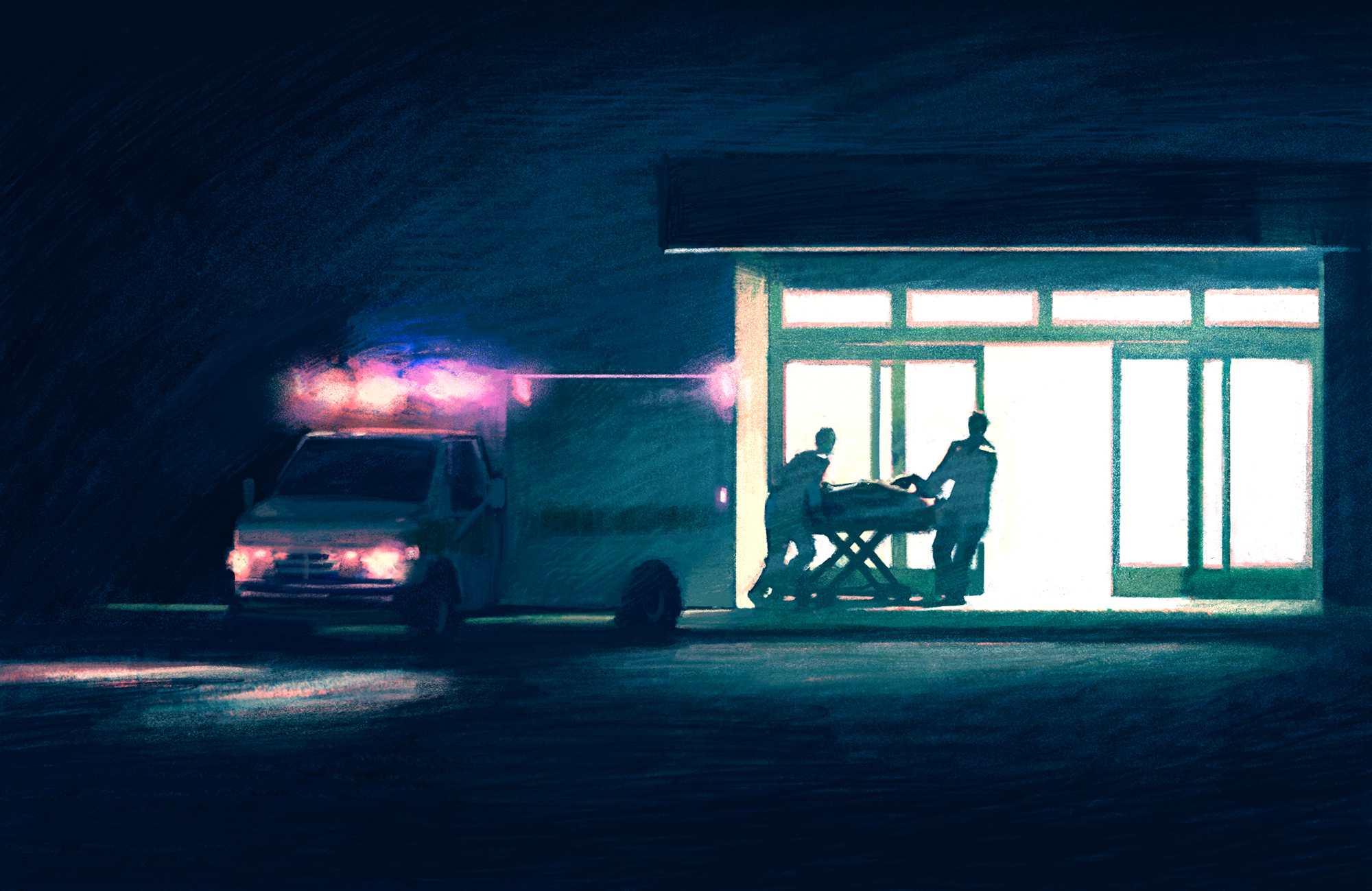
He was in distress for days.
Finally, Falchetto went to the VA hospital in East Orange, New Jersey.
A CT scan of Falchetto’s abdomen suggested his appendix had not only burst, but that it was gangrenous.

His gut was so filled with bacteria and pus that tissue was dying.
Doctors wrote that he needed surgery immediately.
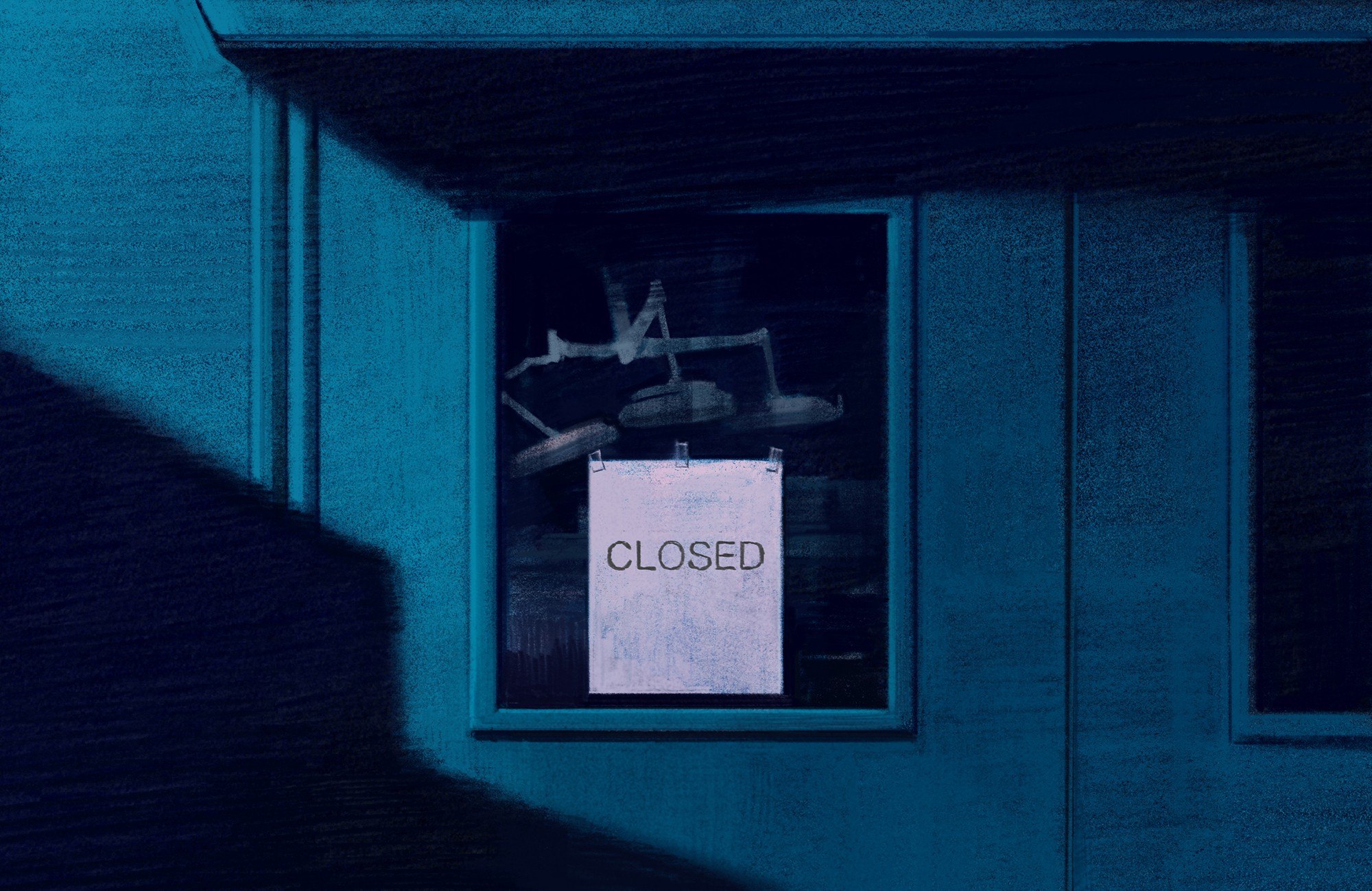
But that night, the hospital’s operating room was closed.
Months earlier, the ventilation system had malfunctioned, and the repair team was short-staffed.
So Falchetto lay there, his life in the balance, for seven hours.
This was not normal. But nothing had been normal at East Orange since President Donald Trump returned to office last year and set his sights on the VA.
The behemoth agency, which traces its roots to the Civil War, is both the country’s largest healthcare system and one of its most effective. It provides 9 million veterans what is essentially socialized medicine, often for free, under the cover of the American flag. The doctors, nurses and other staff are employed by the government.
Despite the occasional scandal and persistent short-staffing, studies have shown that the VA — where the doctors coordinate with one another and have deep expertise on veterans’ needs — has better outcomes than private care.
But in his second term, Trump has moved aggressively to upend this system, embracing a decades-long conservative campaign to effectively kneecap the VA’s government-run healthcare and shift veterans toward private doctors and hospitals.
Under Trump, the VA has increasingly acted like an insurer, paying doctors in the community for vets’ care. This, the reasoning went, would allow the government to cut thousands of needless bureaucrats while giving veterans more choices if the VA can’t provide the care.
“We love our veterans,” Trump said during an Oval Office photo op shortly after his inauguration. “We are going to take good care of them.”
Days after that pronouncement, a memo leaked showing the administration was considering sweeping job cuts at the agency. “Things need to change,” warned Doug Collins, Trump’s new VA secretary, in a video message to staff.
After pushback from vets groups and others, the administration retreated from its threat of mass layoffs. But it found another, less attention-getting way to shrink the VA.
If Trump’s appointees couldn’t lay off employees, they would make work conditions so untenable that staffers would leave on their own.
The administration canceled the contracts of the agency’s unions — citing national security concerns. They ordered remote staffers back to the office. Elon Musk’s Department of Government Efficiency demanded employees report what they had accomplished each week. And the administration offered staffers early retirement packages and other incentives to quit.
Throughout it all, the VA’s leadership said front-line medical workers would be immune from any cuts. But amid the upheaval, many left anyway.
Six months after Trump entered the White House, the VA had 3,800 fewer doctors, nurses and other “mission critical” staff than it did at the start of his term, according to the department’s own data. While the losses made up a small percentage of overall employees, the drop compounded longstanding shortages — and contrasted sharply with a hiring spree under President Joe Biden that had begun to address them. Many of the front-line workers who quit in Trump’s early days have never been replaced. Instead, the VA has eliminated thousands of open positions, including doctors, nurses and other providers.
The administration has denied that it is hurting veterans’ care. “There’s actually an excitement about what’s going on,” said Collins, a former personal lawyer for Trump, in congressional testimony this spring. A spokesperson said the eliminated jobs for healthcare providers were simply “not needed.”
That is not what we have found. Over months of reporting, ProPublica has watched the East Orange VA Medical Center — a typical agency facility — spiral downward. The hospital and its affiliated facilities in New Jersey lost nearly a tenth of the staff they had when Trump took office.
Over the past two years, a VA watchdog report shows, the number of roles with “severe shortages” in East Orange has tripled, from around 30 to roughly 90. Among them: oncologists, radiologists, surgeons, cardiologists, anesthesiologists, critical care doctors, nurses, mechanics, cleaners — nearly every job that makes a hospital run.
“It’s scary,” one East Orange administrator said in a meeting this year. “We have no one.”
It’s not just there. According to the VA’s watchdog, nearly all VA hospitals — 97% — reported having severe shortages of doctors. (The agency argues that the report — titled in part, “Staffing Shortages” — is simply about shortages of candidates and not actual staffing.)
The exodus of healthcare providers has increasingly forced veterans into the private care program — called Community Care — that the Trump administration has pushed. Amid soaring caseloads there and what a government report describes as “insufficient staffing,” many vets have been facing interminable waits.
ProPublica and other outlets have previously detailed problems with particular areas of VA care under Trump, such as mental health. But our reporting suggests far more care for veterans is being put at risk.
At East Orange, the damage wrought by the administration’s approach has cut like a scythe across nearly every area of the hospital.
Wound care is harder to get, since the nurses who specialize in it have mostly gone. The standard tests for blood clots weren’t available for most of the year, because there were no technicians. Even radiation treatment was stopped for months, after one of the key specialists left.
“Care has gotten worse for the patients,” said one doctor. “The services available. The wait times. We’re not providing the care that we wish we could.”
Another doctor, who recently quit, recalled how vets coming in with chest pains couldn’t get cardiac tests for months. “It felt dangerous practicing in a place like that,” said the physician, who, like others, declined to be named for fear of retribution. “That’s something you don’t want on your conscience.”
VA employees across the country told ProPublica they are seeing remarkably similar issues at their hospitals.
In Albuquerque, New Mexico, short-staffing forced the hospital to take many of its beds offline and stopped it from operating on severe heart attacks. Surgeries — on lungs and spines — have also been suspended for months at the VA hospital near St. Petersburg, Florida. At both hospitals, government reports found, Trump’s touted private care program was also overwhelmed and understaffed, further fueling delays in care.
“Care has gotten worse for the patients. The services available. The wait times. We’re not providing the care that we wish we could.”
East Orange VA doctor
Surgeries and other critical care have also been delayed at the Minneapolis VA. A staffer there shared a friendly looking notice tacked to a bulletin board in May: “No SOD coverage” — meaning, no surgeon on duty — “until further notice.” Radiation treatment was also suspended there because one of the machine’s operators quit. A Minneapolis doctor recalled that meant having to put a vet with cancer-riddled bones on a rattling ambulance ride every day, rather than simply wheel him down the hall. The doctor said each bump on the winter roads caused the vet excruciating pain: “It was miserable.”
A longtime oncologist who works with VA hospitals around the country told me, “Care is collapsing from the inside.”
Starting in July, ProPublica repeatedly asked the VA about evidence we’d found that short-staffing is hurting veterans’ care. We asked to interview Collins and the leadership of East Orange. The VA did not make them available. Nor did it address the specifics ProPublica shared on care.
In a general statement, the VA said care has improved under Trump. “This Administration is solely focused on measuring VA’s success by how well it serves Veterans,” said agency spokesperson Quinn Slaven. He cited a record number of appointments for both direct and private care over roughly the past year. Slaven also noted that the private care program began under the first Trump administration and was also embraced by the Biden administration.
As for East Orange, Slaven said the facility is outperforming private hospitals on certain metrics, such as diabetes care and some cancer screenings. Slaven also said more appointments were completed in fiscal year 2025 — which ran from October 2024 through September last year — than in any year of the Biden administration.
Citing privacy law, the VA noted it could not address individual cases without a waiver from the patient or appropriate family member. While ProPublica spoke with veterans’ family members and loved ones, none chose to sign.
We did, however, also ask the VA about the general issues surrounding those cases — such as East Orange’s OR being closed — and the agency did not respond.
In speaking to us, family members expressed surprise about their loved ones’ care. Falchetto’s brother, Tony, knew his brother had appendicitis, but hadn’t known that the OR in East Orange was closed. “Oh my god,” Tony exclaimed when I told him that his brother didn’t get timely care.
This story is based on internal documents, emails, agency data, recordings and interviews with more than two dozen current and former VA staffers, along with veterans and their families.
Contrary to the administration’s rhetoric, what emerges is a portrait of an institution in trauma.
“It Felt Like Bullying”
As soon as Trump was reelected, healthcare providers and other staffers at East Orange could feel the barometric pressure plummeting and the storm arriving.
The incoming administration’s plans for federal employees had long been clear. “We want to put them in trauma,” said Russell Vought in 2023, before he became Trump’s chief of the Office of Management and Budget. “We want them to not want to go to work.”
Just days into the new administration, officials imposed a rigid return-to-office policy, even as many staffers — from schedulers to radiologists reading digital scans — had shifted to remote work in recent years. An internal agency watchdog later wrote that the edict caused a “system shock” at East Orange, whose outdated infrastructure and long-mothballed rooms couldn’t handle the influx.
“I love working with vets, and I’ve never wanted to work anywhere else,” said one medical provider at East Orange who rattled off a list of edicts. “You’re this little person, and the full weight of the federal government was on you. It felt like bullying. It was very, very stressful.”
That May, Collins appeared before Congress and promised that the administration would not cut care: “We’re going to maintain VA’s mission-essential jobs, like doctors, nurses, claims processors, while phasing out nonessential roles, like interior designers and other things — DEI.”
Two months later, the agency touted the loss of nearly 30,000 staffers. “VA is headed in the right direction,” Collins said in a statement announcing the losses. It was hard to know if the remaining staff agreed, since officials canceled the VA’s employee satisfaction survey.
Among the most essential staff at VA hospitals have long been the specialty doctors, with their years of extra training. Recognizing their importance — and their potential to earn far more in the private sector — bipartisan legislation, which Biden signed into law in January 2025, allowed the VA to pay top-notch doctors more than the standard government rate.
But under Trump, the department didn’t use that authority for more than a year — even as more and more specialty doctors were leaving.
So, amid the departmental tumult, East Orange’s doctors began to exit, and they often weren’t replaced.
Six months into the administration, East Orange was down five psychologists, two of its four general surgeons and 18 nurses, among others, according to data obtained through a public records request.
The departures weren’t limited to front-line providers. So-called support staff were leaving too.
The effects could be just as devastating.
In East Orange, the medical physicist calibrated radiation machines. When he quit, the hospital had to suspend radiation treatment for months.
That left a veteran named Dennis in the lurch. The 72-year-old Vietnam vet had advanced colorectal cancer, which was causing rectal bleeding.

Dennis’ bleeding — and his pain — could be reduced with radiation. It might also give him more time. But suddenly, East Orange couldn’t provide the treatment.
In early August, Dennis’ case was transferred to the Community Care program, which reroutes vets to private providers.

Except East Orange’s Community Care office had also been losing staff and was overwhelmed with requests.
Weeks passed as Dennis waited, even as his doctors messaged at least five times that he needed to be seen, as one put it, “ASAP.”
He finally got an appointment for a consultation — the first step toward radiation — for Sept. 12. But Dennis never made it.

He died on Sept. 4.
Winter Comes to East Orange
A half dozen oncologists and surgeons told me that delaying treatment by more than a month and a half was problematic. At the least, they said, the delays almost certainly made his last weeks more painful. One told me he gives patients in Dennis’ condition radiation “within hours.” (ProPublica is withholding the veteran’s last name at the request of his family, which wants to maintain their privacy.)
Other veterans at East Orange faced the same dynamics: They were shunted to private care after their VA doctors and others left — and then they got stuck in the system since the office that handles private care — Community Care — was so overloaded. “That volume just keeps going up,” one administrator said at a meeting last November. The reason for the increased referrals to Community Care? She explained: “We just do not have the providers to provide the care.”
That winter the short-staffing and its effects spread across East Orange.
Staff were told via email that because of “urgent nurse staffing levels,” eight of the hospital’s roughly 60 general admission beds were being “taken out of service.”
“That was a big chunk of our beds,” said one of East Orange’s doctors. “I don’t recall ever having to close that many.” Without beds, the doctor explained, veterans often “stay in the emergency room, which is not ideal.” Indeed, studies have shown that leaving patients in the ER is dangerous and results in higher mortality rates.
A vet at one of East Orange’s campuses wrote to Trump complaining about short-staffing. He soon received a response signed by the president. “Every American owes our veterans an eternal debt of gratitude,” Trump said in the one-page letter, “and under my leadership, they will always have the loyalty, respect, and support they have earned and so dearly deserve.”
“You’re this little person, and the full weight of the federal government was on you. It felt like bullying. It was very, very stressful.”
VA healthcare provider
Around the same time, the hospital also had to shutter its operating room.
In December, part of the operating room’s air flow system had malfunctioned, contaminating the surgical instruments. Breakdowns like this weren’t unusual. East Orange was built 70 years ago, and its infrastructure showed it. But now the hospital mechanics who kept it all running were quitting. In interviews, they cited the same downward spiral that healthcare staffers did: As coworkers left, the staff who remained had to pick up the load, further increasing the strain of their jobs.
This put even more strain on a department that was already “severely understaffed” before Trump, said Irvin Webb, who worked as an air systems technician before he left the VA in May 2025. As a result of the departures, he said, repairs ended up taking longer. (Air conditioning equipment mechanic and air conditioning equipment operator were both among the many East Orange positions categorized as having severe shortages in this year’s VA survey.)
Medical staff felt the impact. One doctor calculated that the OR has been down nine times over the past year — compared with once the year before.
After the air flow malfunction in December, the OR was out of action for roughly three weeks. It then reopened for planned surgeries but remained closed for emergency and off-hours surgery for more than another month.
Then, on Feb. 12, Falchetto came to East Orange with a burst, gangrenous appendix.
He arrived in the early evening. Doctors noted that he had abdominal pain, vomiting and diarrhea, and described the results of Falchetto’s CT scan as “worrisome.” The doctors wrote that Falchetto needed surgery, but, as one physician noted, there was a “lack of OR capability.” And so, despite his life depending on quick intervention, Falchetto had to leave the hospital that was treating him.
At about midnight, East Orange arranged for Falchetto to be transferred to the VA hospital in Manhattan. It’s less than an hour away. But Falchetto ran into yet another problem: Instead of arranging an emergency transfer, the administrators scheduled him to be moved when the transport unit started its morning shift around 7.
Falchetto was finally taken to the Manhattan VA the morning of Feb. 13.

About 12 hours had passed since he had arrived at East Orange’s emergency room.
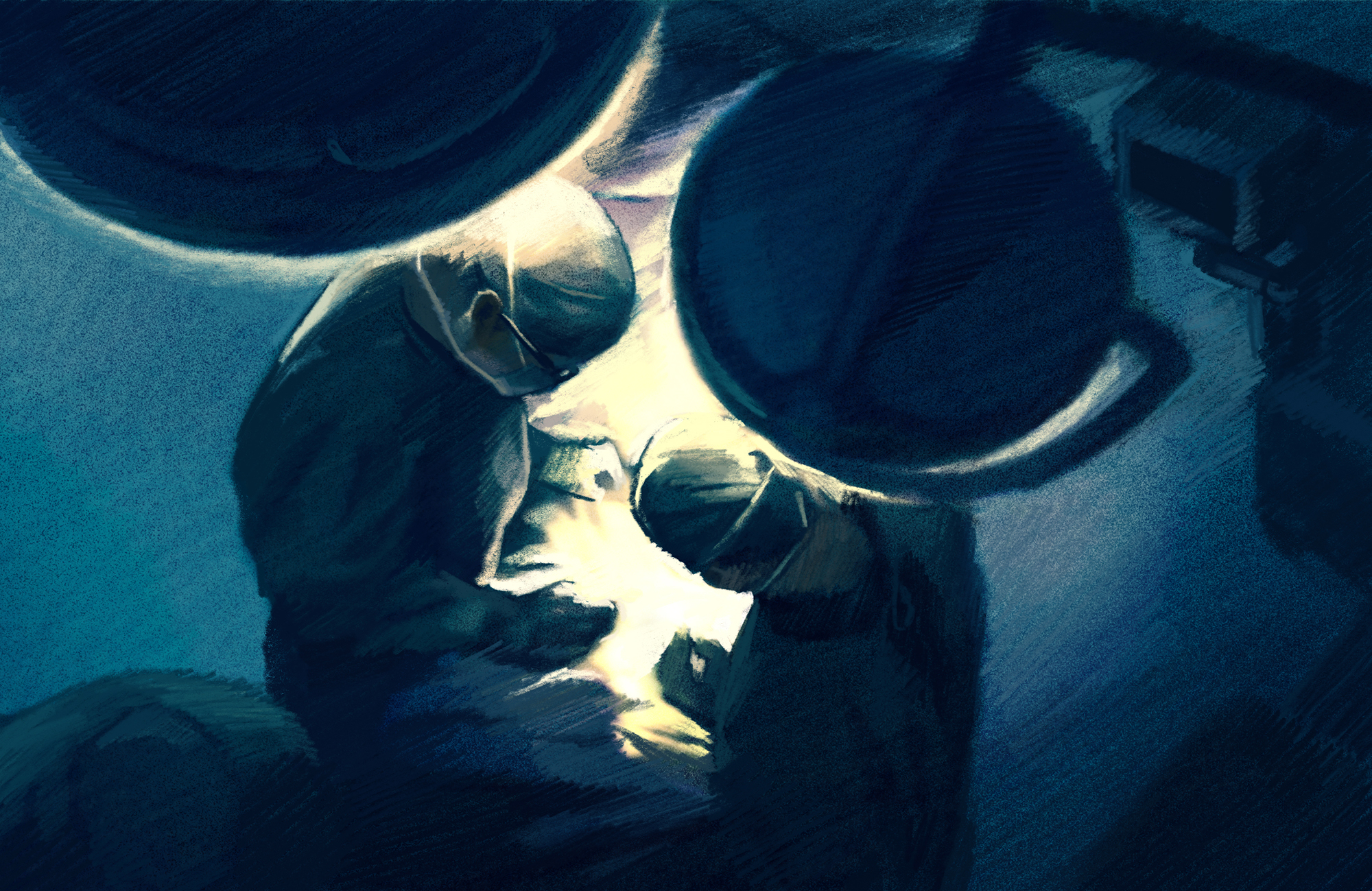
The Manhattan surgeons operated on him immediately, noting “perforated appendicitis with gross fecal spillage.”
They also recognized something even more ominous: sepsis, a life-threatening reaction to infection.
Falchetto never recovered. Doctors documented “worsening septic shock.”

He had a catastrophic heart attack a week later.

With little brain activity, Falchetto was transferred to hospice.
He died on March 7.
“Imminent Risk to Patient Care”
It’s impossible to say for certain whether short-staffing caused Falchetto’s death. He was severely ill when he arrived at East Orange and may have died even if he got proper, timely treatment. But he didn’t get that.
“If I were the family, I’d sue everyone,” one of the doctors involved in Falchetto’s case told ProPublica. “He should have been operated on immediately.”
By last spring, managers at East Orange were sending increasingly dire alarms internally. One email in March — just a few days after Falchetto died — warned that the shortages were preventing proper care.
The crises began coming in quick succession, one more desperate than the next.
Both of the hospital’s orthopedic surgeons left. And wound care became a particular problem. The East Orange VA previously had three nurses who specialized in the area. By this spring, just one remained, according to East Orange staffers. She would have to commute dozens of miles between East Orange’s hospital and its satellite clinics and nursing home.
“I’m not going to have time for anything,” the nurse told colleagues in a meeting about the changes.
A few months later, a veteran arrived at East Orange with a diabetic ulcer — essentially an open wound — on his left foot. His records state that the wound “significantly increased in size” but that he hadn’t been seen by a wound care specialist amid shortages.
“If I were the family, I’d sue everyone.”
East Orange VA doctor
It was the VA’s nearby nursing home — which the agency calls a community living center — that raised the starkest alarm. A message to the staff on April 10 warned of an “extreme shortage of CLC nursing staff with an imminent risk to patient care.”
An administrator wrote in the message that the nursing home was taking emergency action to cut the number of veterans allowed at the facility from 192 to 180. Soon the cap was reduced again, to 170.
What that meant is that vets who qualified for spots would be mostly turned away.
Typically, the East Orange hospital could function as a kind of temporary overflow facility for the nursing home. And the nursing home could do the same for East Orange, taking some patients when the hospital was full.
But now neither could handle any more. On May 20, a notice went out to staff saying the hospital couldn’t accept patients from the nursing home that day.
What’s more, 17 veterans who needed admission were instead housed in the ER. Other hospitals also sometimes do that, but at East Orange the problematic practice went from rare to “far more common,” one doctor involved recalled. They were stuck there at least a day. “They’re in bed all day,” said the doctor. “It’s essentially a cot.”
“People Are Falling Through the Cracks”
The day after the ER pileup, Collins, the VA secretary, arrived on Capitol Hill to testify again. He bristled when he was asked about how staff cuts and eliminated positions were affecting care.
“There is nothing they cannot hire,” Collins told the lawmakers. If hospitals need a doctor, “they hire the doctor.”
Soon after, Collins quietly imposed staffing caps. What’s more, even when hospitals do have the authority to hire, the pall hanging over the agency now has impacted recruiting. As ProPublica reported last year, many doctors have turned down VA job offers amid the ongoing turmoil. Nearly 4 in 10 of the roughly 2,000 doctors offered jobs from January through March last year rejected them. That is quadruple the rate of doctors rejecting offers during the same time period in 2024.
At the time of Collins’ testimony, the VA had around 5,100 fewer doctors, nurses and other “mission critical” staff than it did at the start of the Trump administration, a 3.4% drop. Under Biden, by contrast, the VA had been staffing up.
“There is nothing they cannot hire.”
Doug Collins, VA secretary
At East Orange, staffers told me the hospital had no vascular techs for most of this year, meaning there was no one to run tests on arteries and veins. And on the oncology ward, internal records show the team assigned to help patients navigate their treatment was down to just one nurse.
The providers who have stayed have been overwhelmed by vets’ needs — a dynamic that employees say is playing out in VA hospitals across the country. “People are falling through the cracks, and now they’re not getting help,” said one primary care physician at a VA clinic in Missouri.
“I’ve been working from 6 a.m. to 10 p.m.,” she said. “I’ve had to take mental health breaks because I’ve been so stressed. I’ve been near suicidal. It’s not normal.”
Coins, Not Care
On a late August morning, a smattering of black SUVs and police cars pulled up to a VA campus near East Orange. Collins and a gaggle of aides stepped out of the caravan and went inside.
The VA secretary visited two departments. One was the chaplains’ unit, which, like so many units within East Orange these days, is “severely understaffed,” according to an internal presentation. (Collins is an ordained Baptist minister and once served as a Navy chaplain.)
The other was the residential PTSD unit. Staffers had arranged for Collins to meet with veterans, messages show. The event was not open to the media, but, according to staff and a vet who were there that day, Collins sped through the visit and did not stay long to speak with the vets.
On his way out, Collins stopped for a moment to talk to a veteran without legs in a wheelchair. After Collins strolled away, I asked the veteran what they discussed. “He just thanked me for my service and gave me one of these,” said Willie Johnson, showing me a commemorative coin that says, “Secretary of Veterans Affairs, Douglas A. Collins.”
I asked Johnson whether he had noticed changes in care since Trump returned to office. “Oh yes,” he said, noting that even food has gotten worse (among the positions with severe shortages at East Orange: food service worker).
The day after Collins’ visit, an email went out to staff. A “particularly meaningful part” of the visit, the email from a top administrator said, was the opportunity to recognize the service of five employees with Collins’ coin.
Among the recipients was the head of the maintenance department — the diminished unit that’s struggled to keep the operating room open.
Last week, as we were preparing to publish this story, a doctor at East Orange told me of a development: a backup generator had failed, and the OR was closed yet again.
Don't Miss:
-
A Natural Gas Project Off Alaska’s Coast May Be a Russian Ploy for Intel on the Arctic
-
The Garbage Man: Bill Gates Has Earned Billions Investing in Climate-Polluting Landfills
-
Watch: Where Do Our Generic Drugs Come From? We Dug to Find Out.
-
Lawyers in This State Are Allowed to Ghost Clients for Years. Why Don’t More Judges Stop Them?
-
Firm Linked to Trump’s Sons Got Nearly $40 Million in Federal Contracts to Screen for Ebola and Other Diseases