
 New documents show how a retail chain’s sales practices helped put guns on US streets
  Singapore a battleground of commodities fraud lawsuits
  From Propagandist to Criminal
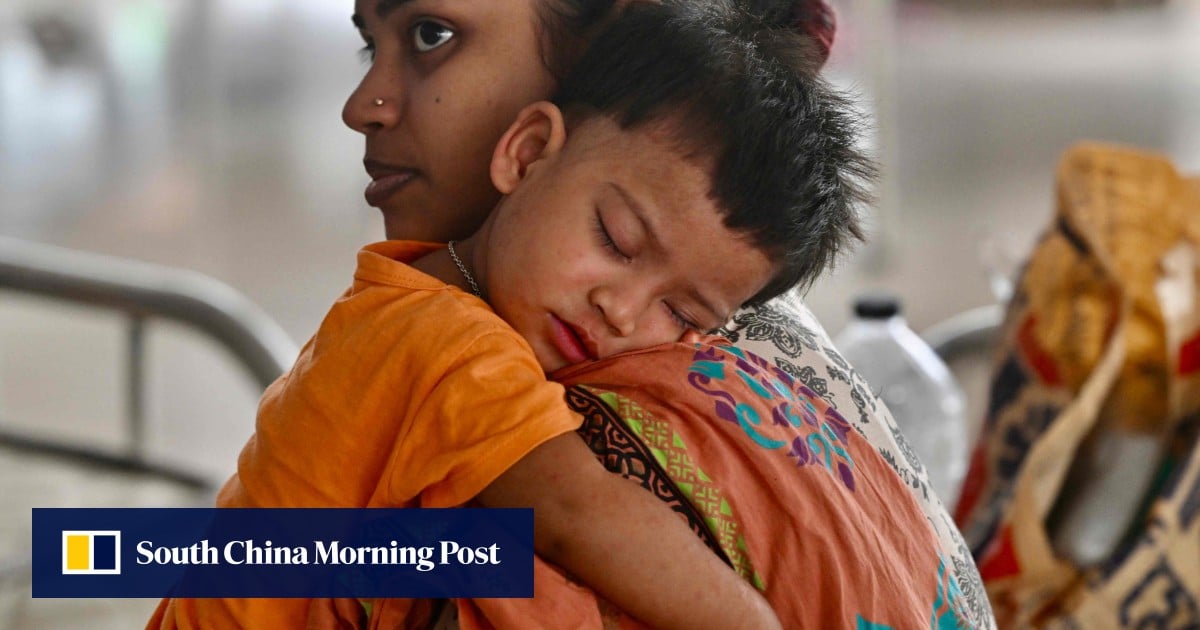
Rocking her baby to soothe his searing pain and gasping breaths, 18-year-old Rubia Akhtar Brishti recounts how her son nearly died in Bangladesh’s deadly measles outbreak.
“The boy had [a] high fever and found it hard to breathe,” Brishti said, wiping the fevered brow of one-year-old Minhaz, cradled in her arms. “His whole body had rashes.”
At least 143 people have died in the outbreak since March 15, the vast majority children, with more than 12,000 suspected cases – the worst in the South Asian nation in 20 years.
Advertisement
Brishti, like dozens of others, rushed from her village seeking help in the capital Dhaka, where the DNCC Hospital in Mohakhali, set up originally for Covid-19, is flooded with cases.
The ward is filled with the sounds of coughing and cries of pain, as mothers hold nebulisers over their children’s mouths to help their little lungs gulp for air, their tiny bodies marked by a searing rash.
Advertisement
Measles is one of the world’s most contagious diseases, according to the World Health Organization (WHO), and spreads via coughs or sneezes.
Don't Miss:
-
Former American Idol singer Caleb Flynn sentenced to life in prison for wife’s murder
-
Bogota mayor presses Chinese-led consortium for more metro workers as auditors flag delays
-
ICC unseals arrest warrants for 4 Taliban leaders wanted on gender persecution charges
-
Quebec votes in provincial election as separatist surge poses test for Canada’s PM Carney
-
“Here, We Confront Drug Traffickers Daily… And The U.S.?”