
 About the China Capital investigation
  Frequently asked questions about the China Capital investigation
  ICBC promoted corrupt executive, ignored employee misconduct as it pursued global expansion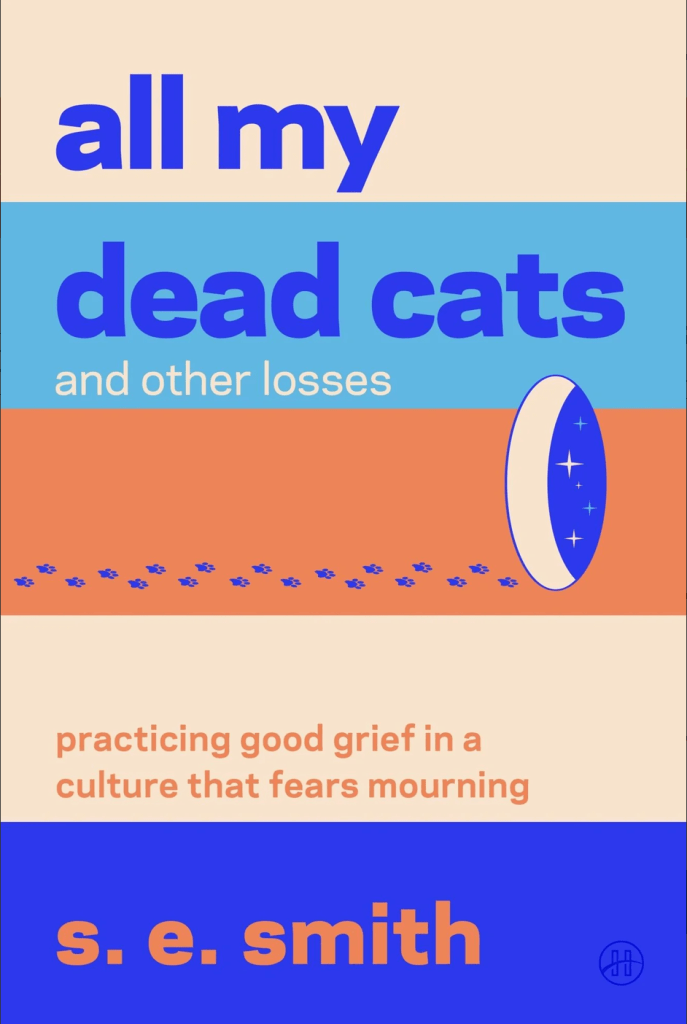
Curation is the heart of what we do at Longreads, and for years, I’ve appreciated s.e. smith’s reading recommendations, which often surface less-circulated outlets and stories. In a time of algorithmic sameness, smith’s Bluesky links—along with their periodic palate-cleansing photos of cats and peaches—are refreshingly human.
A National Magazine Award-winning essayist and journalist in Northern California, smith explores contemporary culture, with a focus on labor, disability, technology, feminism, death and dying, and animal welfare. Near the start of their new book, All My Dead Cats and Other Losses: Practicing Good Grief in a Culture That Fears Mourning, they ask a question: “What if we interacted with loss in more diverse ways?” From there, smith traces how the loss of their cats over the years has shaped their understanding of grief, and how that grief collides with a culture—white, American, individualist—that would rather not talk about death at all. In the book, smith makes a case for mourning as something we should be able to do together, not alone.
This collectivist spirit runs through another one of smith’s projects. They’re a co-founder and worker-owner of feminist media collective The Flytrap, an outlet for cultural criticism that pushes against the algorithm and provides a “space for people to tell stories that aren’t getting surfaced,” they said in a recent interview. That same call for collectivism shows up in how smith talks about cultural criticism more broadly: Without it, we can’t understand the world we live in. “We are going to keep doing the same shit over and over, and relitigating the same boring-ass topics,” they told The Flytrap, “if we cannot preserve, protect, and uplift cultural criticism—and people need to do the reading.” In other words, reading is essential. It’s how we stay in conversation and connection with each other. At Longreads, we’re all for it.
Preorder All My Dead Cats and Other Losses, out on July 28. In the meantime, follow s.e. smith on Bluesky, sign up for their pet end-of-life advice column, and dig into this questionnaire, which touches on the beauty of the natural world, embracing neuroatypicality, and the wondrous rabbit hole of reading.
Where did you grow up?
I grew up in three places, really, if we’re talking about formative years in early childhood that shaped who we are and how we think about the world. One was Elk, a small town in Northern California where we lived on a large piece of timber land way up in the hills—my father managed the forestry, which was almost all old-growth redwood, and the property owner only took a tree now and then when they needed some cash, because that wood was so valuable that you could get tens of thousands of dollars for a single tree. I loved living amid the trees and adventuring with my father and during the infamous timber wars of the era, it was a reminder that forestry doesn’t have to be all or nothing, clear-cut or never touching a single tree, there is a way to harmoniously live with a forest and its other residents with respect and care.
Another was Greece, where we lived on both Xhios and Lesbos. Being immersed in a different culture, learning a new language, and interacting with people far outside my American experience was really valuable to my development as a more thoughtful person aware that other people exist. My childhood in Greece actually comes up in the book—Greek funeral practices had a profound impact on my relationship to death and grief.
The third was Caspar, another very small town in Northern California where we’d play soccer in the middle of the street. Our house was the polling place. The neighbor’s cows would periodically escape: Once, extremely memorably, one walked into our house after we had left the doors open for cross-ventilation on a hot summer night, which is how I learned that cows will go UP stairs but they don’t particularly care for going DOWN them. Caspar gave me a deep sense of community and was a great lesson in the value of leaning into absurdity, whimsy, and storytelling.
What places feel like home?
Home feels more like a state of mind than a place to me, although for a long time, whenever I dreamed about being home, it would be my childhood house in Caspar, so maybe it’s more of a place than I want to admit. I think of home as a game night with friends; sitting out in the garden on a warm evening with an old-fashioned and arguing about books; a long walk and talk. Home is people I trust and feel like a better person for knowing.
Other than family members, who or what has shaped you the most?
Alice Wong, who died in 2025, had a profound impact on my life. Alice was a larger-than-life force of nature who rejected disablism with such ferocity, who believed in the power of disability joy, who understood, intimately, the need for solidarity work and found the disability connections in everything. She was outspoken on Palestine when it was deeply unpopular, she challenged social attitudes that devalue disabled lives, and she was a meteoric, incredible writer.
She was also a deeply held personal friend who shaped the way I think about relationships, friendships, and my own disability. I was so honored by the years we spent together and remain enraged about all the years we will miss out on because of structural disablism. Alice always made me think more deeply, was unafraid to call her friends out on their bullshit, and was a fantastic late-night texting partner. I sense her long, bony arm frequently in my day-to-day life and will carry her with me always, especially when she’s whispering conspiratorially into my ear.
What is your favorite time of day?
I love dusk, the moment when the sun has set but the scattered clouds in the sky are still all lit up in oranges and yellows and pinks, where the sky feels so alive but the light moves so fleetingly that every time you blink, it looks totally different. Maybe the moon is just rising, a reminder that night is waiting in the wings. There’s this little wind that kicks up right as the sun slips over the horizon, and a weird movement of sudden hush, an exhale. The best place to experience sunset is on the headlands by the ocean, on a night where there’s a bit of an old bones smell.
What are you really good at?
Breaking things. If there is a new and previously thought impossible way to break something, I can do it, with results like “I don’t even know how you could do this” and “this is honestly kind of impressive” and “can I share this damage report with the engineering team?” Software developer friends like to use me as a beta tester because I can be relied upon to very quickly identify the wildest possible route to catastrophe, but my skills apply to physical objects as well. Is this skill frustrating because it’s usually my own things that I break? Yes, absolutely, but the flip side of this is that I’m also good at taking things apart and figuring out how they work so that I can, in turn, hopefully fix the thing I broke and put it back together. Mostly.
What’s the best gift you’ve ever received?
An act of kindness that really stuck with me from when I was living in San Francisco in the 2000s. I was meeting up with friends in the Mission, had a panic attack, and got extremely disoriented. A hipster in full 2000s regalia could tell I was obviously not doing my best and asked if I needed help—he ended up disrupting his whole night to escort me all the way back out to Treasure Island on transit, which as anyone who lived on the island in those days knows was a real pain in the ass, especially late at night. I know this sounds extremely cheesy, but he reminded me that it’s always worth taking time out of your day to help someone who is clearly not having a good time out, rather than turning away. I hope he knows I still think of him and that he’s living his best life.
Describe your favorite meal.
A meal that I come back to regularly is one my father and I used to make all the time when I was a kid: spanakopita. It’s the mezze that really make it, though: maybe some beet salad, dolmades, baba ghanouj (sorry Greeks, I like Turkish food too), really good pickles, olives, fresh feta with honey, grilled octopus, some nice crispy sardines and lemons, cheeses, high-quality bread, kefte, whatever else you can rustle up. Going all out when friends are coming over is one of my favorite things. A good wine to go with it is always nice too.
Sound or silence? (And if sound, what sound?)
Such a situationally dependent question! The sound I probably find most pleasurable is the ocean, especially waves running along a rocky beach that make a sort of clattering hiss. That said, I do sometimes wish I could turn my ears off because there are so many Terrible Noises in the world and noise-canceling headphones can only do so much.
Where do you do your best thinking?
Either going for a walk or having a shower beer, or walking and then having a shower beer. Gosh, I’m answering a lot of these questions with alcohol, I promise I don’t actually drink that much! The movement and opportunity to touch grass on a walk often helps me work through problems and noodle over ideas, and I’ve noticed that my brain really likes to start cooking when it is as inconvenient as possible to take notes, which is why sometimes I’ll be walking back from the post office muttering under my breath as I desperately try to remember the perfect turn of phrase or the solution to a chapter I’m really stuck on or hold on to the shred of an idea for a story I want to pitch.
What journey—physical, creative, intellectual, or otherwise—has meant the most to you?
I spent a lot of life really buying into the idea that I was “too much” or “a difficult personality” because there’s all this social pressure that’s rooted in neurotypicality and assumptions about gender and the gendered expectations that follow. Working through that, unpacking it, and pushing past it has been a long process with lots of fits and starts, but it’s helped me build confidence in myself, allowed me to take up space, and pushed me to actively contest the idea that everyone needs to behave within these really narrow and also baffling confines. Honestly, I feel bad for neurotypical people who are locked into this and struggling with it. Set yourself free! It’s something I will always have a hard time with and there are days when I doubt myself, but this journey has been a really critical part of coming not just to a better understanding of who I am, but a better understanding of our culture, and it’s connected me even more deeply with fellow disabled people.
Where do you like to read?
On a daily basis, I have various reading sites around the house; almost every room has an armchair of some form or another, although the one in my office might be my favorite because when it’s raining out it feels very cozy with the rain on the skylight. My top-tier favorite place to read, though, is sitting in a tree on a warm spring day when it’s just starting to leaf out so everything is sun dappled and the leaves are whispering to each other in a light breeze.
What’s the last rabbit hole you disappeared into?
I recently picked up some very cool vintage folding chairs on a street corner—the now-moribund community theater was getting rid of them and it seemed fortuitous that I’d just been talking about wanting extra chairs for dinner parties and there they were, out there in the wild for any interested parties. (They were gone within 20 minutes.) They were not in the best of shape, though, which sent me on a wild mission to refinish them. Not only have I never refinished chairs before, I’ve never done any sort of woodworking project-related activity, period. Naturally I immediately pinged a woodworking friend with a few basic questions because the internet is terrible for finding any kind of information at all these days, and then spent the next four days in ADHD hyperfocus mode dismantling them, stripping the old varnish, sanding them, wondering why I thought this was a good idea, going to the hardware store at least once a day, trying to get all the rust off the hardware, searching “how to get broken-off screw out of furniture,” and getting increasingly filthy. I just ordered fabric for the seats. (Have I reupholstered anything before? Do you even need to ask this question?)
I really enjoy teaching myself to do things, stumbling through goofy mistakes, and in particular using my hands in new ways, so I am having fun with this project even if I am at times frustrated. (I am about to give up and ask my friend for help with getting the sheared-off screws out of the legs before I start actually applying new finish.) Side bonus: You cannot mess around on the internet for hours when you are wearing PPE and covered in various kinds of goo and/or sawdust, a big help for me, an extremely online person.
Name three publications you enjoy reading these days.
I’m really impressed with Equator, which is decentering the West with incredibly interesting, provocative cultural criticism and analysis from all over the world, including some works in translation. They’re producing such thoughtful work and every time a new piece drops I’m excited to set time aside to read it.
I also love Colin Dickey’s Glacial Errata, which runs every Monday. Every week it’s a list of five things, but each list is so distinctive. They can be photos, poems, songs, observations, and they always take my brain down interesting paths. I feel like the frequency and timing is always perfect, too—we’re all in newsletter overload (I say, as someone who co-owns The Flytrap, a feminist cultural criticism newsletter, and has a weekly advice column, Tell Your Cat I Said . . .), and it always lands at the perfect moment for a little reading and thinking break. Colin’s logical connections are sometimes really circuitous and counterintuitive, which I also love, as someone with a brain that tends to jump around in wild ways too.
And I’m a huge fan of Offrange, which brings both really good reporting and sharp cultural criticism to conversations about food and farming. Every article is so interesting and surfaces a new perspective, and I learn so much from every read. Lots of very cool longreads as well from passionate journalists who truly love the work they do.
What’s one longread that you can’t stop thinking about?
I regularly re-read and recommend Jake Eaton’s “The Unbearable Loudness of Chewing,” about misophonia, which is really poorly understood. It’s a fantastic piece with lovely writing and that alone is reason to read it. It’s so hard to articulate the experience of being so oversensitive to noise that ordinary sounds, and sometimes even their associated visuals—chewing, someone chopping wood in the distance, a cat grooming—are not just unpleasant but unbearable, triggering responses that you understand are totally disproportionate to the sound but also can’t control. Misophonia fits into the framing of “contested illnesses” that society doesn’t understand and is automatically suspicious of, and it’s so important to get work like this out into the world.
Eaton does a great job of talking about misophonia in a clear, empathetic way and introducing the conversation around the fights that arise when people introduce a new diagnosis. He also talks about what happens when people find community in each other, learning that they are not alone, and how powerful that feeling is, especially after spending years encountering hostility when you try to explain that no, it’s not just that you find a sound annoying, it goes much deeper than that.
It’s a great example of how journalistic objectivity is a myth and incredible disservice. The story is so good because he makes himself a character, because he intimately understands the experience he’s researching and interviewing people about, because he knows, personally, the frustration of living with something that’s so frequently subject to dismissal and derision.
What was the last book you read?
All Hail Chaos by Sarah Rees Brennan, the sequel to Long Live Evil. I’m a longtime fan of her work and like her other books, both will rip out your heart and stomp on it, but they also play with and expand literary tropes, especially around gender, in really interesting ways. She’s a deeply feminist writer and also extremely sassy and her characters are always larger than life. Both are also fundamentally grief books, exploring not just death and fear of death but other kinds of losses, so they felt very timely in this moment.
What piece of nonfiction are you most proud of writing?
One of my all-time favorite pieces ever was about the concept of “complicated grief” for Bitch Magazine, which we recently reprinted at The Flytrap as part of our project bringing back highlights of the Bitch archives. While it ran in early 2020, that was a coincidence; I researched and wrote it in 2019. Working on it brought up a lot of questions for me about why we pathologize grief, how some expressions of grief are considered inappropriate, and who gets to decide these things. That became the genesis of my book, because I felt like many books about grief weren’t taking it on as a collective social project—Sarah Jaffe’s outstanding From the Ashes is a notable exception—and were offering more of a personal, self-help perspective instead of understanding that grief isn’t something we do alone. That said, I should note that there are a lot of amazing grief essays and reported cultural criticism out there, including “Voices of Mourning” (Hannah Gold for The Baffler), “Someone Died the Day I Bought These Boots” (Luna Soley for Outside), and “Memetic Mori” (Kristen Martin for Real Life). I wanted to read something that spoke to this desire to minimize and fix grief, to make it go away, and I wanted to push back on what grief is supposed to look like. This is a country with a really unhealthy relationship to mourning and we’re not going to resolve it by pretending that we can will grief away like a vampire confronted with a head of garlic.
What’s your most reliable way to get creatively unstuck?
Working on something that’s not the thing I am struggling with, and specifically working on something outside the domain of the thing I am fighting. If I’m writing something and I feel clogged, I pick up a sewing project or go work in the garden. If I’m wanting to scream about the math on a quilt, I pick up a nonfiction essay I’ve been noodling around on. It’s really important to disrupt that cycle in my brain that will fixate on something and keep picking at it instead of stepping back, and that conscious switch between types of tasks is a great reset for me.
Who’s a writer you turn to when you need some inspiration?
Kate Wagner. She’s hands-down one of the greatest culture critics working today. Her writing is stellar, thoughtful, and provocative, and she’s a great storyteller. I always find something new in her work, even when it’s a piece I’ve read multiple times. She’s also just so incredibly knowledgeable, and it shows in the care she puts into her work. Every one of her longform features is an absolute delight, including her infamously killed Road and Track feature on Formula One.
What words do you overuse?
I’m a millennial so absolutely lol, lol, but I am also really trying to weed hedges and prevarications out of my language: I don’t need to preface every statement with “I think” or “I feel” or some other qualifier apologizing for my statement, opinion, or existence. I can just say what I mean!
What’s your favorite guilty pleasure?
I really try to reject the mindset of guilty pleasures; culturally this whole concept is structured around shame and the suggestion that you should feel bad for finding pleasure and joy. If you enjoy something society thinks you shouldn’t be doing, that’s a them problem, not a you problem! As long as the thing you enjoy doesn’t harm anyone, don’t feel bad about it, no matter how stigmatized or silly it is. I will say that one thing I enjoy that seems to surprise people is violent movies: I am a huge John Wick enthusiast, for example.
What superpower would you like to have?
Absolutely the ability to snap my fingers and eliminate every billionaire on earth, with a side of keeping the millionaires running scared.
What animal or nonhuman being do you most identify with?
Perhaps unsurprisingly, cats. I appreciate their independence and ability to entertain themselves and figure things out on their own, and also their loyalty to their people—and the fact that they express that care and loyalty in subtle, complicated ways. Like most cats, I am also actually very self-conscious, hate being perceived, and especially don’t like being embarrassed, so I, too, pretend that I meant to miss when I tried to jump on the (metaphorical) counter, and that was definitely intentional and nothing to discuss further.
If you have a free solitary hour in your day, what do you typically do?
Read, or work in the garden, depending on my attention span and focus in that particular moment. If I feel my brain bouncing around, I’ll garden, because it lets me focus on a thing that also requires movement and lets my brain wander. If I can dial in, it’s going to be reading.
What five items would you place in a time capsule?
Everyone’s journals, notebooks, and diaries from the last ten years, this incredible collection of interior, private, day-to-day life that shows us how we got to this moment. Usually these kinds of surviving personal records only survive if the author was able to get them published or was a prominent historical figure and someone thought their work was worth preserving. I want people in the future to know who we all were, not about the outliers.
Some samples of really good fruit. Climate change is destroying so many food systems and it makes me sad to think that people in the future might not really know the flavor of a true summer peach off the tree, only eating a hollow, artificial echo of it. We’ve already lost so many great fruit varietals not just to climate change, but to breeding for industrialized agriculture, where fragile, subtle things just can’t survive the supply chain.
Similarly, a view of a truly dark night sky in August, with the Milky Way blazing through the stars. The number of truly dark places on earth is rapidly shrinking; even in the pretty remote area where I live, I have to take a bit of a trip to find darkness. When friends from the city visit for the first time, some of them have never seen the Milky Way before, which blows my mind. Everyone should be able to experience that. The night sky is so amazing, and it infuriates me that it’s being polluted by urban glow, Elon Musk’s satellites, and other debris of the Anthropocene. If we can’t save it, we should at least preserve its memory, and if we can, our future selves should know how close we came to losing it forever.
Some samples of newspapers and magazines, but I’m not thinking about famous headlines. Throw in some random local newspapers (if you can even find one these days) or The San Francisco Chronicle on the most boring day ever. If you haven’t guessed, I’m a huge fan of preserving regular life, not just extraordinary moments; I love looking through old magazines and newspaper archives and absolutely live for the mundanities like the rummage sale at the Senior Center and the editorial corrections.
At least one beautifully engineered thing that doesn’t have to go as hard as it does, but is a delight to handle, use, and look at. I love utilitarian design too, but I have a deep affection for things that are a little extra and showcase not just functionality but our love for beauty and sometimes even whimsy.
What does your writing space look like?
My office is a big, bright room lined with bookshelves and dominated by the very large solid wood buffet I’ve repurposed for storing things—I picked it up because the top drawers are actually designed like a card catalog, I love that vibe, and I love things that can hold small things that would otherwise get lost. A lot of those drawers currently contain cat toys. I also have a little reading nook, and in addition to my primary desk, I have a secretary where I write letters and postcards. The view looks out over the garden so I have something nice to rest my eyes on, and it’s filled with art and mementos from friends, including my ancestors, like a blue ceramic foo dog from Alice Wong and a 19th-century ivory zushi that I inherited from my father. I like being surrounded by beautiful things and also carrying the legacies of my ancestors forward.
s.e. smith is a National Magazine Award-winning Northern California-based journalist, essayist, and author.
More questionnaires
The Longreads Questionnaire, Featuring Aymann Ismail
The Slate writer and Becoming Baba author reflects on Newark and mosques as home, making sense of Egypt on long flights, and becoming a father.
The Longreads Questionnaire, Featuring Elisa Gabbert
The author of Any Person Is the Only Self and recent Guggenheim fellow talks about the worst time of day, the value of wasting an hour, and chilaquiles.
The Longreads Questionnaire, Featuring Cory Doctorow
The author of Enshittification and the new The Reverse Centaur’s Guide to Life After AI on hammock life, the joy of pulp, and writing through it.