
 ICIJ journalist Micah Reddy freed after 4 days in secretive Djibouti custody
  IMDB’s China Connection
  Trump administration gave firm with ties to ballroom donor the green light to do business with a sanctioned Russian bank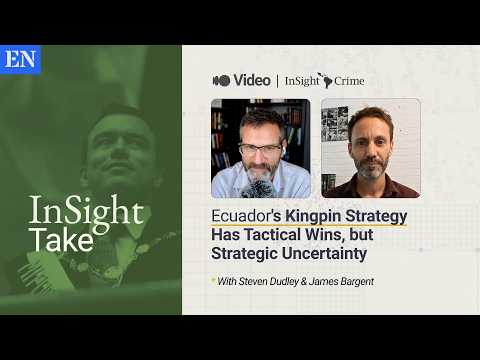
The capture of Ecuadorian crime boss Wilmer Chavarría, alias “Pipo,” was a major victory for President Daniel Noboa’s strategy of targeting high-value criminal leaders. But it also raises a larger question: Do kingpin arrests weaken organized crime, or simply make it more fragmented and violent?
Pipo allegedly faked his death from COVID-19, obtained a fraudulent death certificate, and underwent multiple facial surgeries before his capture in Málaga, Spain. Ecuador and the United States have both sought his extradition—Ecuador over a 2010 murder case and the United States over alleged international drug trafficking. While a Spanish court rejected the US request, Ecuador’s remains pending.
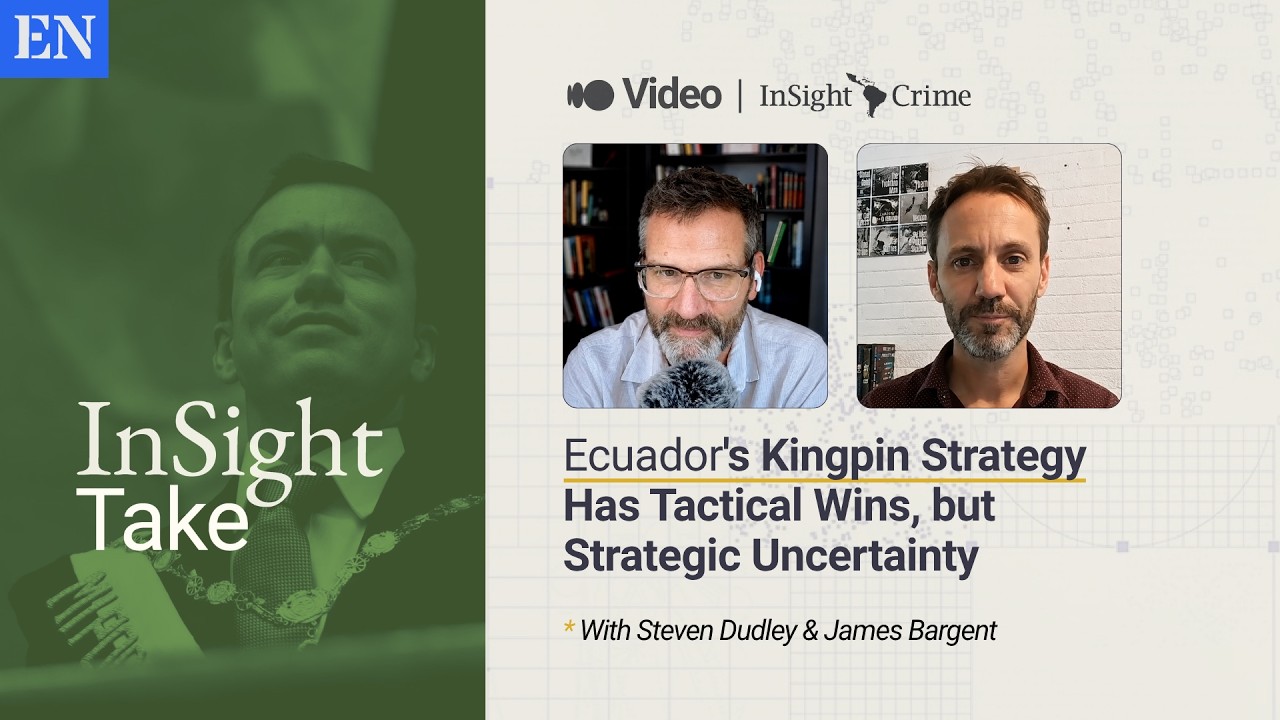
In this week’s InSight Take, InSight Crime Co-director Steven Dudley and investigator James Bargent examine what Pipo’s case reveals about Ecuador’s kingpin strategy. They discuss how high-profile arrests can deliver tactical victories while accelerating the atomization of criminal groups into smaller, more volatile factions.
Transcript
Steven Dudley: [00:00:00] A Spanish court has just rejected a US request to extradite Wilmer Chavarria, alias “Pipo,” the alleged leader of Ecuador’s Los Lobos gang, who faked his own death from Covid before resurfacing in Malaga, where he was arrested last November. The ruling doesn’t free him, and it doesn’t clear him. It just leaves Ecuador’s own extradition request pending in the same Spanish courts. But it’s a good moment to ask a bigger question. More than two years in, what has President Daniel Noboa’s strategy of hunting down Ecuador’s top criminal leaders actually accomplished?
[00:00:47] I’m Steven Dudley, the Co-director of InSight Crime, and I’m joined this week by James Bargent, who’s been tracking Ecuador’s high-value-target campaign since it started. James, thanks for joining me.
James Bargent: [00:01:01] Afternoon, Steve. Good to be here.
Steven Dudley: [00:01:04] Let’s start with Pipo—I mean, that’s our hook. Walk us through why this case is so strange.
James Bargent: [00:01:12] Yeah. I think to start off with, we want to know who Pipo is, right? So he is not one of the better-known, more notorious gang leaders in Ecuador, but arguably he’s one of the most important organized crime figures of recent years. So Pipo was a bank robber, but when he was in prison, he became part of the Choneros Criminal Federation. This was the federation that took over the prison system and began projecting their power out on the streets. But around 2020, Pipo led a breakaway faction called the Lobos in leaving that Choneros federation. And really, this moment where Los Lobos, Pipo, and several other groups kind of broke away and fragmented was the trigger for the security crisis that Ecuador has seen in the last few years. And now Pipo himself, as you mentioned, escaped from prison by faking his own death. He got a fake Covid death certificate and simply slipped away. Since then, he’s had multiple facial reconstruction surgeries, and he’s been running Los Lobos from abroad. Now, whenever we spoke to anyone during this time—any law enforcement authorities, criminal sources—no one believed Pipo was dead. Everyone was like, yeah, he’s out there somewhere. He’s in Dubai, he’s in Europe, he’s in the United States. And it turned out, as you said, that he was in Spain, and they arrested him in November last year in a joint operation between the Spanish and Ecuadorian authorities.
Steven Dudley: [00:02:47] It’s really incredible that he has managed from abroad, or at least outside of the country, to build up what is arguably the strongest criminal group in Ecuador. How did he do that?
James Bargent: [00:03:02] Well, I think it’s important to recognize Los Lobos have always been a bit different from the other organizations: less centralized, less focused on one big kind of charismatic leader, as the other groups have had. So Pipo has always been kind of managing it from behind the scenes. And what he was able to do very successfully is build up a series of local factions run by different commanders, some of them from behind bars within prisons, others from out on the streets who were very aggressively moved into strategic territories, above all for drug trafficking, but also for illegal mining. Los Lobos were some of the pioneers in expanding criminal influence into illegal mining. And when they get to a new territory, they basically try and pick off the gangs that are working for their rivals. So you might get a local street gang that basically takes orders from the Choneros. They would go in, and they’d make them a better offer. And of course, if they didn’t take that better offer, then they would use violence to try and take over those territories.
Steven Dudley: [00:04:10] I mean, it’s no surprise then that for Noboa, this is a huge victory or should be a huge victory. But it seems to have gotten even more complicated after they had this victory, didn’t it?
James Bargent: [00:04:29] Yeah. I mean, Noboa said at the time, this is one of the biggest blows against Ecuadorian organized crime of his presidency. And he wasn’t wrong in that in some senses. But it seems to be—well, it’s at risk of going off the rails. So basically after he was captured, two countries put in extradition requests. Ecuador put in a request for him to be extradited on murder charges for some killings that took place in a bank robbery in 2010. So we’re basically talking about the original charges that he escaped by faking his death. The US, meanwhile, put in a request for large-scale international drug trafficking. And this is where it started to go a bit wrong. So the Spanish authorities have rejected the US extradition request, saying that it basically didn’t meet their evidentiary standards. They cited imprecisions in the evidence that was provided and said that along those terms, with the evidence the US has provided so far, they couldn’t grant extradition. Which leaves us still with this Ecuadorian request. But that could be facing its own challenges.
Steven Dudley: [00:05:41] I mean, it’s not only kind of going off the rails because of all these different requests—you don’t know if they’re going to be granted or not by the Spanish courts because you have all different bars they have to cross. But also he started to make these really kind of, I don’t know if they’re outlandish, but certainly scandalous accusations about Noboa himself. So he’s using his time in court as a sort of chance to speak into the megaphone. And in that megaphone, he’s saying Noboa is also involved in drug trafficking.
James Bargent: [00:06:26] Yeah. Not only that, he has accused Noboa of being a major player in Ecuador’s drug trade, but he’s also accused Noboa of being one of the intellectual authors of one of the most emblematic murders in Ecuador’s history: this is the Fernando Villavicencio case. Now, Villavicencio was an anti-corruption campaigner, a journalist turned politician, and he’d launched his own presidential campaign when he was murdered. He was murdered just after a campaign event. Now, Pipo, himself, has been accused of being part of this plot. The Lobos were allegedly contracted by powerful political and business sector figures to carry out this hit on Villavicencio. But he’s kind of turned the table on that accusation. And he said Noboa himself was behind the murder.
James Bargent: [00:07:17] Now we have to say, we have to be very skeptical about these claims. Noboa has faced some drug trafficking scandal linked to his family’s banana business, which was used to move cocaine shipments, but there’s never been any serious hard evidence that Noboa himself was personally involved, and certainly no evidence of his involvement in the Villavicencio hit. But what these claims do is essentially say to the Spanish courts, look, if you extradite me to Ecuador, you are putting me in the hands of someone that I have information about, and therefore you are putting me in danger. So it certainly seems, and certainly this would be an incentive for him to make these claims, that he is going to argue that by extraditing him to Ecuador, Noboa may try and have him killed in the prison system to prevent him from talking about what he knows.
Steven Dudley: [00:08:17] In many respects. I remember the Villavicencio assassination being the moment in which Ecuador’s security situation really landed on the global map. It was so dramatic. He was assassinated leaving a campaign event. There were several Colombians, I believe, who were implicated in the murder. They were subsequently assassinated. I mean, the whole thing is straight out of a movie. And now we have this guy claiming that the president himself was involved. I mean, to a certain extent, you could see the logic. It did catapult Noboa’s campaign in some respects—although he was one of the leading candidates, it should be said—but it catapulted security to the sort of global scale. And certainly the United States, I think, also began to pay, they were paying a lot of attention, but they paid a lot more attention thereafter. Do you think there’s, you know, a world in which, somebody like people gets back to Ecuador and is facing trial and is making similar accusations? What do you think the chances are he will land back in an Ecuadorian jail and be facing trial there?
James Bargent: [00:09:46] Well, uncertain at the moment. And for this, we have to look at the case of another of Ecuador’s most infamous mafia leaders arrested during the Noboa administration. So this is alias “Willy2 of the Tiguerones. Now Willy, very different to Pipo, he was a very kind of charismatic figure, almost become a kind of cultural symbol for the Tiguerones as a gang member. But he was also out of the country directing operations and arrested in Spain. Now, in his extradition case, he successfully argued that Ecuador had not provided the Spanish courts with sufficient proof that they would be able to guarantee his safety in the Ecuadorian prison system. As a result, his extradition was rejected, and he was freed. He’s walking free in Spain right now. So I would assume that Pipo is very much looking to follow a similar strategy as Willy and argue that his life is in danger if he goes to Ecuador, and it may well be within the Ecuadorian prison system.
Steven Dudley: [00:10:57] I mean, it’s almost the Willy strategy to a certain degree.
James Bargent: [00:11:01] It is pretty much following the same playbook as Willy, yeah. And although Willy didn’t quite make the same outlandish accusations against Noboa, it’s a similar argument that Ecuador cannot guarantee his security if he is sent back there.
Steven Dudley: [00:11:20] These are big names. These are the biggest names in the Ecuadorian underworld. And this has been the centerpiece of the Noboa strategy. How did this all get started? Where does this begin?
James Bargent: [00:11:39] Yeah. I think to understand that you do have to go back to the man who’s perhaps the face of Ecuador’s security crisis more than any other. And that’s José Adolfo Macías Villamar, alias “Fito.” Fito was the man who took over the Choneros as their federation fragmented and really led the battle against the Lobos and the other splinter factions, but he’s also just a much more public figure. He even did a lot of kind of media work and promoted his image during these times. So in contrast, Pipo was very low profile. Fito was a really out-there character. Now, Fito was the main target for some of Noboa’s earliest security interventions. So now we’re talking about January 2024. And what Noboa did was, he sent the military into the prisons to remove Fito from the prison that he basically ruled as his criminal fiefdom. It was his own personal little empire, and he used it as a base of operations to direct the Choneros. So he was sitting, living in a luxury cell, running his criminal organization from his prison. Noboa sent in the military to try and break their control and remove Fito and put him in an isolated maximum security facility. But when they turned up, Fito had already gone. So in response, Noboa sent the military into all the prisons to try and break this kind of control and criminal governance structures that the mafias had imposed there. And the result was three days of absolute chaos. The gangs responded with attacks on police, kind of terror-style attacks in the streets. They even stormed a TV station during a live news broadcast. And this was when Noboa declared Ecuador was in a situation of internal armed conflict, not just with criminal gangs but with terrorist organizations. And he named 22 of these groups as terrorist groups, among them Choneros, the Lobos, the Tiguerones. And part of this—he declared his new strategy as part of this kind of new internal war—was a kingpin strategy. So targeting the high-value, maximum leaders of these organizations.
Steven Dudley: [00:14:02] I mean, a couple of things there that really jump out at me: one is the obvious parallels to what we saw with Pablo Escobar, you know, some 35 years prior, where he was essentially running his business from the prison that they had made specially for him. And then they go in to stop him from being this kingpin operating from prison. And boom, he’s gone. It’s really incredible. You know, though, so you so from the second thing is just thinking about from a sort of optics perspective. The Ecuadorian government makes this guy the centerpiece, right? He’s your symbol, and you can’t even stop him from walking out of prison before you’re going to stop him. It’s really an auspicious beginning to this campaign.
James Bargent: [00:15:09] Absolutely. And a reflection of the fact that when we did our prisons investigation in Ecuador, we found out that Choneros and other gangs literally had the keys to their prison wings. So they were the ones that could lock them up at night and let them out in the day, not the authorities. The authorities controlled the external walls, but the actual wings themselves were controlled to such an extent that the prisoners themselves could let in who came in and who came out, including the prison director, the guards, anyone. They had the control over that.
Steven Dudley: [00:15:41] Mhmmm.
James Bargent: [00:15:42] And as you say, it is remarkably similar in that sense to the Pablo Escobar era. It was a different system; he had his own personal prison that they’d constructed specially for him, whereas the Choneros took over the prisons. But there are definitely parallels in what’s happened afterwards, as well, which is if you focus exclusively on these big personalities, these top leaders, you’re not actually dealing with the broader problem.
Steven Dudley: [00:16:11] Yeah. I mean, there have been a number—and this is the other thing that obviously jumps out—a number of these groups, as you said, were named as terrorist groups. It certainly gave them, perhaps, more latitude to do things that they couldn’t otherwise, such as send in the military to, if not take over prisons, surround them or give some sort of multi-cordon security system around the prisons themselves. But you know, since, we’ve seen the US government as well, jump in on the whole terrorist designations, and the Choneros have been named, Los Lobos have been named, and another group, a much smaller, lesser-known group, I would say, called the Chone Killers, have been named. What do we know about the Chone Killers and their current status in this fracas in Ecuador?
James Bargent: [00:17:12] Yeah. I mean, the Chone Killers have suffered arguably as much as any group, possibly more from this kingpin strategy. So they have lost, well, almost lost their two top leaders. So we’re talking about a guy called Ben Diez and a guy called Trompudo were both reported killed in Colombia. Now, as in the case of Pipo, you can’t really always trust it when an Ecuadorian mafia boss is reported dead. These are not the first guys to suddenly reappear back alive. And sure enough, Trompudo appeared alive, trying to enter Argentina from Colombia. Nevertheless, there have been several other top leaders of the Chone Killers that have been captured. Several other leaders of that kind of second layer of command as well. And it has led to a fragmentation of the group and spiraling violence in the town where they operate, Durán, as these various factions not only fight against their long-term rivals, a gang called the Latin Kings, but also now fight against each other to control the criminal economies in that city.
Steven Dudley: [00:18:23] Yeah. I mean, this is just the kind of, you know, literally the tip of the iceberg that they’re going after. Talk to me a little bit more aboutthe ripple effects of having this kind of kingpin strategy. What happens when you do take out some of these leaders?
James Bargent: [00:18:55] Yeah. So what we’ve seen a couple of months ago, the Noboa administration announced that they had captured 17 high-value targets. So we’re not just talking about these top layers, like Fito, and Pipo, and Willy. We’re also talking about the kind of command layer beneath these guys as well. So in one sense, that’s a big success, to take out that many top criminal leaders in such a short time is a bit of a feather in the cap for the administration, but the results of that have not really undermined organized crime. They have accelerated this evolution that was in process since people led this kind of breakaway from the Choneros. And that’s this process of fragmentation, where each time these groups break into smaller and smaller factions and then they turn on each other, and this increases criminal competition and increases violence. So what we’re seeing now as a result, in a large part, of the success of the Noboa administration’s kingpin strategy, is a real leadership vacuum. And instead of one group or another kind of moving in to fill that vacuum, we’re left with a lot of ever smaller groups and a kind of neighborhood level that are contracted out by kind of leading criminals, drug traffickers, this sort of thing, but don’t really respond to national criminal leadership in the way that groups did before. And this is a new challenge for law enforcement. Instead of trying to target one or two or three organizations, they’re targeting an unknown number that are constantly shifting and changing every single week. And it’s also a major driver of violence, as more groups equals more criminal competition, less kind of centralized control that can bring stability to an area. And as a result, last year, even though they’ve taken out all of these top criminal leaders, was Ecuador’s most violent ever.
Steven Dudley: [00:20:55] So some success in terms of going after the leadership. But these may be unintended effects of atomization and subsequent violence. What about the fact that these guys are also, I don’t know, they seem to be moving abroad. And in some cases, as in the case of people, they’re able to operate successfully from abroad for a very long time.
James Bargent: [00:21:23] Yeah. This is a trend that we’ve seen going back a few years now, where the Ecuadorian leaders have—several of them have faked their deaths and gone abroad. Others have escaped from prison, but it doesn’t really seem to undermine their ability to run their criminal operations. And that really is a reflection of the structure of the Ecuadorian underworld, where they’re not managing these day-to-day operations on the ground. They are managing these kind of networks where you have different layers of command. They will talk to the guys beneath them. The guys beneath them will talk to the guys in different regions who will talk to the guy on the street, gangs who actually do the work and control territory. So because of that multi-layered, semi-decentralized structure of Ecuadorian organized crime, it means that they’re able to maintain control of their operations basically by just talking to a handful of people.
Steven Dudley: [00:22:22] Mm. Yeah. So even though they might be increasingly flat in terms of their structure, they are still able to—there’s enough incentive for each of the parties to keep contact, to keep the businesses going—in some cases to wage all-out war because they need to wage all-out war, maybe sometimes between themselves in order to maintain control. But what about in terms of the government then? I mean, if they’re facing this increasingly complex, atomized criminal ecosystem, how are we to evaluate their success or failure in this market?
James Bargent: [00:23:07] Well, as I said, I think you have to recognize that taking out this many criminal leaders in some form is a success. But doing it in isolation is not a security strategy. And that’s really what we’ve seen to this point. The administration has not really addressed the underlying conditions behind this security crisis. They’ve targeted the personalities that are driving it, but not the real reasons for why Ecuador has gotten into this state. So they’ve not really addressed the criminal economies and the criminal ecosystems that extend beyond the actual gang leaderships themselves. They’ve not addressed the social conditions that create the perfect environment for organized crime to take root. And I think the biggest thing that they’ve not really addressed is the corruption, because corruption is rampant through all levels of the Ecuadorian state. And this really facilitates organized crime. It ensures that even if you take out one node, another can kind of step in and replace it and keep the business going.
Steven Dudley: [00:24:16] Yeah. And it’s just, I don’t know, it’s a familiar story, I guess, that we have in Ecuador and other countries. I mean, you do have real verifiable results of the kingpin strategy. I mean, it does knock out these very high-level people, but the situation on the ground doesn’t seem to be getting any safer. So, James, we’ll be watching. We’ll be watching to see what happens with Pipo, obviously other leaders, whether or not these guys from the Chone Killers are really dead. I mean, it’s all kind of up in the air. So thank you very much for giving us this update, and we look forward to the next one.
James Bargent: [00:25:09] Thanks, Steve.
Steven Dudley: [00:25:12] You just watched the InSight Crime Take, a weekly video chat analysis on the biggest crime stories in Latin America. You can find it on our website, in the multimedia section, or on YouTube and Spotify. If there’s a story or subject you’d like us to take apart, reach out to us at flagship at InSight Crime.org. We’ll be back with another InSight Take next week. Bye for now.
Don't Miss:
-
CUHK economist apologises over talk that examined women ‘marrying for money’
-
Trump defends Iran war, touts ‘America is back’ agenda in UN speech
-
Learning from Ukraine war, Chinese military doctors target injuries from drones
-
China names new Tibet party chief as Communist Party reshuffles regional leadership
-
Hong Kong workforce to shrink by 20,000 yearly as key sectors face shortages