
 The Taliban’s New War Begins at Home
  Panama removed from EU’s tax haven ‘blacklist’ a decade after the Panama Papers
  Crackdown and Controversy: The Battle Over Beach Bars and Noise in Phuket’s Bang Tao
 By: Toh Han Shih
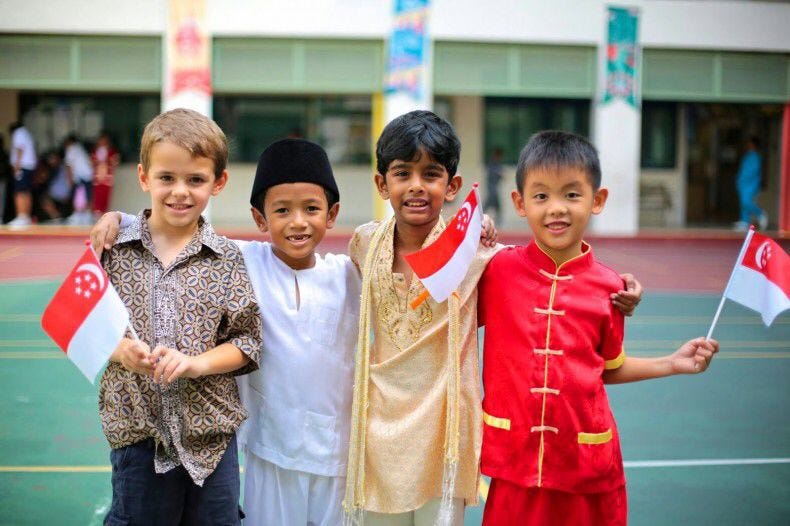
Singaporean authorities are alleging foreign interference in the country’s domestic affairs, stoking racial divisions with South Asians as targets via a China-based platform allegedly sowing racial discord with online subject matter. On June 6, the police announced orders for the disabling of content circulating on YouTube, Facebook, and X “which target the Indian community and undermine Singapore’s model of multiculturalism.”
“Last month, narratives started circulating online in the Chinese information space that Singapore is displaying anxiety over our cultural identity and ethnic politics. Shortly thereafter, online content emerged containing inflammatory narratives about Singapore’s cultural diversity and suggesting that Singapore was being overrun by Indians,” officials disclosed in a press release.
Chinese constitute 75.5 percent of Singapore’s population, while Indians account for 7.6 percent, according to 2025 Singapore government data. Ethnic Malays make up another 15 percent in a balanced racial mix that is closely watched by authorities.
The South Asian community in the city state is long established and highly heterogeneous, encompassing descendants of early migrants from the colonial period as well as more recent expatriates and professionals. Over recent decades, highly skilled professionals from South Asia have relocated to work in IT, finance, and academia, occasionally stirring public debate regarding employment opportunities and population density, bringing to light issues of xenophobia, cultural friction, and housing pressures.
South Indians have historically tended to swing well above their weight in politics, today including Tharman Shanmugaratnam, the country’s current president, K. Shanmugam, coordinating minister for national security and minister for home affairs, Indranee Thurai Rajah, minister in the prime minister’s office, second minister for finance and second minister for national development, and former transport minister S Iswaran, who was jailed on bribery charges in 2024.
In general, race relations are largely peaceful, although deep-seated prejudices and racialization occasionally surface, partly because the island state persists as a predominantly Chinese island in an ethnic Malay sea, and are carefully managed through the government’s aggressive zero-tolerance policy toward any rhetoric that threatens communal stability. State-enforced multiculturalism is administered through a so-called CMIO framework, standing for Chinese, Malay, Indian, Others agenda. Authorities use strict legal structures such as the Maintenance of Religious Harmony Act and the penal code—to swiftly penalize hate speech.
Thus, although the current incident might seem minor to outsiders, Singaporean authorities regard it with concern. Police say the narratives included claims that Singapore’s multiracial policy is a façade meant to appeal to western values, that stability cannot be attributed to its multiracial policy but rather to the fact that the country is majority Chinese, that ethnic Indian politicians act in favor of Indian immigrants, and that its culture is fundamentally Chinese so the government’s approach of “decoupling” itself from China while neglecting the threat of a growing Indian community would lead to a negative outcome.
The Ministry of Home Affairs and police assessed these posts to have violated Singapore laws on racial harmony. Investigations revealed that the content likely originated from a China-based platform, police said. “These are malicious efforts to sow discord by inciting ill-will against the Indian community in Singapore.”
On June 6, Edwin Tong, Singapore’s law minister and second minister for home affairs, clarified there is no evidence to suggest this was a coordinated campaign by any government including the Chinese.
Singapore leaders are at pains to maintain harmonious relations with both China and the US, both of whom are locked in geopolitical competition. China is Singapore’s biggest trading partner, while the US is the city-state’s biggest military partner.
“These videos attack our multi-racial society and they try to divide people based on race. This, however, is not who we are,” Tong told reporters on June 6,
“We don’t tolerate any narratives at all that seek to undermine the racial harmony that we enjoy and that we protect, especially when it is propagated by foreigners, and many of these posts are of foreign origin,” he added.
Singapore Minister for Digital Development and Information Josephine Teo also denounced foreign online content for sowing discord in the multiracial country.
In a Facebook post on June 6, Teo said, “Some videos have been circulating online, targeting our Indian community — one even showed a religious procession at Pagoda Street, implying Indians are not welcome there. This is untrue and unacceptable. These videos did not come from Singapore and do not speak for us. Their intent is to divide,” she added.
Toh Han Shih is a Singaporean writer in Hong Kong. He is a regular contributor to Asia Sentinel.
Don't Miss:
-
The Taliban’s New War Begins at Home
-
Panama removed from EU’s tax haven ‘blacklist’ a decade after the Panama Papers
-
Crackdown and Controversy: The Battle Over Beach Bars and Noise in Phuket’s Bang Tao
-
East Asia’s Youth Job Crisis Is Hiding Its Coming Labor Shortage
-
Leaked files reveal how Deloitte Cyprus helped Roman Abramovich hide $10B fortune