
 How Real Is the US Withdrawal from the Middle East?
  From Iran to China: An Emerging Trans-Central Asian Corridor
  New documents show how a retail chain’s sales practices helped put guns on US streets
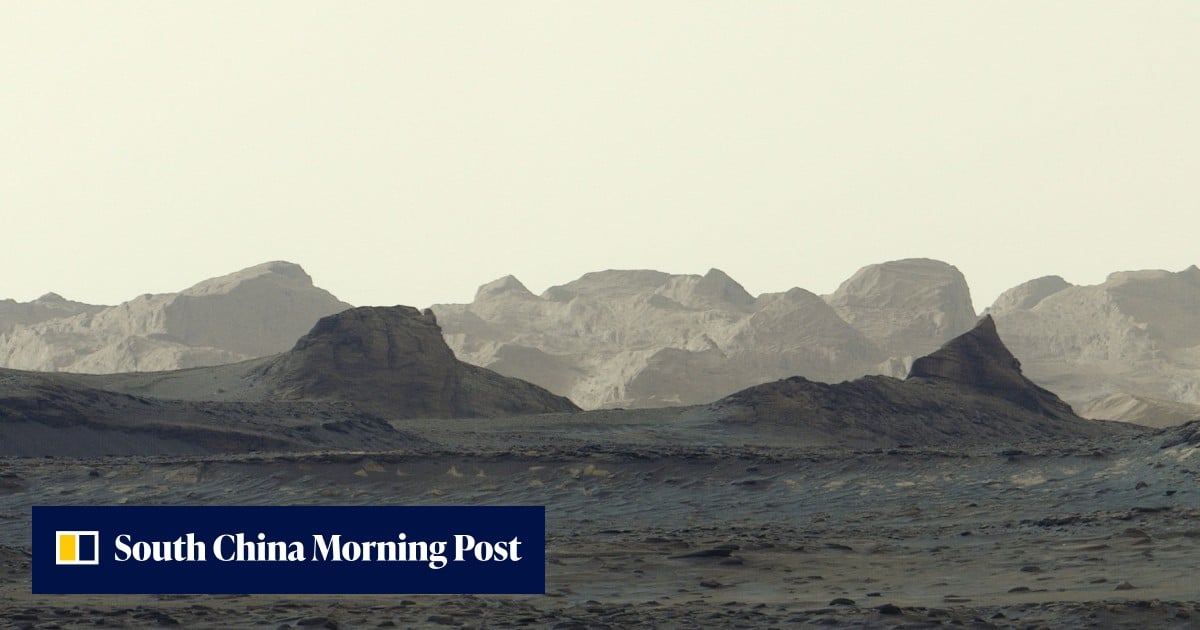
Nasa has released a striking image of dawn on the Martian surface taken by its Curiosity rover, showing sunlight bathing jagged crags formed billions of years ago as the car-sized vehicle continues to explore Earth’s planetary neighbour.
Curiosity landed in 2012 in Gale Crater near the Martian equator, and since 2014 has been climbing Mount Sharp, a 5km-tall (3-mile-tall) mountain rising from the crater floor. The image was taken by the six-wheeled rover’s Mastcam camera about an hour after the sun rose above a landscape featuring wind-carved cliffs in the distance.
“The bright craggy peaks in the distance are a rock layer that is quite different in appearance from all the layers the rover has driven through so far. We think it once was windblown sediment, maybe sand or maybe even ash that blew into the crater from nearby volcanic activity. After the sediment hardened into rock, aeons of wind carved up the rock layer into ridges called yardangs,” said planetary scientist Ashwin Vasavada of Nasa’s Jet Propulsion Laboratory in California, the Curiosity project scientist.
The yardang layer most likely formed about 3 billion years ago, around the same time as the rest of the mountain, according to Vasavada. This layer spans about 16km across the northwestern reaches of Mount Sharp.
Don't Miss:
-
Hong Kong finance chief says economy grew in third quarter, warns of external risks
-
Despite rising yields and political gridlock, France not facing a debt crisis: analysts
-
Nobel Chemistry Prize awarded to Henri B. Kagan and Kenso Soai
-
Ex-Buddhist monk who founded Thai Aids hospice convicted of embezzlement
-
Why Morgan Stanley sees more upside in Hong Kong offices than New York towers