
 How Beijing’s Africa ambitions, financed by China’s mega banks, triggered a crisis in Zambia
 AI and the Red Lines of a Planet under Stress
 Anwar Ibrahim: The Man Who Became the Compromise
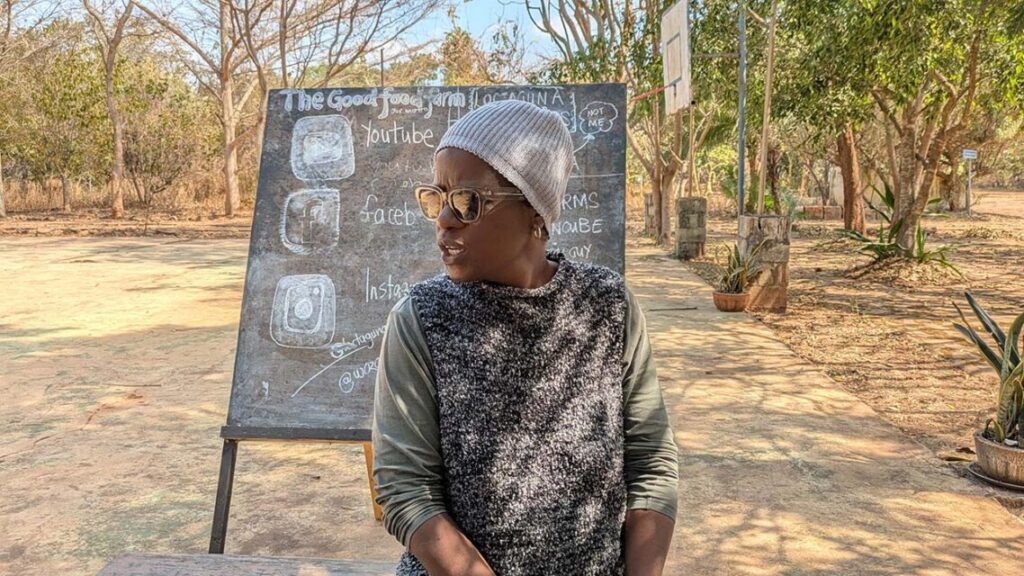
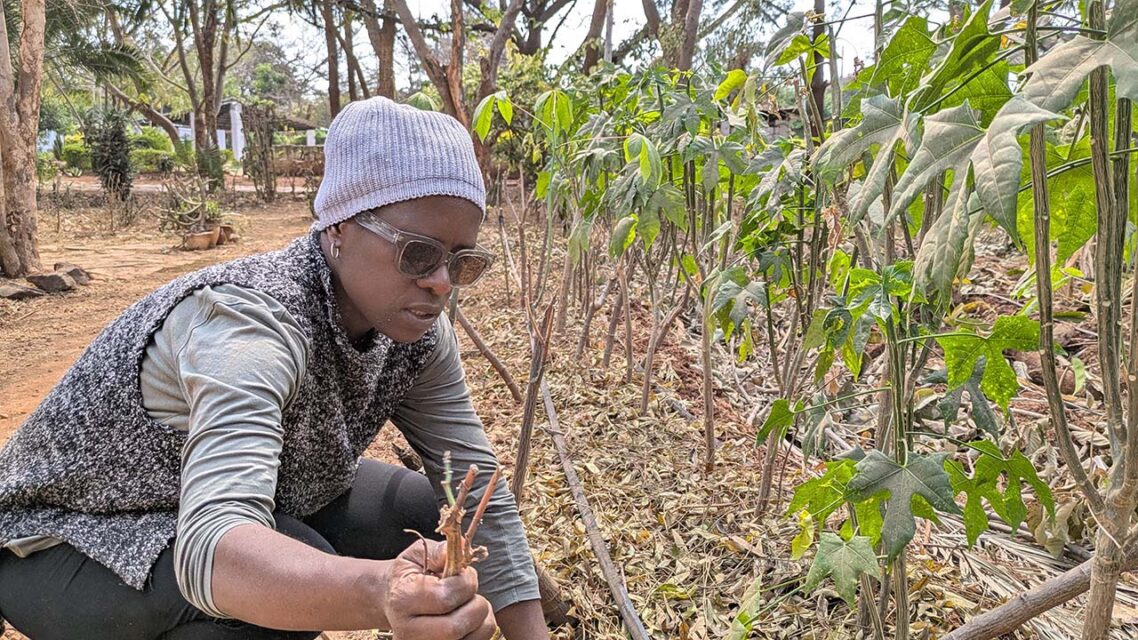
As Kanangwa Newlove walked through her 10-acre farm just outside Lusaka, Zambia, one day in October 2025, she felt as if her dreams were withering away in front of her. The spinach, lettuce and mustard wilted in the heat. Tomatoes shriveled on their vines. She uprooted entire rows of organic vegetables — once sought-after by discerning customers, now rotting in the sun — and fed them to her pigs. “The crops that suffered the most without water were our mainstay,” she told a reporter for the International Consortium of Investigative Journalists. “There was nothing we could do. There was no water for the crops because there was no electricity.”
Every few days, she needed nearly 8,000 gallons of water from borehole pumps to keep her farm going. The pumps required a reliable supply of electricity, but since March 2024, Zambia’s rolling blackouts had left swathes of the country without power, turning everyday tasks into Herculean struggles. Sometimes she had only four hours of power a day.
The blackouts had a “cascading effect,” Newlove said. Without electricity she couldn’t refrigerate the few meager vegetables she could harvest. She stopped breeding and slaughtering animals. She was unable to sell to many of her regular customers, like local “mom and pop shops.” She had to drastically reduce the area she farmed and cut back on planting, and she couldn’t hire seasonal workers.
The rolling blackouts affecting Newlove’s farm were a result of “load shedding,” scheduled power cuts meant to reduce demand on the grid. ZESCO, the state-owned power company supplying almost all of Zambia’s energy needs, alerted its customers to the load shedding schedule, but these schedules weren’t consistent or reliable, Newlove told ICIJ, making it hard to plan how to maintain — or save — her crops. “One week you’d get a schedule from, say, morning to midday and you’d make a plan based on that,” she said. “Then, without prior notice, it would change.”
She couldn’t run a farm on four hours of electricity. For the first time since she’d started the farm over a decade earlier — a labor of love she launched while working for a social enterprise — she began to wonder if she’d need to shut it down. “Farmers are optimistic people until that is obliterated entirely by reality. … It’s a mammoth thing to fathom, that you’re going to kill a business that you’ve worked so hard for for so many years,” she said.
Newlove and other small-business owners across Zambia faced collapse amid a perfect storm in which environmental and economic shocks were exacerbated by the country’s deep-seated financial problems. Zambia — where roughly 60% of the population lives in poverty — is overwhelmingly dependent on hydropower, but a severe drought in 2024 left dams empty and forced ZESCO to ration electricity usage. While Zambia is drought-prone, ZESCO’s financial woes left it uniquely ill-prepared for the drought, the worst in decades.
The company was sinking financially. Among its biggest expenses was a long-term loan of nearly $285 million from the Industrial and Commercial Bank of China (ICBC) with tough repayment terms. The loan was signed more than a decade before, in 2011, and in the following years, ZESCO had taken on more and more debt from ICBC and other Chinese lenders. Beholden to Chinese creditors, the power utility mirrored Zambia, one of the world’s most indebted countries and the first in Africa to default on its sovereign debt during the COVID-19 pandemic. As the country’s largest state-owned company, ZESCO was a significant contributor to Zambia’s overall debt.
Now, newly revealed documents show how Chinese lenders, working with Chinese contractors in Zambia, piled loans onto the country and its ailing state-owned enterprises. When it came time for ZESCO to pay, ICBC adopted what analysts see as a hardball stance to recover debt from a struggling borrower.
These documents form part of China Capital, an ICIJ-led investigative collaboration with 23 media partners. Based on a trove of 4.8 million documents, including client dossiers, due diligence reports, loan agreements, meeting minutes and internal emails in English and Chinese, China Capital exposes the inner workings of ICBC’s U.K. subsidiary and London branch, and the crucial role ICBC London has played in advancing Chinese interests in Africa.
China Capital lays bare what experts describe as the bank’s muscular lending tactics, which burdened some of Africa’s most economically vulnerable states — claims the Chinese Embassy in Zambia denied. The project reveals the complex picture of Zambian debt arrangements and the role played by lenders such as ICBC, which presents itself as a commercial bank but acts as a foreign policy tool of the Chinese state, advancing Chinese strategic interests in resource-rich countries like Zambia.
Although China became a vital lender for Zambia and helped the country fill an enormous infrastructure gap, Chinese objectives were not always aligned with Zambia’s best interests. Chinese lenders like ICBC were willing to make onerous and high-risk loans to a country that could not afford them. Meanwhile, Chinese companies seeking infrastructure contracts urged Zambian state entities to take on new debt to fund those projects. Zambia’s government, eager for easily accessible credit to fund its infrastructure plans, needed little encouragement. These factors combined to push Zambia into a disastrous debt spiral in which it was unable to service its debt, followed by years of sluggish recovery.
A $285 million loan
Zambia’s economic outlook was positive in 2011, the year ZESCO signed its $285 million loan agreement with ICBC.
The country had emerged from successful debt relief programs involving the World Bank, the International Monetary Fund and other international lenders years before. Relatively debt-free, it began to focus on funding new infrastructure projects, such as power lines, highways, stadiums and airports. To do so, it turned to the international financial market. Between 2012 and 2015, Zambia issued three international bonds worth $3 billion to foreign investors chasing high yields in the developing world.
At the same time that Zambia was eagerly courting foreign infrastructure investment, China was rapidly expanding its interests in Africa. In 2013, Chinese President Xi Jinping announced China’s Belt and Road Initiative, a strategy to bolster the country’s connectivity with the rest of the world through infrastructure and development. Chinese companies were encouraged to invest abroad, accompanied by a surge in Chinese foreign lending. To poor, landlocked countries like Zambia, China portrayed itself as an alternative to Western funders, untainted by accusations of paternalism and willing to engage developing nations as equals. It offered fewer economic policy conditions on its loans than its Western counterparts, whose legacies were associated with painful economic reforms forced onto indebted African countries.
Chinese investors were also willing to go where others were not. For Western companies, Zambia came with a risk premium that drove up the cost of capital and meant that they would invest only if high returns made up for the perceived risk. Barbara Dutzler, an economist with Germany’s main development agency and head of the agency’s Good Financial Governance in Zambia program, told ICIJ that, with China, there was “an alignment between state and industry” and an overarching geostrategic plan. That meant China could direct investment where it wanted and fund projects that would not hold up in purely commercial terms.
Although it presents itself as a commercial bank, ICBC remains majority state-owned and is driven not only by the profit-maximizing interests of shareholders but also the political prerogatives of the party-state. Documents from China Capital show that ICBC bankers routinely weighed Chinese strategic policies like the Belt and Road Initiative when considering loan decisions around the world.
In response to written questions from ICIJ, the Chinese Embassy in Zambia denied that China pursues political interests through lending: “Strictly following market rules and international norms, China respects the will of all partner countries,” embassy officials said in a statement. “It never forces borrowing, presses for repayment, attaches political conditions to loan agreements, or seeks political interests.”
The bank’s $285 million loan to ZESCO gave it a foothold in Zambia alongside other Chinese lenders. At a July 2012 groundbreaking ceremony for the ZESCO electrification project that the loan was meant to fund, China’s Ambassador Zhou Yuxiao referred to several Chinese loans to Zambia that were either in effect or being sought.
For Zambia, Africa’s second-largest copper producer, these were years of high growth driven by the commodities boom and China’s demand for metal. The growth in Zambia’s gross domestic product averaged 7.4% in the decade from 2004 to 2014, 1.6 percentage points higher than the average for rapidly growing sub-Saharan Africa.
It was an optimistic time for Newlove, who began farming commercially in 2012. “When I started selling, the opportunities were quite astonishing,” she told ICIJ. What began as a small experiment to feed friends and family turned into a booming business: Soon she quit her day job to focus on her new venture, supplying organic fruit and vegetables to supermarkets and to an in-flight caterer serving major airlines at Lusaka’s international airport.
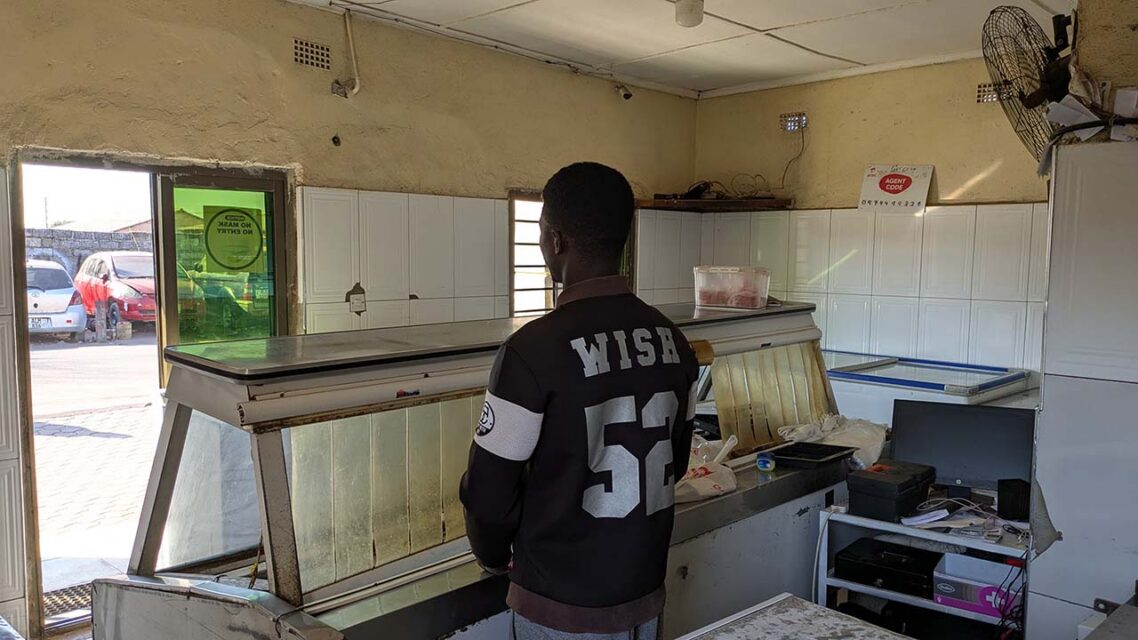
As Newlove’s business took off, so did Gerald Soko’s. In 2011, Soko rented a modest property to start a butchery in Mtendere Compound, a high-density neighborhood in the capital city where tiny, tin-roofed shops and kiosks cling to the dusty roadside. Business thrived, he recalled. The shop heaved with customers buying meat for their families or in bulk for the many local bars and restaurants. “Everything would sell,” he told ICIJ, yielding impressive profits for a small business.
For the poorest Zambians, however, the years of growth didn’t translate into productive jobs and improved livelihoods. Zambia’s Parliament acknowledged that growth skewed toward urban centers and mining, and did not address the structural weaknesses in the economy.
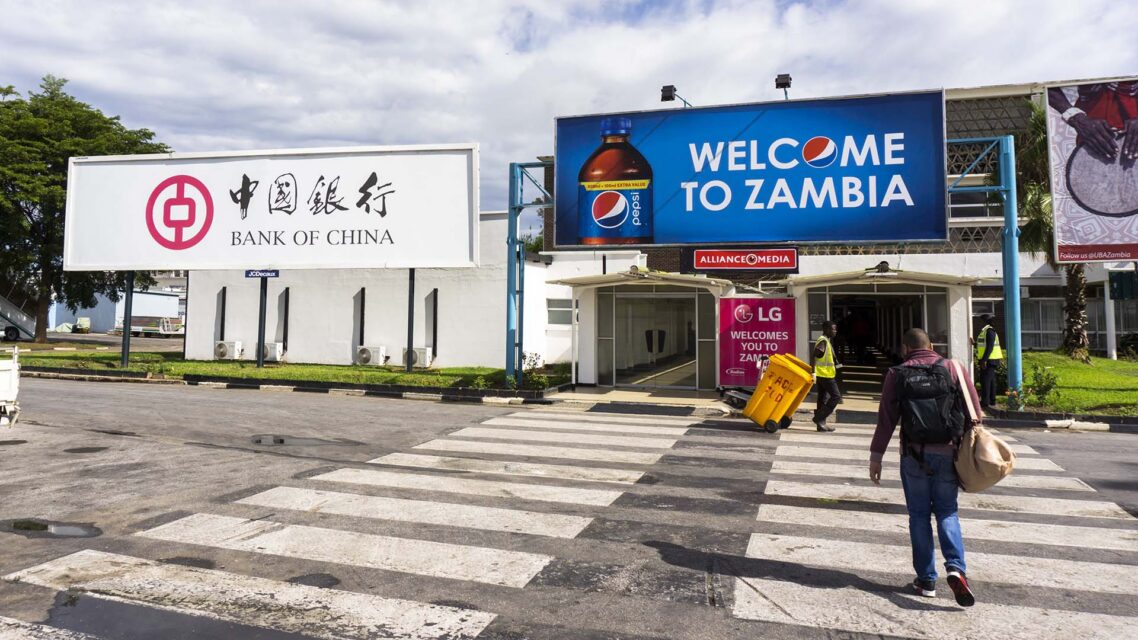
The Chinese-funded infrastructure projects, frequently awarded without competitive bids, were also often wasteful and led to inflated prices, fuelling debate in Parliament. Critics, including opposition-party members of Parliament, said such projects were often detached from development priorities and failed to boost the economy. That view is shared by Zambian financial analyst Trevor Hambayi, who cited the example of two “questionable” airport expansions at Lusaka and Ndola. “With infrastructure we needed to plan and see what was feasible within our budget,” he told ICIJ.
Newlove recalled “shoddy” roads and other infrastructure projects that were quickly rolled out across Lusaka before elections as showpieces for voters, and how those seemed to rapidly deteriorate and now need repair.
Some Zambian officials tried to slow the rate of borrowing, according to a former Finance Ministry official, but the finance minister at the time “was calling [that] fiscal conservatism,” saying that you have to borrow to develop. “Our reaction was that you can borrow,” but not without a plan, the former official told ICIJ.
Propelled by political interests, ZESCO played a key role in the country’s debt-funded infrastructure spree. A World Bank report determined that the power company’s management was “swayed by political decisions on investments.”
After Edgar Lungu became president in 2015, Zambia “ratcheted up borrowing” from China even further, wrote Deborah Brautigam, founding director of the China Africa Research Initiative (CARI) at Johns Hopkins University’s School of Advanced International Studies. Unfortunately for the country, the borrowing spree coincided with a steady drop in the price of Zambia’s main export: copper.
Rating agencies soon began sounding the alarm by downgrading Zambia’s sovereign rating. In September 2015, S&P Global noted subdued copper prices and foresaw a widening deficit and “increased external indebtedness.”
Once again, Zambia was straining under the weight of its loans, yet Chinese creditors continued to aggressively lend millions to the country, which had limited capacity to account for all the borrowing.
The Chinese Embassy in Zambia said that “in recent years, debt risks in developing countries have notably increased due to various external challenges,” which it said “some parties” have used to “spread false narratives” about China.
“Based on individual national development needs, China focuses its foreign investment and financing cooperation on infrastructure, energy and essential public sectors. These efforts help developing countries build independent and sustainable development capacity,” the embassy said.
Debt frenzy
In Zambia in the 2010s, Chinese companies seeking work on infrastructure projects helped drive the frenzied acquisition of government-backed loans to fund projects they then profited from. In the case of the $285 million ICBC loan, TBEA, a Chinese firm based in the Xinjiang region specializing in power transmission and renewable energy projects, arranged the financing for a project it was contracted by ZESCO to undertake: construct power transmission lines and infrastructure to supply electricity to Zambia’s Northern Province on the border of the Democratic Republic of Congo and Tanzania, and Eastern Province bordering Malawi and Mozambique.
This sort of “contractor-facilitated lending” became institutionalized in Zambia, where the government found it convenient to start “outsourcing much of the financing and mobilization process directly to Chinese contractor partnerships,” according to a paper by researcher Tianyi Wu at the Global China Initiative, part of Boston University’s Global Development Policy Center. Besides ICBC, the funds came from an array of Chinese financial institutions that were all too willing to provide high-risk loans. In these transactions, China benefited on both ends — as lender and contractor — while Zambia assumed the repayment obligation and much of the financial risk.
The former Finance Ministry official told ICIJ the ministry was supposed to oversee borrowing, but “a lot went on outside the Ministry of Finance, and they’d find out that ministry X had signed with Y company from China and organized the finance. It was a bit of a free-for-all for a while.”
Researchers at CARI found that among African countries with Chinese loans, Zambia had the highest number of lenders and the second-largest number of Chinese contractors securing Chinese-financed infrastructure projects. “Only Angola, which has borrowed four times as much from Chinese lenders, has more contractors, and even Angola has fewer Chinese lenders,” the researchers found.
Many analysts agree that widespread corruption, patronage and institutional weaknesses helped fuel Zambia’s debt spiral. The country’s bureaucracy lacked capacity to negotiate, evaluate and monitor its high levels of debt, while politicians had perverse incentives to keep accumulating it. The money was easily available for large infrastructure projects from which political elites could derive kickbacks and other illicit gains: “Patronage is part of the political landscape of Zambia,” the former Finance Ministry official said. “People were seeing things like roads being built, a new airport and stadium. Things were getting better in terms of infrastructure but at a very high price because of rent-seeking behavior.”
Chinese banks loan billions to Zambia
The debt-ridden African nation has used Chinese money to finance major infrastructure projects, defense contracts and more.
Sources: The China Africa Research Initiative (CARI) at the School of Advanced International Studies, Johns Hopkins University and the AidData research center at the College of William & Mary. The CARI data includes 2015-2019 loan commitments to ZESCO and 2000-2020 loan commitments to the Zambian central government.
An IMF report noted both that “large public investment projects were often transformed into vehicles for political patronage and rent seeking opportunities,” and that “embedded governance weaknesses cannot be overestimated in accumulation of sovereign debt and the subsequent crisis.”
Zambia was an increasingly risky prospect, but ICBC continued expanding its interests there. In 2016 and 2017, ICBC committed to finance three other ZESCO electricity supply projects worth over $100 million and, together with the Export-Import Bank of China (known as China Eximbank), was a joint lender in the $1.5 billion syndicated loan for the 750 megawatt Kafue Gorge Lower Hydropower Station, for which ICBC claimed $15 million in management fees from ZESCO. It also signed six additional loans with the central government between 2016 and 2018, committing over $1 billion to a range of projects, from police and defense force housing to the construction of a hospital and an international airport, not all of which were fully implemented. Borrowing “mushroomed during the [Lungu] administration … to the degree they couldn’t even disburse the loans,” said Dutzler — a view backed by findings of Zambia’s auditor general. This led to growing alarm among Zambian opposition politicians and civil society groups over alleged Chinese predatory lending, as well as international headlines warning of “debt-trap diplomacy” — where a creditor country overloads a borrower with debt with the intention of extracting concessions.
Meanwhile, Gerald Soko, the butcher, was still trading on Zambia’s good years and focusing on expanding his business, unaware of an approaching debt cliff and the years of economic strain ahead.
ICBC comes knocking
The first installment of ZESCO’s $285 million loan was due to ICBC in June 2018: a $20 million payment. But by that time, the utility was in deep financial trouble. It was saddled with debt and in arrears to power suppliers, and ICBC had already committed hundreds of millions of dollars to another ZESCO power project involving TBEA just months before.
Internal ICBC records in the China Capital documents show that the bank flagged concerns about ZESCO’s financial health. They noted that reduced rainfall had curtailed electricity revenue and that the company was already struggling under the weight of the $1.5 billion syndicated loan commitment with China Eximbank and ICBC for the hydropower plant. ZESCO had just paid $15 million to ICBC in “management fees” for that loan, the documents note, which “put some pressure on the company’s financial situation.”
In a sign of ICBC’s hardball attitude to recovering its debt, the bank’s headquarters pressured ICBC London to transfer the $20 million from a reserve account it held on behalf of ZESCO. This caused a stir among ICBC London staffers when they “later learned that [head office] had pushed [the London branch] to make the payment” without the necessary documentation being in place, according to an internal ICBC report in the China Capital documents.
The reserve account was firmly under ICBC’s control. “What this means is a bank doesn’t have to go to a separate bank, to ask for permission to touch the money in the [debt service reserve account]. They’re like, ‘I am the escrow account bank, I can do whatever the hell I want with this money,’ ” said Bradley Parks, executive director of AidData, a research center at the College of William & Mary that has tracked Chinese lending globally.
Later that year, S&P Global again downgraded Zambia “on rising fiscal deficits and debt burden.” In its analysis, it referred to mounting government arrears “to contractors involved in the construction of new roads and to ZESCO … which had to import emergency power to replace a shortfall of hydro-generated power.” It added that “the increase in debt accumulation has also been accompanied by rising debt service payments.” Between 2014 and 2019 the government’s debt to foreign creditors as a percentage of GDP more than quadrupled.
The effects of a severely strained economy soon reached ordinary Zambians. Zambia’s currency, the kwacha, depreciated, inflation rose and high interest rates made borrowing more expensive. “This has affected the ordinary person, this high inflation without GDP growth that can match the cost of living,” said Hambayi, the Zambian financial analyst.
By 2019, ICBC was “reportedly reluctant” to release funds because Zambia began defaulting on payments to other creditors, according to an AidData analysis. In 2020, a ZESCO subsidiary defaulted on its repayment obligations for the $1.5 billion China Eximbank-ICBC hydropower loan. ZESCO — which had guaranteed higher electricity prices from independent power producers than the tariffs it charged its customers — was insolvent. So was the country, after defaulting on its debt that year. Lungu’s government had run out of options and had begun talks to restructure its debt.
Among other measures to recover costs and reduce losses, the government began cutting subsidies, including for fuel, and increasing electricity tariffs. The escalating cost of living weighed heavily on Soko’s butchery business. “People complain about the cost of electricity … and are struggling to make ends meet. They keep asking for meat on credit, the same people who used to spend a lot,” he said, before listing the many neighboring businesses that had closed in recent years: barbers and salons, welders and fast-food franchises.
Zambia’s weakened fiscal position left it extremely vulnerable to the worst drought in four decades, which began in 2023 and led to the relentless power cuts that nearly ended Newlove’s farming business. During the most intense period of cuts, as her crops wilted, she and the farm supervisor scrambled to find a generator and eventually found someone willing to rent them an old one. It sputtered and shook and looked as if it would give out, but it got her through those difficult days. The generator’s high costs ate into her dwindling margins, though, forcing Newlove to use her personal savings to keep the business afloat. “If we didn’t have that reserve of money, we would have sunk,” she told ICIJ.
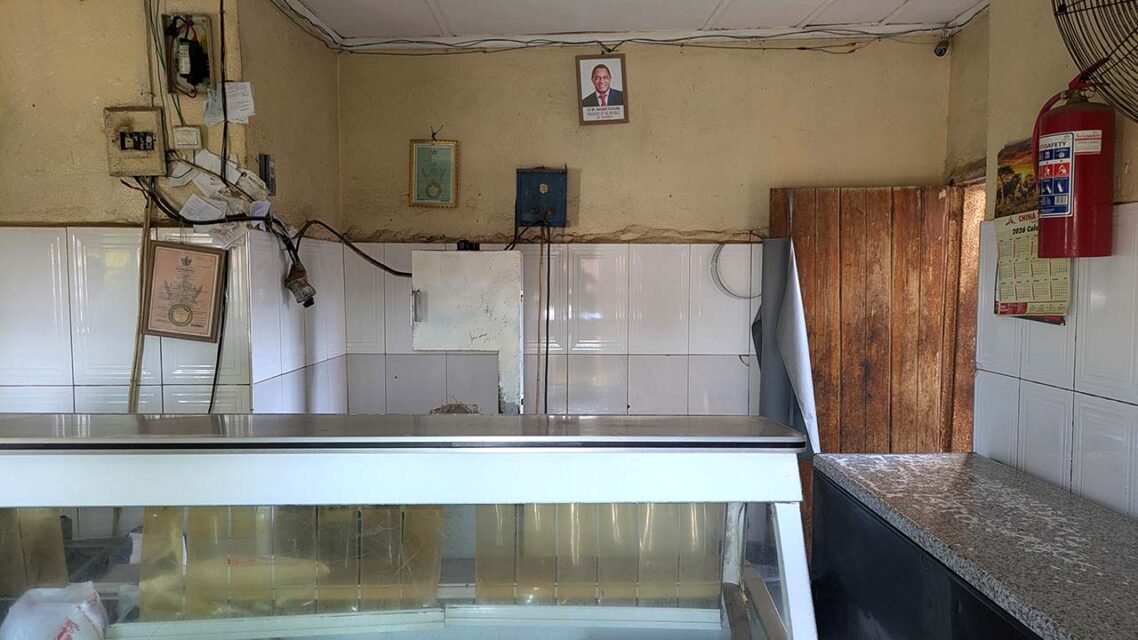
The electricity crisis also dealt a heavy blow to Soko’s butchery, leaving fridgefuls of rotting meat. Customers stopped buying in bulk, worried that they would face the same problem, what Soko called the “trickle-down effects” of load shedding. He said that burglars twice took advantage of the darkness during power cuts to target his shop. To get through the worst of the outages, Soko too had to fork out for a generator he could barely afford to run. Sales from the butchery these days is less than half of what it was before load shedding, and he has had to put all his plans for expanding his business on hold. “There is no profit,” he told ICIJ.
Negotiating the future
After China became the world’s largest source of bilateral official lending to developing countries, it faced a critical test in Zambia: How would it negotiate to restructure an unusually complex mountain of debt? How would it work with other external creditors? As a creditor nation, China has not joined the Paris Club — an informal group of mostly high-income lending countries that coordinates solutions to heavily indebted developing countries — and Chinese creditor loan agreements often contain provisions to exclude them from collective debt-restructuring initiatives. Chinese lenders also had a reputation for taking a hard line and refusing to accept markdowns on their loans, “a core Chinese position,” said Dutzler of Good Financial Governance in Zambia. “They don’t give a haircut.” Among those at the negotiation table, she said, “China was the big unknown.”
The restructuring efforts began on shaky ground, as the negotiating parties — numerous governments and private lenders — went through back-and-forth talks that dragged on for years, hamstringing Zambia’s development and economic recovery.
The true scale of the country’s debt remained hidden, adding to the tension. Researchers at CARI, which had been tracking Chinese lending to Africa for almost a decade, found that “Zambia’s outstanding external debt to all Chinese financiers, official and commercial, was approximately $6.6 billion in August 2021.” This was nearly double the highest figure cited by the Zambian government. Part of the problem stemmed from the structure of the Chinese loans, which were cloaked in confidentiality clauses.
A study by AidData and three other international research organizations published in March 2021 found that Chinese loan contracts typically contained “unusual” and “far-reaching” confidentiality clauses imposed on borrowers that were not normally found in agreements from other lenders. It pointed to the link between such confidentiality conditions and “hidden debt [that] can impede debt restructuring.” At the time, holders of Zambia’s bonds were “refusing to proceed with debt renegotiation, citing insufficient information about China’s claims on the country.”
In an email to ICIJ, the Chinese Embassy in Zambia said that claims about opaque lending were “baseless” and that China’s “overseas financing cooperation is fully open and transparent.”
Ultimately, the worst fears of Chinese predatory lending, rumors of China seizing national assets like ZESCO and screaming international headlines about debt-trap diplomacy turned out to be alarmist. China agreed to co-chair Zambia’s official creditors’ committee alongside France, signaling a willingness to work with others rather than go it alone. An important milestone came in 2024, when Zambia reached agreements in principle to restructure debt with Chinese commercial lenders, including ICBC. As of 2026, debt-restructuring negotiations were largely concluded, with most of the talks occurring under the government of Lungu’s rival and successor, Hakainde Hichilema.
Ordinary Zambians still feel the lingering effects of years of intersecting crises that battered the economy and shifted perceptions of China’s role in Zambia. At Soko’s spartan butchery, the long queues of customers have been reduced to a trickle. Turnover is less than half of what it was, he said, leaning against a mostly empty display cabinet. Survey data shows that Zambians have grown increasingly skeptical of China’s role in their country. In 2014, 72% of those polled by Afrobarometer — an independent public opinion research network — viewed China’s economic and political influence positively. By 2022, that figure was down to 42%. China too was burnt by the debt troubles of developing nations; that’s part of the reason it has shifted focus to what it calls a “small and beautiful” approach to infrastructure projects, with smaller loans and shorter repayment windows.
Newlove, the farmer, told ICIJ that she feels she has made it out of the crisis intact. Her farm is fully operational, and she avoided laying off any of her 14 full-time staff. They have begun replanting on portions of the land they were forced to abandon. The chickens, goats, rabbits and pigs survived, and she has since crisis-proofed her farm with large solar panels that soak up energy from Zambia’s mostly sunny skies. But on the other side of Newlove’s stone perimeter wall is dry, dusty scrubland — a graveyard for failed farms and a constant reminder of her close brush with disaster. “Our resilience was tested,” she said. “I knew a lot of farmers who shut down or changed business. … They were very lucrative, and I thought, ‘We’re next.’ ”
Contributing reporters: Scilla Alecci, Denise Ajiri, Jelena Cosic and Delphine Reuter (ICIJ)
Don't Miss:
-
AI and the Red Lines of a Planet under Stress
-
Anwar Ibrahim: The Man Who Became the Compromise
-
The US is letting a convicted Bolsonaro spy chief stay in Florida. Brazil wants answers.
-
‘Snipped And Posted’: How Pro-Oil Groups Generate Viral Content Online
-
Rick Claypool on Pay to Play Corporate Crime Enforcement