
 From Iran to China: An Emerging Trans-Central Asian Corridor
  New documents show how a retail chain’s sales practices helped put guns on US streets
  Singapore a battleground of commodities fraud lawsuits
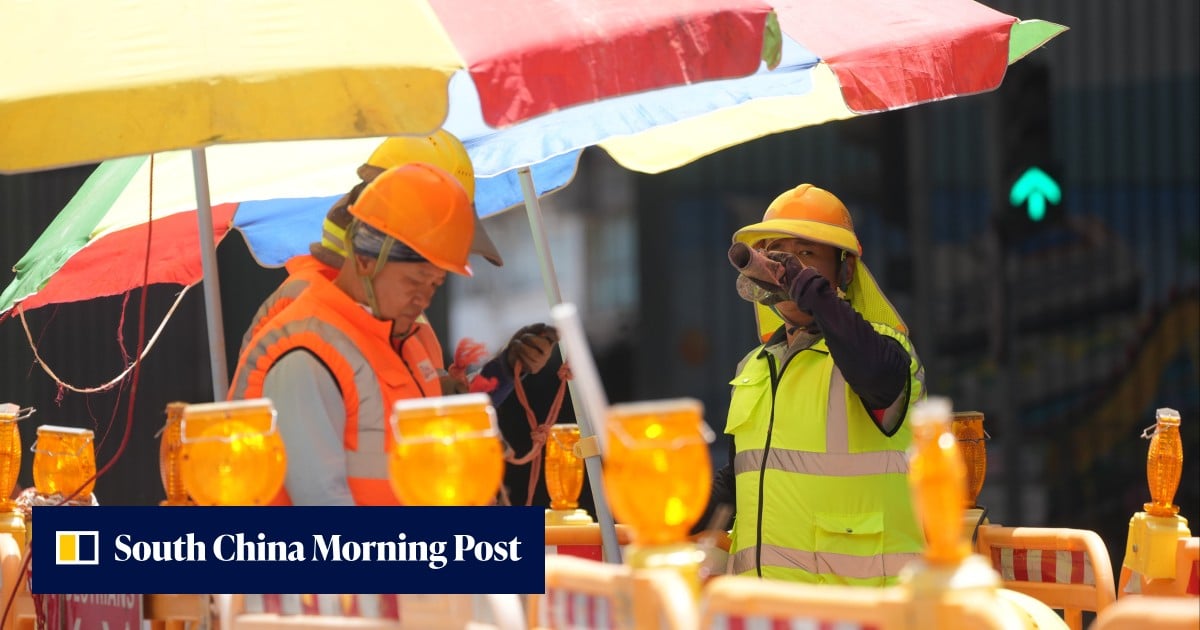
Hong Kong authorities are considering lowering the threshold for activating higher-tier heat stress warnings during abnormally hot weather, following public criticism that the system failed to escalate as the city sweltered through its hottest day on record.
Commissioner for Labour Sam Hui Chark-shum said on Tuesday that the warning system was currently more responsive to “muggy weather” than conditions of purely high temperature and strong solar radiation, but the government would seek to improve its sensitivity during periods of extreme heat.
Hui explained that the heat stress at work warning system took into account factors such as air temperature, humidity, wind speed and solar radiation, but that their weighting was “localised” to suit Hong Kong’s climate.
“In Hong Kong, the heat stress does not always track actual temperature change. When the humidity is high and the wind speed is slow, our cooling efficiency would drop sharply even if the temperature is not that high, and the associated health risk could be higher than in a well-ventilated open space with a higher temperature,” he said.
“Our system is more sensitive to this muggy situation, and the weighting of direct solar radiation is relatively smaller.”
The Labour Department recently came under criticism after its Heat Stress at Work Warning System remained at the lowest level while the city’s forecaster recorded a scorching 36.9 degrees Celsius (103 Fahrenheit) on Sunday afternoon – the highest temperature since records began in 1884.
Don't Miss:
-
John Lee promises ‘high-quality’ experience for Apec finance meeting guests
-
John Lee urges public to tune in to Legco debate on city’s 5-year plan, policy address
-
Hong Kong prepares reforms, accountability measures ahead of Tai Po fire report
-
Turkmenistan grows its arsenal of Chinese air defences as Russia’s role shrinks
-
India sizes up US F-35 stealth jets in landmark first on home turf