
 Southeast Asia Welcomes Japanese Investment but not Soldiers
  Would a Big Alaska LNG Deal make Taiwan Safer?
  Philippine VP Sara Duterte’s Impeachment Trial Narrows as Stakes Remain High
 When Hong Kong International Airport (HKIA) opened in 1998 to replace its predecessor, the iconic Kai Tak Airport, the world was amazed by its engineering and architectural marvels.
HKIA’s construction transformed the geography of northern Lantau Island, adding 1 per cent to the city’s total land mass by reclaiming land to connect two other islands, Chek Lap Kok and Lam Chau. The main terminal, designed by the renowned architect Norman Foster, revolutionised the passenger experience with its pillarless interior set under a wave-shaped vaulted ceiling. Now known as Terminal 1 (T1), the building has been an inspiration for many other aviation facilities that followed.
Over the last three decades, the airport has gone through numerous upgrades to maintain its position as a leading international aviation hub. But none have been as transformative as the three-runway system, which commenced operations in November 2024 on time and within budget, and is set to expand HKIA’s capacity by 50 per cent to an impressive 120 million passengers per year.
On the passenger-facing side, one of the most significant updates happened in May with the opening of the revamped Terminal 2 (T2), designed to serve those travelling to and from regional destinations. A total of 15 airlines have moved to the new facility.
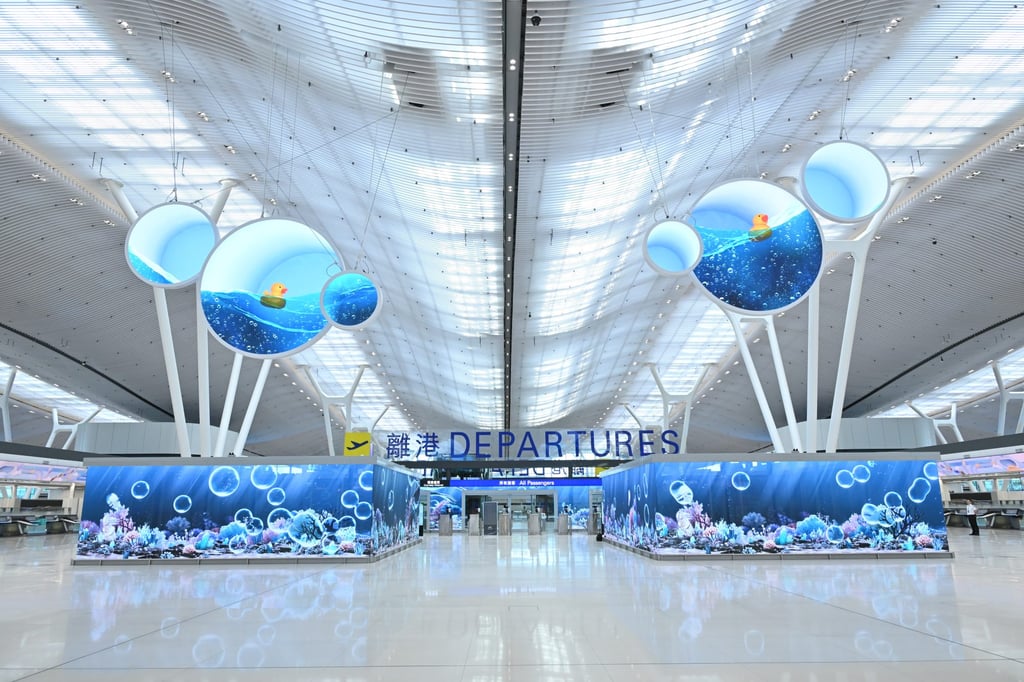
In addition to offering 24-hour dining and retail outlets, T2 has structural features that are crucial to the passenger experience, which include five vehicle lanes set under an entrance canopy. There are also waterfall displays and a sweeping cantilever roof that creates a sense of space.
Those were among the myriad details considered by Tommy Leung King-yin, executive director of engineering and technical services for the Airport Authority Hong Kong. And HKIA’s own track record was the toughest act to follow.
“T1 has collected multiple top international awards, and after 30 years, it’s still one of the best terminals in the world,” he says.
Leung says making T2 better than T1 seemed like a “mission impossible” at some point, but after numerous design revisions, they came up with the result: a feather-shaped roof that rests like a canopy on inclined “tree columns” – slender, tapering structural elements, each with a floating base that barely touches the ground.
“We created a feather roof which allows natural light to come in, and lifted the column off the ground,” he says, adding that this enhances orientation and reduces dependence on artificial lighting while also creating a calm, open and uplifting atmosphere within the terminal.
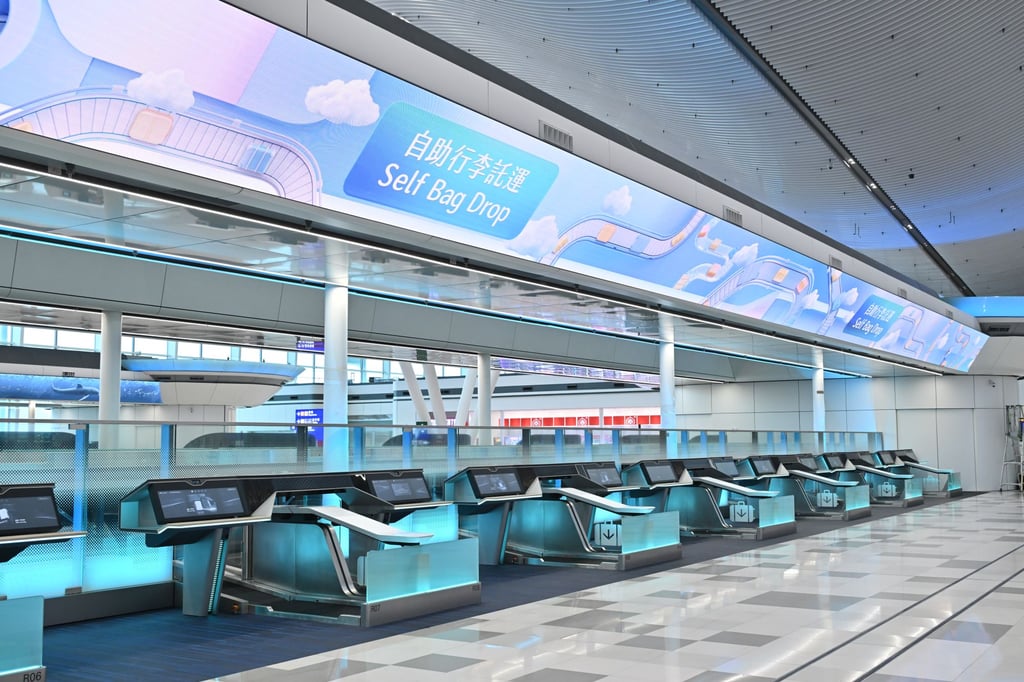
The interior is only one part of a multifaceted experience at T2. Steven Yiu Siu-chung, executive director of airport operations for the Airport Authority Hong Kong, says that by optimising the layout and technology, it takes passengers less than 20 minutes to get from the entrance to the boarding gate.
Yiu notes that T2 features “100 per cent in-house design” self bag-drop machines, each equipped with 10 artificial intelligence cameras that scan baggage to complete the process in 45 seconds. They also have ergonomically designed, ultra-low platforms that make it easier for passengers to place their luggage onto the conveyor belt.
“In T2, the security gates leading to the airside area are right in the middle of the hall, and that’s for operational efficiency,” Yiu adds. “You can get out of the taxi and walk through to the restricted area in two and a half minutes if you only have carry-on baggage.”
This substantial time savings is made possible by innovations such as the facial recognition technology that has replaced physical checks of passports and boarding passes at every security gate.
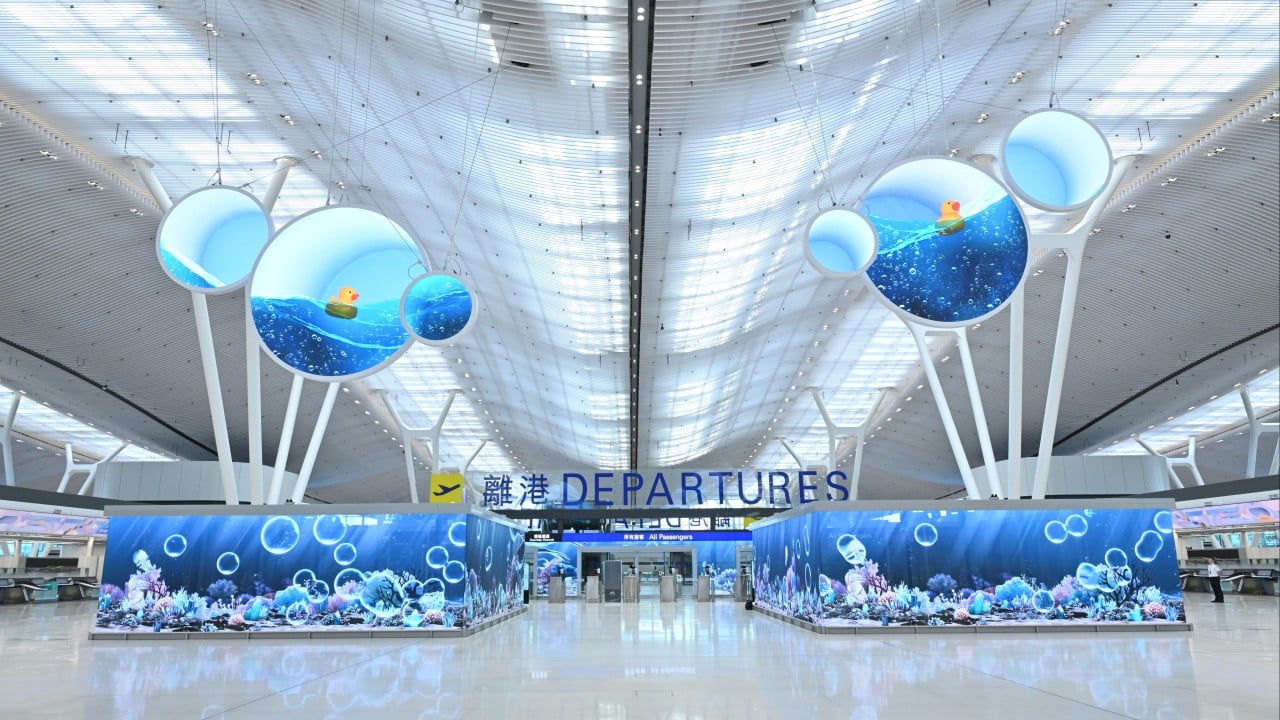
Yiu also highlights the LED screens with ocean-themed displays that surround passengers as they descend the escalators, which add a relaxing vibe to the experience. “These big screens give a very young, energetic feeling,” he says.
Hong Kong architect and frequent traveller Jacqueline Chak, who once worked at Foster + Partners – the architecture firm behind HKIA’s original design – is impressed. “This T2 gives me the feeling that it has the DNA of the amazing T1 we all know, but it feels a lot younger,” she says.
Watch the full video to find out more about Terminal 2 by following Jacqueline Chak on a walk through the new facility with Tommy Leung and Steven Yiu.
Advertisement
Don't Miss:
-
El Taliban Fell In Mazatlán… And What He Confessed Ties Everything Together
-
Inside the Camp at the Heart of Honduras’ Garífuna Land Struggle
-
This Is How the MataZetas Captured and Executed the Zetas
-
Captain Sol: The Ghost Who Controlled Customs and Ran the Government’s Illegal Fuel Trade
-
Former Chihuahua Prosecutor Arrested for Allowing CIA Officers to Operate in the Region