
 From Iran to China: An Emerging Trans-Central Asian Corridor
  New documents show how a retail chain’s sales practices helped put guns on US streets
  Singapore a battleground of commodities fraud lawsuits
 CalPERS’ $630 billion fund is the nation’s largest public pension fund.
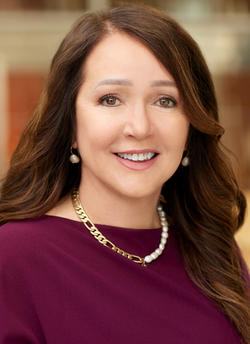
CEO CalPERS
But a recent report commissioned by the Retired Public Employees’ Association of California (RPEA) finds that CalPERS is paying top tier compensation for bottom tier performance.
The report found that CalPERS’ return on investment places it at the bottom 15 percent of all 230 U.S. public pension funds.
And the report found that CalPERS’ executives receive excessive compensation.
The report found that four executives make more than $1 million a year, another four more than $900,000 and 26 earn between $500,000 and $900,000, making them the highest paid government officials in California.
(The annual salary for the Governor of California is $245,929.)
The historic crowdfunded report argues that were CalPERS managed with fiduciary discipline and transparent reporting, its assets could plausibly exceed $1 trillion today.
Instead, the fund remains mired in chronic underperformance, ranked near the bottom of national public pension performance.
The report challenges CalPERS’ claim it is the “most transparent pension in America,” citing decades of resisting public records requests and lobbying against expanded disclosure requirements.
“CalPERS has perfected a form of what can only be described as ‘performative transparency,’” the report states. “The sole explanation for the persistence of imprudence is that the current system works – just not for the people it is supposed to serve.”
Leaked 2024 records revealed a coordinated, aggressive, preemptive, secretive effort among California, Minnesota, New York, Ohio, and Rhode Island’s pension officials and unions, to systematically block independent forensic audits of public pension funds.
The report found that while CalPERS discloses low-risk procedural data, it aggressively withholds critical investment documents, including private equity contracts, fee schedules, and valuation data.
The report cites CEO Marcie Frost stating that CalPERS “is not sharing the limited partnership agreements. . .private markets are private for a reason.”
The report asserts that CalPERS has “massively misrepresented” total investment fees – particularly for private equity – which may be two to three times higher than disclosed.
The report describes a CalPERS’ board as politically shaped, underqualified, and structurally unable to oversee a $556 billion portfolio dominated by opaque private-market assets.
Members are not mandated to possess any financial or investment expertise, and rely on pension staff and external Wall Street advisors’ recommendations frequently rife with a myriad of potential conflicts of interest.
The investigation concludes that CalPERS is incapable of reforming itself since many within CalPERS benefit from keeping it intact and the incentives for politicians.
The primary recommendation for improving CalPERS is having an Independent Inspector General for CalPERS empowered to investigate misconduct, enforce transparency, review benchmarks and valuations, and protect beneficiaries from conflicts of interest.
Remarkably, no federal nor state regulator, nor law enforcement agency, actively monitors CalPERS.
This regulatory gap creates an environment where complex investment structures and opaque fee arrangements proliferate with limited oversight or enforcement.
“This is not a technical failure; it is a governance failure – plain and simple,” the report concludes. “Until there is accountability, the massive losses will continue, paid for by the very people the system was created to protect.”
The report was written by Edward Siedle, a whistleblower lawyer and owner of Benchmark Financial Services.
Siedle is a former Securities and Exchange Commission (SEC) enforcement official turned whistleblower.
He is famous in corporate crime circles for having secured two of the largest whistleblower awards – one for $50 million in 2018 for providing information to the SEC that led to JPMorgan Chase paying the government $267 million in 2015 to settle conflict of interest charges. The other, the largest CFTC whistleblower award so far, $30 million, for his share of monetary sanctions the CFTC collected in the JPMorgan Chase settlement.
Before this report, had there ever been such a forensic investigation of CalPERS?
“No. Also, an independent filmmaker wanted to make a movie about this investigation from the get go,” Siedle told Corporate Crime Reporter in an interview last week. “The movie is called Pension Fight Club. It’s a 90 minute documentary. It follows my travels across the United States since 2013, when I did the first forensic investigation in the state of Rhode Island. It follows me as I do the investigations in North Carolina and Ohio, Minnesota and then on to California.”
“We started in the state with the smallest state pension fund – $8 billion. North Carolina was $100 billion. CalPERS is the largest state pension fund at $600 billion.”
There are public pension funds and private pension funds. What’s the difference and how much money do they manage overall?
“There is about $6.5 trillion in public pension funds. They are regulated entirely differently than private pension funds. Corporate pensions are governed by a comprehensive federal law known as ERISA – the Employee Retirement Income Security Act of 1974.”
“Public pension funds – state, city, county pensions – are exempt from ERISA. They are not subject to any comprehensive law. They are subject to a patchwork quilt of state statutes that more often than not do not provide any answers. The money management industry is continuing to evolve, but the state statutes are not.”
“If you wanted to know whether a pension fund in Shelby County, Tennessee can invest in a hedge fund that invests in hedge funds, there is no answer in law.”
I just did a quick search. The private pension funds are twice as large as the public pension funds. The private pension funds come in at about $14 trillion.
“That sounds right. Public pension funds are supposed to be the most transparent funds in the world. The public pension funds are subject to a state Freedom of Information Act. Private pension funds are not. So public pensions are theoretically supposed to be the most transparent of all pensions in the world.”
“But starting about twenty five years ago, with the introduction of what is called alternative investments, or private equity or private credit, real estate – you saw these investments creeping into public pensions. And the alternative investment industry refused to be transparent.”
“Thirty years ago, I could have gotten from any public pension all of the operative investment documents. Today, I can get virtually none. The practice has changed radically over the last twenty-five years with the introduction of opaque alternative high risk, high cost investments which have refused universally to make their prospectuses and other offering documents available to state workers whose retirement assets are invested in their funds. No public pension in America will make these documents available.”
“You can ask. And I have. You can sue. And I have. But you will not get these documents.”
Does that mean that we don’t know where CalPERS is investing its money?
“Yes. It’s as fundamental as that. These funds are not subject to any state regulation. And their boards utterly lack investment expertise. The CEO of CalPERS has only a high school diploma. She apparently was hired ten years ago. And there was some misunderstanding, which blew up in the Los Angeles Times and elsewhere – where she had not gone to college. She’s the CEO of CalPERS. CalPERS’ board has almost no one on it who has investment expertise.”
“Tim Walz, the Democratic Vice President candidate, was the chair of Minnesota’s $150 billion state pension fund. In his financial disclosure, he said he had never owned a stock or bond in his life.”
“These board members are generally regarded on Wall Street as “the dumbest investors in the room.” Wall Street is peddling products for these funds that are not consistent with ERISA fiduciary standards. They are specifically designed for these unregulated dumbest investors in the room market. That’s a very big problem.”
“The boards of these funds have no idea where their money is being invested, what the performance is, what the fees are, what the costs are. They have no idea.”
“And fully sixty percent of all the investments CalPERS has made in the last four years is in private investment.”
I thought you said we don’t know where they are investing. So how do we know that?
“CalPERS will disclose on a regular basis how much they have in each asset class. Quite to your point, those numbers are generally the best case scenario. If they tell you they are 35 percent in alternative investments, it’s probably closer to 45 percent. They mischaracterize certain of the investments to make the investments appear safer than they are.”
CalPERS says it’s 40 percent.
“I would take that to mean at least 40 percent.”
What are some of the key findings of your report?
“Twenty five years ago, private equity didn’t exist in public pensions. Private equity has come to be an ever growing percentage of the assets. And in the last five years, the gatekeepers have come under control of private equity. The firms that evaluate and recommend private equity have shifted in the last five years. Those firms are now owned by private equity.”
“For the past 40 years, CalPERS has had an investment consultant called Wilshire. And now, Wilshire is owned by private equity.”
“CalPERS is the largest public pension in the world. They are the leader. They have consistently for decades underreported the fees they pay to Wall Street. They have underreported the risks they have been taking. Their performance is subpar. This is the leader. The largest public pension in the world has a CEO with only a high school diploma? Is that leadership?”
Who cares what diploma she has. Is she doing the job? Let say she brings in remarkable returns, cuts fees and costs and compensation and is the most transparent.
“But by all of those measures, they are not leading, they are at the very back of the pack. What other public pension fund in America has had board members commit suicide on their way to prison? None. What other public pension fund has a high school graduate running the operation? None. And the performance is terrible.”
“They announced in 2015 that they didn’t even know the fees they were paying to private equity managers. And indeed they said they could not know.”
How could they not know? They look and see what they paid to this manager.
“Because they didn’t ask. I just had this situation in Minnesota. In Minnesota the pension fees were ten times greater than they were reporting. Immediately after my report was published, the pension fund said that while it was impracticable to determine the fees they were paying, within a month of my report, they increased their disclosed fees by 400 percent. In law, a one to five percent error can be material. A 400 percent error is outrageous.”
“Then in the following year, 2025, they increased the reported fees another 400 percent. So since my investigation in Minnesota, they have increased the fees disclosed by 800 percent. And the excuse they gave was that it was impracticable to calculate the fees.”
Are there any political players in California calling for tougher regulation?
“No. The retirees association proposed an independent inspector general for CalPERS. That was shot down.”
“Twelve years ago, I asked the state auditor in North Carolina – how do you determine whether the pension money in the Cayman Islands is really there? She said to me – what money in the Cayman Islands? I said – you don’t know about the money in the Cayman Islands? And she said – we rely on the managers for their statements. This state auditor didn’t even know where the money was.”
Your report was funded by the retirees in California. What are the politics behind this?
“The politics are that in every state, Republicans and Democrats are using public pension monies to further their political agendas.”
Are you saying CalPERS is funding the political class in California?
“Absolutely. I wrote a book titled – Who Stole My Pension? I talk about the politicization of investment decisions at public pensions. Public pensions do not make decisions based on investment merit. They make those decisions based on a lot of factors, one of which is politics. That’s the only explanation for many of these investments. Both political parties benefit from the lack of transparency and use public pension assets to further their political ambitions.”
“Both political parties realize that the most lucrative investment contracts they have sway over are public pension monies. They can make you a billionaire overnight by handing you a billion dollar asset pool to manage.”
Your report found excessive compensation at CalPERS. Four executives making over a million a year. Four more making $900,000. And 26 between $500,000 and $900,000. Is that excessive compensation for the industry?
“What industry? These are government workers.”
Are these the highest paid government workers in America?
“Absolutely. In pretty much every state, that’s the case. These are the highest paid workers in the state. What’s the salary of the Governor of California?”
$245,000.
“And CalPERS is one of the worst performing public pension funds in America. Performance is bottom tier. And compensation is top tier. If these people were in the private sector and had this kind of performance, they would be fired in a heartbeat.”
[For the complete q/a format Interview with Edward Siedle, see 40 Corporate Crime Reporter 23, June 8, 2026, print edition only.]
Don't Miss:
-
From Iran to China: An Emerging Trans-Central Asian Corridor
-
New documents show how a retail chain’s sales practices helped put guns on US streets
-
Singapore a battleground of commodities fraud lawsuits
-
From Propagandist to Criminal
-
On Indonesia’s fires, El Nino’s impact on the power sector, and other stories | Asia Sentinel Stories of the Week