
 How Hungary’s richest man funneled millions into Orbán’s propaganda machine
  How Real Is the US Withdrawal from the Middle East?
  From Iran to China: An Emerging Trans-Central Asian Corridor
 However, analysts say that the country will have much ground to cover as it trails behind neighbours Malaysia and Singapore.
At the unveiling by the Ministry of Higher Education, Science, Research and Innovation (MHESI) on July 27, minister Yodchanan Wongsawat called semiconductor development “a national priority”.
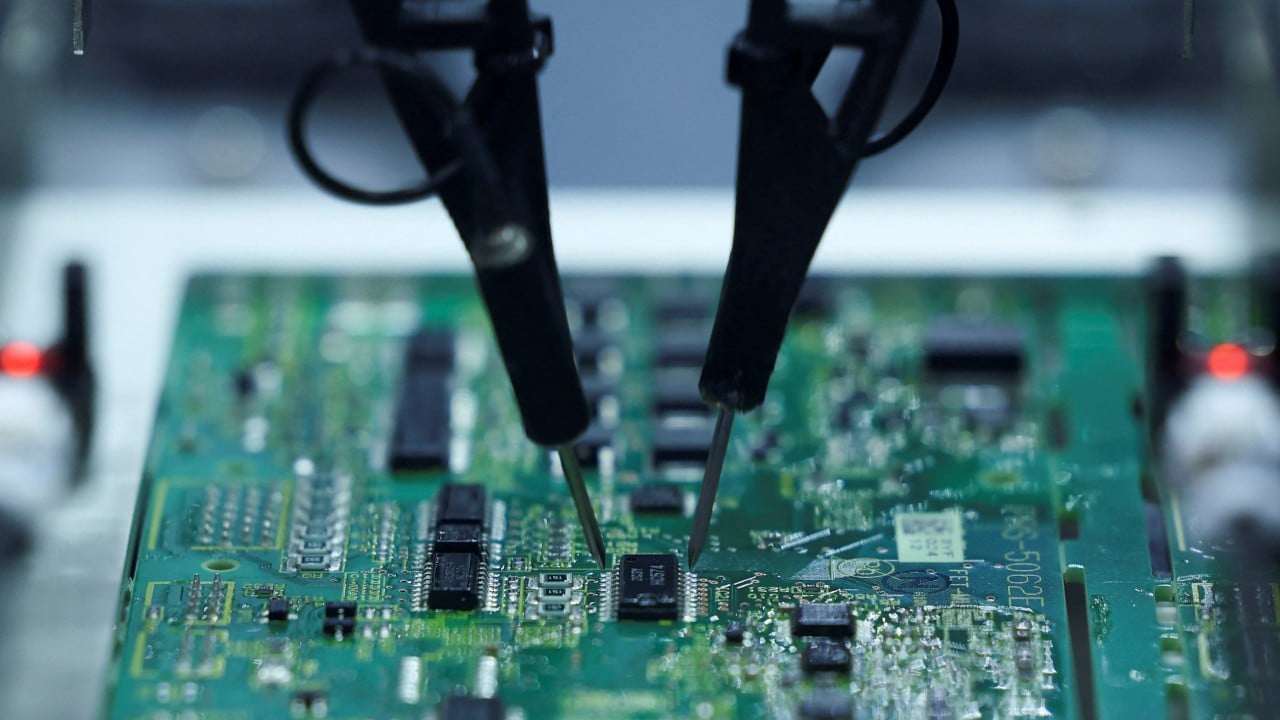
Siam Silica will target five areas: photonics fabrication, advanced packaging, silicon design, quantum photonics and power devices. Thailand aims to establish eight integrated circuit design companies, one semiconductor fabrication plant, and two advanced semiconductor packaging facilities by 2030.

The MHESI also announced it was launching a Higher Education Sandbox degree programme for universities to fast-track deep-tech expertise and develop advanced competencies.
STEMPlus, the ministry’s human resources development and planning platform, will recruit 152 lecturers and scientists, 950 researchers, experts and senior engineers, 553 highly skilled engineers and 1,330 technicians for the programme.
Don't Miss:
-
US wraps up military mission in Iraq, giving Baghdad room to strengthen China ties
-
As China and the EU begin crunch trade talks, optimism is in short supply
-
Data centre opposition is growing in Australia. Is there a middle ground?
-
Helper arrested for allegedly slapping 5-year-old boy after he refuses to eat
-
Workers, mostly Indian, building US consulate in Milan agree to record settlement