
 China Capital stories reveal how ICBC advanced China’s political goals across four continents
  Bangladesh’s Hill Country Needs Dialogue, Not More Bureaucracy
  National Press Club Bans Reporters While Protesting Trump’s Banning of Reporters
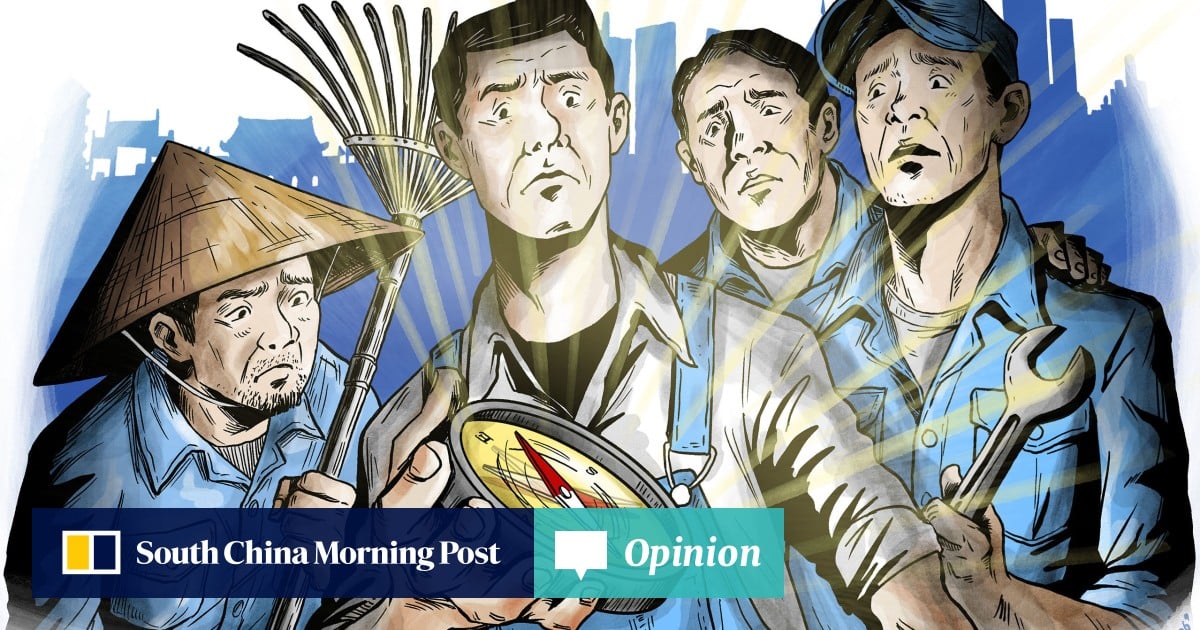
China’s Politburo has just set the country’s economic priorities for the second half of the year. The meeting took place against the backdrop of gross domestic product growth slowing to 4.3 per cent in the second quarter, its weakest since late 2022, and an increasingly K-shaped economy: strong exports and fast-growing hi-tech industries on one side, with weak domestic consumption, softening investment and slower growth elsewhere on the other.
The official readout did not describe the economy as K-shaped or echo the central bank’s language of structural divergence. Instead, it emphasised new growth momentum and an improving economic structure, while calling for faster infrastructure development, a deeper push of the AI Plus strategy, the expansion of emerging and future industries, and continued upgrading of traditional sectors.
This reinforces an official narrative in which the divergence is interpreted as part of China’s transition from old growth drivers to new ones, with artificial intelligence and other advanced technologies expected to raise productivity across the economy.
But this framing makes China’s productivity challenge look mainly technological. A more fundamental test lies in what happens to its more than 301 million migrant workers. Under the urban-rural household registration system, migrant workers remain registered as rural residents while taking up non-agricultural jobs. Where they go next will shape whether productivity gains reach beyond China’s most advanced sectors.
China remains the world’s largest agricultural economy by output, about US$1.3 trillion last year. The sector employed 22 per cent of the workforce, while its labour productivity was only about one third of the economy-wide average.
Reducing the concentration of low-productivity labour in agriculture is therefore central to Beijing’s ambition of becoming a “moderately developed” country by 2035. Doubling GDP per capita from its 2020 level will depend heavily on raising output per worker.
Don't Miss:
-
Ukraine’s Zelensky warns of painful winter for Russia if energy truce talks fail
-
Donald Trump built a US$5 million White House helipad. Don’t expect Xi Jinping to use it
-
Grief and pain flow at hearing for Canadian suicide poison vendor Kenneth Law
-
All you need to know about a state visit, as White House rolls out red carpet for Xi
-
Indian sailor killed in attack on vessel in Hormuz, India and Oman authorities say