
 Rick Claypool on Pay to Play Corporate Crime Enforcement
  Labaton Launches Whistleblower Practice with Former SEC Acting Chair Allison Herren Lee
  Kremlin payment firm A7 has been pumping billions in ‘untraceable’ cash into global financial system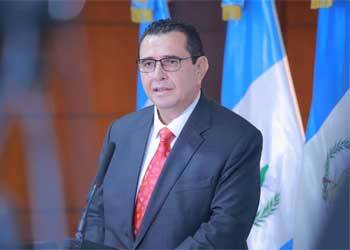
The appointment of Gabriel Estuardo García Luna as Guatemala’s new attorney general could put the brakes on a period of extreme judicial backsliding, though the top prosecutor inherits a hollowed-out institution that will be difficult to revive.
Gabriel Estuardo García Luna, a career judge and university professor, took office on May 17 after a months-long selection process from which he emerged as President Arévalo’s top pick.
He succeeds Consuelo Porras, who during her eight-year term amassed sanctions in over 40 countries over her alleged role in shielding corrupt actors from investigation and waging a campaign of persecution that has driven dozens of anti-impunity officials into exile.
“Today marks an opportunity to restore dignity to the justice system,” García Luna said in a public address broadcast after becoming attorney general.
“The Attorney General’s Office cannot be used as a weapon…in the service of any group, so any selective persecution must come to an end,” he added.
Porras’ exit will come as a relief to Arévalo, whose anti-corruption agenda has been derailed by years of legal tussling with the outgoing attorney general. Porras tried to prevent Arévalo from taking office in 2024 and has since hounded his government with investigations widely viewed as politically motivated.
SEE ALSO: President Arévalo’s Counterproductive Stand-Off With Guatemala’s Attorney General
“Justice has too often been used as a tool for settling scores; it is time to leave that past behind,” President Arévalo said in a speech shortly after selecting García Luna as the new attorney general in early May.
The Organization of American States welcomed his appointment and called for an end to the “instrumentalization of criminal law.”
García Luna is now tasked with overhauling an office that has been gutted from within. This will not only require him to confront corrupt networks within his ranks but also resist backlash from a political establishment accustomed to receiving protection from the top prosecutor.
Who Is Gabriel Estuardo García Luna?
García Luna was serving as an advisor to the executive’s top lawyers before Arévalo named him attorney general. The former judge and academic seems to have been chosen for what he did not do, rather than what he did.
He was one of the few candidates for attorney general with no stains on his record, something of a rarity in Guatemala. Despite spending two decades between criminal and appellate courts, he does not stand out for having presided over major cases.
His profile points to a potential “non-confrontational” or “establishmentarian” approach, according to former Guatemalan prosecutor Juan Francisco Sandoval. Impunity Watch researcher Alejandro Rodríguez described him as a “passive” figure with a reputation for leniency.
SEE ALSO: Arévalo, One Year On: Is Guatemala’s President Losing the Fight Against Corruption?
“The key question is whether he will manage the institution by preserving the existing internal power balances he’s inherited or whether he will push for deeper changes,” said Sandoval, who led Guatemala’s Special Prosecutor’s Office Against Impunity (Fiscalía Especializada Contra la Impunidad – FECI) before it was gutted during Porras’ tenure.
“We’ll need to see whether he reviews the structures that enabled the criminalization of prosecutors, judges, journalists, human rights defenders, and activists,” he added.
García Luna has pledged to restructure the Attorney General’s Office, improve resource management, and prioritize criminal investigations.
During his first press conference as attorney general, García Luna told reporters he would dissolve FECI, which under Porras all but stopped investigating corruption and instead became a weapon for persecuting political rivals.
He also plans to review possible cases of political persecution, signaling his willingness to confront Porras’ legacy.
What Challenges Will García Luna Face?
The main obstacles facing García Luna are internal. Porras spent years consolidating a loyal network of prosecutors in leadership roles while purging the Attorney General’s Office of its most talented staff.
The institutional brain drain has severely weakened the office’s capacity to investigate criminal networks. It has also allowed Porras’ allies to go after political rivals and position unqualified prosecutors in units dealing with corruption and impunity.
A newcomer to the Attorney General’s Office, García Luna will need to assemble a team capable of navigating the institution’s internal dynamics and asserting their authority over its administration, according to Rodríguez.
“If he does not have a solid team behind him, the internal structures of the Attorney General’s Office will consume him,” Rodríguez said.
Controlling the chain of command will be pivotal to restoring the office’s capacity to initiate or revive complex corruption cases—many of which were shelved under Porras.
Most of the prosecutors and legal aides who led major anti-impunity cases were either fired, driven into exile, or jailed on dubious charges during Porras’ tenure. The few who remain in the Attorney General’s Office have been systematically transferred away from their areas of expertise and face reprisals for initiating corruption probes.
Reversing the culture of fear and reinstating worker protections repealed under Porras will be pivotal to incentivizing both experienced and aspiring prosecutors to take on high-profile cases. But another challenge lies in preventing senior staff from meddling in investigations, which has become a routine tactic to stall cases.
These internal hurdles will take time to overcome, and they are only part of the problem. Outside the Attorney General’s Office, García Luna must also navigate a hostile judicial and political landscape that favors impunity over accountability.
“Corruption networks don’t operate solely within the Attorney General’s Office. They also have ties to political, economic, and judicial ties that complicate genuine efforts to ensure accountability,” Sandoval told InSight Crime.
This includes Guatemala’s top tribunals—the Constitutional Court (CC), the Supreme Court, and appellate courts—all of which have a history of blocking investigations and overruling corruption convictions to the benefit of corrupt officials and criminal groups.
The CC repeatedly shielded Porras from Arévalo’s attempt to oust her and could become a “powerful enemy” capable of restricting García Luna’s work, according to Rodríguez.
Featured image: Guatemala’s new attorney general, Gabriel Estuardo García Luna. Credit: Guatemala’s Public Ministry X Account (@MPguatemala)
Don't Miss:
-
A Total of 13 Mass Graves Have Been Found in Viesca Containing the Charred Remains of Men and Women
-
Jorge Luis Zambrano, alias “Rasquiña”
-
El Taliban Fell In Mazatlán… And What He Confessed Ties Everything Together
-
Inside the Camp at the Heart of Honduras’ Garífuna Land Struggle
-
This Is How the MataZetas Captured and Executed the Zetas