
 Statement on missing ICIJ journalist Micah Reddy
  TRANSCRIPT: ‘China Retains Levers for Long-Term Territorial Ambitions’
  On Indonesia’s new oligarchy, China’s state bank, and other stories | Asia Sentinel Stories of the Week
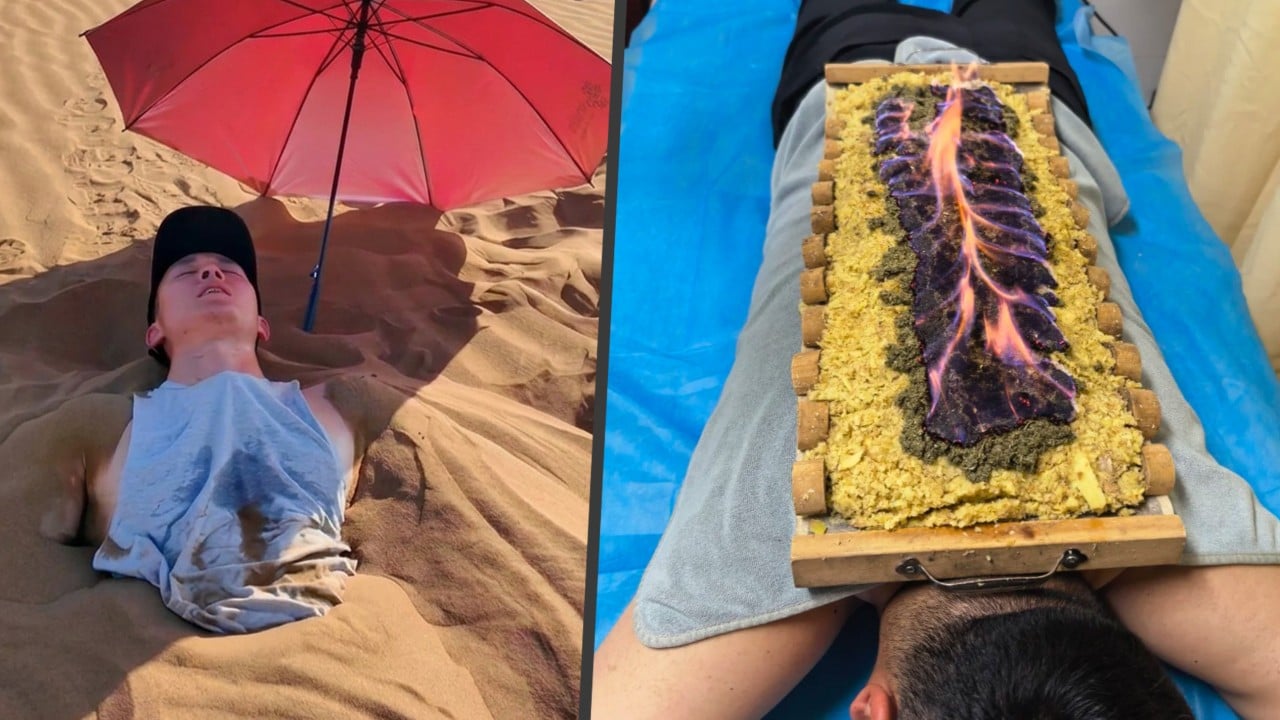
 As China enters the peak of summer heat, an increasing number of youth believe they have found a solution to fatigue, oily skin, and low energy: qushi, or eliminating dampness from the body.
Rooted in traditional Chinese medicine (TCM), the centuries-old concept of “dampness” dates back about 2,000 years to the Huangdi Neijing, one of the earliest foundational texts of Chinese medicine.
Recently, it has evolved into a viral wellness trend, inspiring remedies ranging from cupping and herbal foot baths to back sunbathing and sand therapy.
In TCM theory, dampness refers to an imbalance in the body’s fluid regulation, attributed to factors such as humidity, poor diet, insufficient sleep, and excessive air conditioning.

Traditionally associated with fatigue and digestive issues, “excess dampness” has become a catch-all explanation among many young Chinese for oily hair, acne, and low energy.
Don't Miss:
-
Thousands march in France against ‘licence to kill’ draft law
-
Germany’s Merz vows to press ahead with reforms after historic state election defeat
-
UK’s Burnham congratulates Trump and Danish PM on Greenland deal
-
Italy’s Meloni plans to ban burkas, niqabs in schools and cap foreign pupils in classrooms
-
US, China seek Xi-Trump summit deliverables in New York talks