
 BANG TAO’S NIGHTMARE: THAI MEDIA EXPOSES ILLEGAL CLUBS, CORRUPT OFFICIALS, AND THE DEATH OF JORDAN WRIGHT—HERE’S HOW PHUKET’S NIGHTLIFE BECAME A KILLING FIELD
  Sarah Anderson on the Twenty Largest Low Wage Employers
  Rachel Brewster on the Rise of Global FCPA Settlements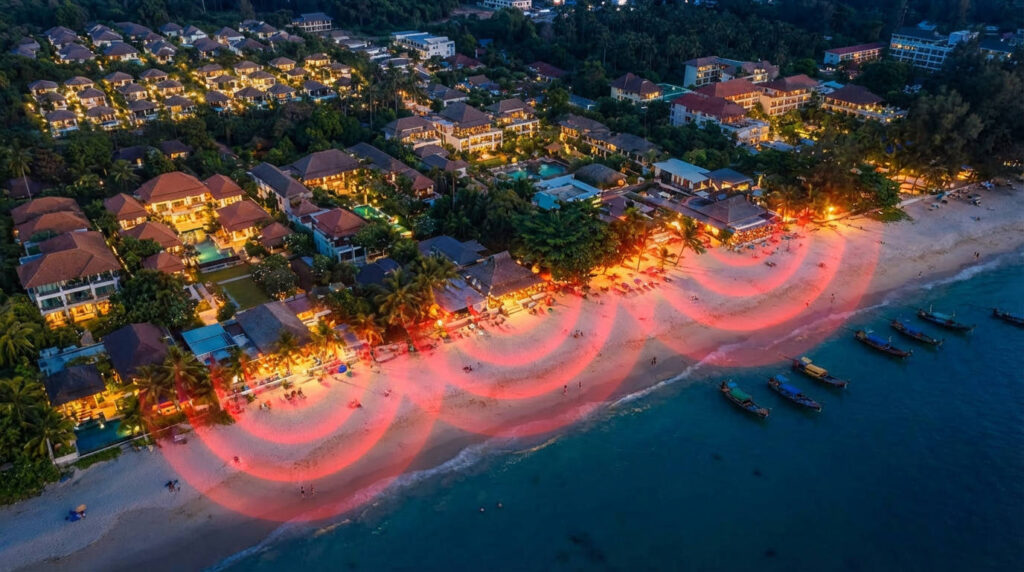
BANG TAO, PHUKET — While Jordan Wright’s death remains shrouded in mystery, Thai media outlets have broken the silence, exposing a web of illegal nightclubs, bribed officials, and a police force that turns a blind eye—all while residents and tourists pay the price in blood.
The truth?
Phuket’s nightlife isn’t just loud and lawless.
It’s a death trap, and Jordan Wright was just the first casualty Thai journalists are daring to name.
THAI MEDIA BREAKS THE STORY: “BANG TAO’S ILLEGAL CLUBS ARE OPERATING IN PLAIN SIGHT—AND NO ONE IS STOPPING THEM”
Multiple Thai-language news outlets have reported on the same disturbing pattern:
1. Clubs Operating Without Permits (And Getting Away With It)
- Maya Beach Club and Yuuhi Beach Club are not licensed for late-night operations in a residential zone.
- No right permits. No right alcohol licenses. No safety inspections.
- Yet they operate every night, blasting music until 5 AM, serving alcohol to drunk crowds—while police do nothing.
2. Police and Officials Taking Bribes to Look the Other Way
- Multiple reports from residents and expats claim police ignore complaints—unless money changes hands.
- Three Phuket mayors already face corruption charges—yet the clubs keep operating.
- Tourist Police refuse to investigate missing persons or drunk-related incidents near these venues.
3. A History of “Accidents” That Were Never Investigated
- Drownings in drainage canals (just like Jordan Wright).
- Overdoses covered up to “protect the clubs’ reputation.”
- Fights turning deadly—with no arrests, no charges, no consequences.
Thai media isn’t just reporting on this.
They’re asking the same question we all should be:
How many more people have to die before Phuket authorities acts?
HOW PHUKET’S NIGHTLIFE BECAME A KILLING FIELD (AND WHY NO ONE STOPS IT)
1. The Permit Scam: Pay to Play (Literally)
No proper licensing? No problem. Just pay the right official.
Noise complaints? Pay the police to ignore them.
A foreigner overdoses? Pay to keep it quiet.
But bribery alone doesn’t explain the scale of this operation. The real genius — and the real danger — is that officials aren’t just taking bribes to look the other way. They’re issuing the licenses themselves.
Here’s how it works:
Under Thailand’s Entertainment Place Act B.E. 2509 (1966) and its amendments, any venue offering music, dancing, or similar entertainment for customers must hold an entertainment venue license (ใบอนุญาตประกอบกิจการสถานบริการ). That license comes with strict conditions. The venue must sit inside a legally designated entertainment zone (เขตพื้นที่จัดตั้งสถานบริการ). It must meet building-safety standards. It must close at legally mandated hours — in Phuket’s designated zones, typically 2:00 AM, sometimes extended to 4:00 AM by provincial order during peak tourist seasons.
A restaurant license (ใบอนุญาตจำหน่ายอาหาร) carries none of those restrictions.
It doesn’t require the venue to be in an entertainment zone. It doesn’t restrict amplified music the way an entertainment license does. It costs less, takes less time, and faces far less scrutiny. The trade-off is that a restaurant is legally limited to food service. It can play background music. It cannot host a DJ. It cannot operate as a nightclub. It cannot stay open past general business hours serving alcohol.
And yet — a venue applies for a standard food-service permit. Reasonable enough. The permit is rubber-stamped by a district official who either doesn’t inspect the premises or has been paid not to. On paper, it’s a restaurant. In reality, it becomes cover for a full-scale nightclub. The venue has a kitchen, yes — sometimes just a token grill or a cold prep station that barely functions. It also has a DJ booth, bottle service, and a dance floor packed wall-to-wall well past legal closing hours.
Technically, it holds a restaurant license. Practically, it’s Bangla Road transplanted into a residential soi — and the law that should stop this is the same law being circumvented to enable it.
This isn’t a loophole. It’s a business model.
The distinction matters because Thai law is explicit. Under the Entertainment Place Act, a venue crosses into regulated territory the moment it offers live or amplified entertainment for patrons — not ambient background music, but a DJ, a sound system aimed at a dance floor, performers. The legal threshold is clear. The enforcement is not.
And the officials who sign off on these restaurant permits? Several of them either hold stakes in the venues themselves or have family members who do. The person issuing the license and the person collecting the profits sometimes sit at the same dinner table.
Then there’s the zoning problem — or rather, the zoning illusion.
Under the Ministerial Regulation on Entertainment Place Zones and Phuket’s own provincial orders, entertainment venues are confined to designated zones — primarily the Bangla Road corridor in Patong, portions of Kata and Karon, and select streets in Phuket Town. Residential areas are off-limits. The rule exists for a reason: people live in residential areas. Children sleep in residential areas.
And yet clubs operate freely inside residential neighborhoods across Phuket. How?
- An official classifies a nightclub as a “restaurant” on paper, keeping it outside the Entertainment Place Act entirely and sidestepping zoning requirements.
- A venue receives a restaurant permit for one address but expands across multiple shophouses, some in residential zones — the license follows the original address, not the footprint.
- An entertainment-zone boundary is quietly reinterpreted — or simply ignored — after the right payment changes hands.
- A local administrative body issues a changwat (provincial) order reclassifying a residential street as “mixed commercial-residential” to retroactively legitimize a venue that was never supposed to be there.
The result is predictable. Families in Patong, Kata, and Kamala live surrounded by venues that pump bass through their walls until dawn. When they complain, they’re told the venue holds a valid license — a restaurant license. What they’re not told is how that license was obtained, what the venue actually operates as, or who profits from the misclassification.
The system doesn’t just tolerate illegal clubs. It creates them. And then it protects them.
A restaurant permit costs a fraction of what an entertainment license requires. The zoning restrictions don’t apply. The inspections are weaker. The closing-hour rules are easier to bend. So you apply for a restaurant, you pay the official, and you open a club. The Entertainment Place Act was written to prevent exactly this. It’s being used to enable it.
2. The Police: Not Protectors, Just the Clubs’ Bodyguards
- No patrols near Maya or Yuuhi. (Why? They’re paid not to.)
- No answer on complains.
- No emergency response. (Why? **Because the clubs *own the night*
HOW TO FIGHT BACK: HOW PHUKET’S PEOPLE ARE PUSHING BACK
The authorities stay quiet. The people don’t.
For years, Phuket’s residents were told nothing could be done. The clubs were too powerful. The officials too entrenched. The money too deep. Complain and you get ignored. Complain louder and you get a visit. The system was designed to make resistance feel hopeless.
But something has shifted.
Thai media has picked up the story with a ferocity that wasn’t there before. Outlets that once treated Phuket’s nightlife corruption as open-secret background noise are now running detailed investigative reports — naming venues, naming officials, publishing noise-level readings taken outside residential homes at 3 AM. The coverage is no longer “tourists party in Phuket.” It’s “Phuket’s residents are being destroyed, tourists are being exploited, and no one in power cares.”
Because this isn’t just a residential issue — it’s destroying tourism too. Visitors who came for a beach holiday find themselves in soi corridors pulsing with bass at 4 AM, stepping over drunk patrons outside their hotels, and watching drug-fueled chaos in what were supposed to be family-friendly areas. More and more tourists are leaving disturbed, leaving negative reviews, and in some cases, leaving Phuket for good. That framing matters. It changes the conversation from a noise complaint to a crisis that hits the island’s most powerful industry in its wallet — and it puts pressure on officials who would rather operate in the dark.
And then there’s the fight on the ground.
Residents who once suffered in silence are organizing. Community groups are documenting violations systematically — recording noise levels with decibel meters, photographing venues operating past legal hours, filing formal complaints with district offices and creating paper trails that can’t simply be shredded. They’re using Thailand’s Official Information Act to request licensing records, forcing transparency on permits that were issued without proper inspection. They’re showing up at provincial administrative meetings and refusing to leave the agenda.
sangop.org, an NGO advocate backed by a growing coalition of Phuket residents, has made the fight against illegal nightlife venues her central campaign. Where venue owners deny wrongdoing, Sangop shows up with evidence — noise readings, license discrepancies, zoning violations. This organization works directly with affected communities, helping residents navigate a complaint system that was designed to exhaust them into giving up.
They launched an active petition on Change.org demanding accountability for the illegal venues operating under fraudulent restaurant licenses in Phuket’s residential areas. The petition doesn’t just ask for “something to be done” — it names the legal mechanisms being violated:
- The Entertainment Place Act B.E. 2509, which these venues bypass by misclassifying as restaurants
- The Ministerial Regulations on Entertainment Zones, which restrict nightclubs to designated areas
- The Building Control Act, which is violated when shophouses are structurally modified without permits to accommodate club operations
- The Public Health Act, which empowers local authorities to act against venues creating hazardous noise levels in residential zones
The petition is gaining traction. Signatures are climbing. And each signature represents not just a name on a screen but a resident who has decided that the sleepless nights, the bass shaking their walls, the drunk patrons in their streets, and the indifference of their own government are no longer acceptable.
This is what the clubs and the officials who protect them didn’t count on: that the people they dismissed would stop asking and start demanding.
The fight is far from over. The permit scam still runs deep. Officials still sign. Police still look away. Venues still open. But the ground is shifting. Every news report, every documented violation, every signature on that petition chips away at the system’s greatest weapon — the assumption that no one would ever push back.
They’re pushing back now.
Don't Miss:
-
Sarah Anderson on the Twenty Largest Low Wage Employers
-
Rachel Brewster on the Rise of Global FCPA Settlements
-
Phillips 66 to Pay $8 Million Gets Prosecution Deferred No Monitor No Finding of Guilt No Corporate Probation No Press Release
-
Kaleb Byars on the Double Standard in the Sentencing Guidelines
-
Nick Chater on the Nudge Movement and Blaming The Individual for Corporate Wrongdoing