
 Arsenic in our Rivers
 Statement: ICIJ battles to protect source behind Pornhub documents story
 New study shows proposed UN tax convention could see countries recover nearly $400 billion in taxes
Late last month, the Department of Justice entered into its first “near miss” non-prosecution agreement under its 2026 Corporate Enforcement and Voluntary Self-Disclosure Policy, resolving an investigation into Extreme Networks’ sales of networking equipment and services to a Russian weapons manufacturer owned by a sanctioned entity.
Ballard Spahr
Philadelphia, Pennsylvanie
Although Extreme Networks’ self-disclosure was untimely because it came under the imminent threat of a news article, the Department credited its full cooperation and remediation, and the company agreed to pay $975,721.84 in criminal penalties, plus $1,529,685 in parallel OFAC administrative penalties.
The Department declined to prosecute Extreme Networks in a case that did not qualify for a declination, marking the first “near miss” resolution under the policy.
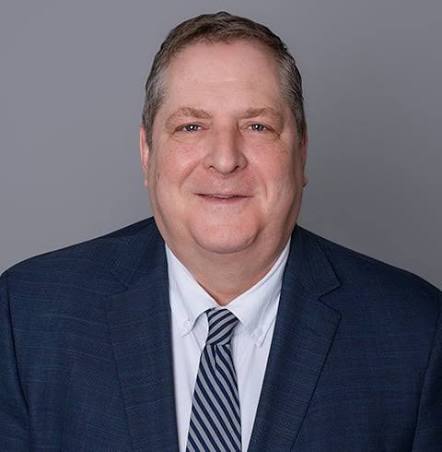
That’s according to a report from Henry Hockeimer and colleagues at Ballard Spahr in Philadelphia. (Department of Justice Announces First ‘Near Miss’ Non-Prosecution Agreement Under Its Corporate Enforcement Policy (October 29, 2026))
Despite an untimely self-disclosure, the company received a 50 percent fine reduction, a three-year term, and no independent compliance monitor, based on its good-faith investigation, cooperation, and remediation.
The company still admitted to multiple criminal offenses, forfeited its proceeds, and took on three years of cooperation, reporting, and certification obligations.
“The facts highlight compliance red flags in distributor, end-user certificate, and acquisition diligence processes that companies should address in their own programs and contracts,” Hockeimer reported. “The Extreme Networks resolution shows that a company whose self-disclosure falls short of the timeliness standard can still earn a non-prosecution agreement, a reduced fine, and no monitor through genuine cooperation and remediation. However, robust distributor, end-user, and acquisition diligence remains the first line of defense to avoid enforcement action.”
“The Department of Justice in March of this year came up with a kind of a component wide program for corporate enforcement,” Hockeimer told Corporate Crime Reporter in an interview earlier this month. “It really focuses on three areas for companies to follow.”
“One is to voluntarily disclose conduct, cooperate with an investigation, and remediate misconduct that they have voluntarily disclosed. If you do those three things, if you do the voluntary disclosure and the cooperation under this program, there’s a good chance you’ll get a declination of prosecution.”
“The near miss comes in if it hasn’t been voluntarily disclosed, or if there are aggravating factors present. In the case we wrote about, the company was remediating a situation. There was an internal whistleblower complaint. They were remediating the situation. They had not yet disclosed. They were made aware of an independent journalist who was going to run a story about the misconduct that they had been dealing with at the company, and they then disclosed under the pressure of this potential public disclosure by this journalist. In light of that, the Justice Department characterized it as a near miss.”
“They were doing all the right things, but they didn’t unilaterally voluntarily disclose. They disclosed that under the pressure of a competing public disclosure by this journalist. Nonetheless, they received a non-prosecution agreement. The fine was about 50 percent of what it would have been otherwise if the Justice Department came knocking on their door and they hadn’t disclosed. There are a lot of other things that they had to do. They had to beef up their compliance program. They had to get board approval for the ultimate settlement. They had to pay OFAC fines as well as other penalties. But again, it was 50 percent of what the fines would have been. And in many ways, it was a good result for the company.”
“Their lawyers did a great job in that there was no conviction. There’s no debarment. I don’t know if this company does federal contracting. If they did the result was – not having the conviction, not having any kind of debarment, having a three-year term to cooperate and make sure that they don’t get any kind of trouble again.”
“But again, they must institute a robust compliance program and training, and moving forward, many of those things are things the company ends up doing anyway. So ultimately, it was a good result for this company.”
Declinations and non prosecution agreements are different. How so?
“A declination is where the Department of Justice would decline to prosecute. Under a non-prosecution agreement, the government says – we are not going to prosecute you, but we’re going to have you admit to a set of facts relating to the misconduct, and if anything comes up, if you do anything wrong and breach the non-prosecution agreement, all bets are off, and you will be prosecuted at that point.”
When we started the publication 40 years ago, our first interview ever was with Rudolph Giuliani, who was the U.S. attorney in Manhattan. At the time, he was making a name for himself prosecuting corporations. And at that time, this kind of alternative criminal settlement agreement was unheard of. You either got a criminal plea agreement, went to trial or the case was dropped.
Since then, it has been turned on its head. Now the vast majority of settlements are these deferred non-prosecution agreements and non prosecution agreements. What do you make of that?
“It’s born of two things. One is the lessons from Arthur Anderson and Enron. Back many years ago, when Arthur Anderson basically went out of business as a result of a criminal prosecution, you had innocent people who had nothing to do with the conduct at issue losing their jobs. It had a personal impact on those people. It had an impact economically. And there was a backlash over putting that company out of business.”
“It’s sort of like the death penalty that SMU got years ago in football. But after the SMU case, they didn’t give the death penalty to another college football team because of the harm that it caused that program.”
“So you have to be sensitive to the jobs that people have and not strike so hard that it wipes out an entire company for what might be isolated behavior.”
“The second thing is this – the Trump administration is a more business friendly administration. When you have programs like this where you’re incentivizing companies to voluntarily disclose, to cooperate, to remediate, you’re delegating and in a sense sort of deputizing compliance officers within companies to root out misconduct and present those facts to the Department. Individuals may very well be prosecuted and likely will be prosecuted. But if companies come to the table and cooperate, remediate, and voluntarily disclose, they will likely get a pass.”
You also have an article up about whistleblower rewards for criminal cases. Is this a first?
“Under a typical whistleblower program, a qui tam case, you can get a percentage of an ultimate resolution, whether it’s a settlement or a judgment. If you’re cooperating, if the government is intervening in the case, the whistleblower can get 15 to 25 percent of the ultimate recovery.”
“If the government declines to intervene, the whistleblower can get 25 to 30 percent of the recovery, and that’s also often with treble damages, triple damages. This new program says that if a tipster comes along and tips off the government, and the government ends up charging somebody, they can get a fee at the time of charging, not waiting until the ultimate settlement or judgment has been reached.”
“If the conduct has been charged, the whistleblower gets a finder’s fee for notifying the government of the misconduct. And if the misconduct results in a charge, you’ll get some type of payment.”
Have there been any awards under the program?
“I’m not aware of any, but I’m sure there are people now trying to qualify for it. The finder’s fee is anywhere from $10,000 to $30,000.”
Representing health care companies – is that a big part of your caseload?
“Healthcare fraud, healthcare enforcement has become in the last few years a significant part of our business, both at the state and federal level. You can see state AGs very involved in healthcare prosecutions, and you certainly see the Department of Justice and U.S. Attorneys’ offices around the country emphasize healthcare. David Metcalf, the U.S. Attorney here has publicly stated that he wants this district to be a leader in healthcare prosecutions.”
Historically, federal prosecutors in Philadelphia and Boston have taken the lead in False Claims Act cases in the country?
“Yes, for sure. Philly and Boston have dominated this area. It’s a self-propagating thing. Once you have experienced prosecutors who do it, and they recruit other prosecutors, and they do it, it just becomes part of the office. I think it’s that. I think it’s also proximity to pharma and healthcare companies in Boston and Philadelphia.”
How has the corporate crime practice changed under this Trump administration?
“I had previously done a good amount of Foreign Corrupt Practices Act cases. Those have essentially dried up. I still do compliance work and training for companies, but I haven’t done any real FCPA investigations. Now it’s a lot more healthcare fraud cases, a lot more sort of government program type fraud, whether it’s procurement fraud, tariff fraud, customs – anything that sort of impacts the public fisc. This administration is really focused heavily on it – any fraud that impacts government programs, taxpayer-funded programs. There has been a lot more of that kind of work that we’ve seen under this administration.”
It’s interesting that the Trump administration continues to pursue those kinds of cases.
“There has always been the tension between being business friendly and rooting out fraud or manipulation of government programs, taxpayer-funded programs. You have situations with an aging population and healthcare costs going up, and fraud affecting those programs.”
“I have cases now where U.S. attorneys’ offices are utilizing AI programs to evaluate submission of claims, hundreds of thousands of claim submissions to see if they can detect any kind of anomalies that could be a reflection of some type of fraud or improper manipulation.”
There was a recent Fox News poll showing that for the first time, public corruption has become the number one issue of concern to voters. How will that public sentiment translate into practice, if at all?
“U.S. Attorneys offices were historically staffed with public corruption prosecutors. But over the last several years, some of that staffing has been diminished.”
You seem to have an old school prosecutor’s mindset. How do you perceive the difference between old school and new school when it comes to corporate crime, prosecution, and defense?
“We’re living in a different time. You still have very good prosecutors working for the Department of Justice, very committed prosecutors. You’ve also seen an exodus of experienced prosecutors in the last few years. You are seeing younger prosecutors in some cases. From what I’ve read, federal prosecutors coming out of law school, which was really unheard of. These were always difficult jobs to get. In my personal experience, I’m still dealing with very seasoned, experienced prosecutors. But there has been an exodus from certain offices around the country that has to have an impact at some point.”
[For the complete q.a format Interview with Henry Hockeimer, see 40 Corporate Crime Reporter 45(12), November 23, 2026, print edition only.]
Don't Miss:
-
Arsenic in our Rivers
-
Statement: ICIJ battles to protect source behind Pornhub documents story
-
New study shows proposed UN tax convention could see countries recover nearly $400 billion in taxes
-
Trump Reinstates Jensen Huang as NVIDIA CEO in Extraordinary Intervention
-
China’s Thin Skin Is a Soft-Power Liability