
 Losing language and culture in Xinjiang
  Manila’s EV ambitions confront economic and energy realities
  Tunisian court dismisses case to dissolve publisher of ICIJ partner Inkyfada
Reporting Highlights
- Harming Children: Kids were in cars, at home and walking to school when tear gas or pepper spray left them wheezing, coughing and struggling to breathe. The weapons are especially toxic to kids.
- Excessive Force: Judges described the use of these “less lethal” weapons as excessive but had no power to curb them nationwide. Kids in other communities continued to get hurt.
- No Uniform Standards: DHS policies on the weapons are less strict than those of some local police departments. The agency’s inspectors general found officers have historically been undertrained.
These highlights were written by the reporters and editors who worked on this story.
The children were walking to school in Broadview, Illinois, or leaving a shopping center in Columbus, Ohio. They were at home in Minneapolis, or sitting in a stroller in Chicago, or at an afternoon protest in Portland, Oregon, alongside dogs on leashes and older people pushing walkers.
They were mostly going about their days when federal immigration agents shot tear gas or fired pepper spray near their homes and schools and into their family cars.
The chemicals blew through the air, sometimes for blocks. They seeped into bedrooms, forcing an asthmatic teen to gasp for air. They stuck to the skin of a young girl, who cried, “It burns!” They caused an infant to stop breathing.
ProPublica identified 79 children across the country who have been harmed by tear gas or pepper spray as immigration officers dramatically stepped up their use during President Donald Trump’s immigration crackdown.
The Department of Homeland Security has repeatedly defended its use of the chemicals, asserting its agents aren’t to blame. The fault, a spokesperson said, lies with “agitators” in the crowds and parents who put their children in harm’s way.
But videos reveal the way agents use these weapons. One captures them releasing tear gas into a crowd with at least seven kids just before someone yells, “There’s children here.” Another shows them hurling tear gas canisters at protesters without apparent provocation; then, with the streets already flooded with white smoke, a Customs and Border Protection agent wearing a body camera shoots pepper balls before muttering, “Fuck yeah,” and shouting, “Woo!”
A third shows what happened after an officer fired pepper spray through the driver’s side window of a family’s car, hitting a 1-year-old girl in the back seat; a bystander filmed her in tears, and her family later said she was struggling to breathe. A DHS spokesperson called the incident “a disgusting pepper spray hoax.” But a local pastor who was at the scene rebuked the claim, testifying at an Illinois state accountability commission that “there’s literally video evidence.”
Such scenes of billowing gas and tear-stained faces have prompted some historians to liken the scope and intensity of the agents’ deployment of chemical munitions to brutal crackdowns by Southern law enforcement during the Civil Rights Movement.
And the legality of their use has been challenged. In cities across the country, judges have excoriated both Immigration and Customs Enforcement and CBP, saying their officers used excessive force. One judge said the agents showed “deliberate indifference” to the risks, including to children. They ordered officers to limit the use of these weapons in areas that were the focus of lawsuits. But they had no power to curb the practice nationwide — and kids in other communities, ProPublica found, continued to get hurt.
The controversy over the chemicals has highlighted a lack of consistency in their use: No national standard governs the use of tear gas and pepper spray by law enforcement, and agency policies differ widely. As a result, agents working for DHS could more freely use tear gas in targeted cities like Minneapolis and Portland, where local police policies are stricter.
A Portland officer said in a court declaration that he and several colleagues were tear-gassed by federal agents while observing and patrolling a protest he deemed to be mostly peaceful. At another event, in which he served as incident commander, he said the agents’ use of tear gas was “excessive and disproportionate to the threat posed” and “affected hundreds of peaceful protesters.”
These weapons are toxic, especially to children, who breathe more rapidly, pulling in more contaminated air than adults relative to their body weight. That principle is why coal miners once brought canaries underground, as one emergency medicine doctor explained in a recent court declaration. Because of the birds’ quick breaths and small size, they would stop singing or die when the chemicals started affecting them, giving the miners time to escape. Children are also vulnerable because they have narrower airways and stand closer to the ground, where tear gas tends to pool.
The Trump administration’s use of tear gas has been so extreme — with some children exposed multiple times — that the only research ProPublica found that might approximate the impact is a 2018 survey of Palestinian refugees in the West Bank subjected to the chemicals by Israeli security forces. Kids reported rashes and chronic tonsillitis, but no one knows the extent of the long-term consequences.
ProPublica’s tally of kids harmed by tear gas or pepper spray is nearly four times the number cited in a recent congressional report that relied on news stories, yet it is likely still a vast undercount. We verified incidents by interviewing more than 40 victims or witnesses and reviewing officer-worn body camera footage, social media posts and lawsuits. We included only cases in which we spoke to parents or others with direct knowledge, found at least two news accounts confirming the incident or identified an episode from sworn testimony.
In many of the cases where children were harmed, a DHS spokesperson said, the officers were justified in using tear gas or pepper spray, but the agency did not address how the weapons affected bystanders, including children. “DHS does NOT target children,” the agency said in a written statement.
The spokesperson defended the department’s training and said ICE officers are taught to use “the minimum amount of force necessary to resolve dangerous situations.” That includes “considering the totality of circumstances when deploying crowd control measures” and training in “de-escalation tactics,” according to the statement. “But if you assault an officer or attempt to obstruct law enforcement activities you can expect to be met with an appropriate response. … This is why rioters and agitators should stop obstructing law enforcement operations” and “refrain from knowingly bringing their own children into potentially volatile situations.”
The department did not respond to detailed questions asking whether it had investigated or disciplined officers over their use of tear gas or pepper spray since last year. In January, Stephen Miller, a White House deputy chief of staff, addressed ICE officers in a segment on Fox News, saying, “You have federal immunity in the conduct of your duties.”
Three former DHS leaders said that the number of children exposed to tear gas and pepper spray indicates something is seriously broken in the department. John Roth, who served as its inspector general under President Barack Obama and for part of Trump’s first term, said ProPublica’s findings are a “bright red flag.”
“This should trigger a serious review of how it is that we train people on use of force,” he said.
“I Can’t Breathe”
Tear gas, a catch-all term for various chemical irritants, exists as a fine powder that settles over every surface, triggering nerve endings to feel like they’re on fire. The chemicals sear your lungs and throat, inflaming your airways until it feels like you’re breathing through a straw, while snot and tears stream down your face. They can cause vomiting, rashes and coughs that last for weeks. Pepper spray is made from compounds found in hot peppers and causes similar effects.
The limited studies of tear gas use on adults have found lingering eye problems, bronchitis and other respiratory illnesses. Emerging research suggests an association between tear gas and abnormal menstrual cycles and miscarriage. In extreme cases, people have died.
How Tear Gas Affects the Body
Possible Immediate Symptoms

Eye and facial pain, blurry vision, and strong production of snot and tears

Burning sensation in lungs and throat, difficulty breathing, and respiratory illnesses like asthma exacerbated

Nausea, vomiting and prolonged coughing

Skin rashes, pain, irritation and sometimes chemical burns
Possible long-term symptoms

Corneal scarring
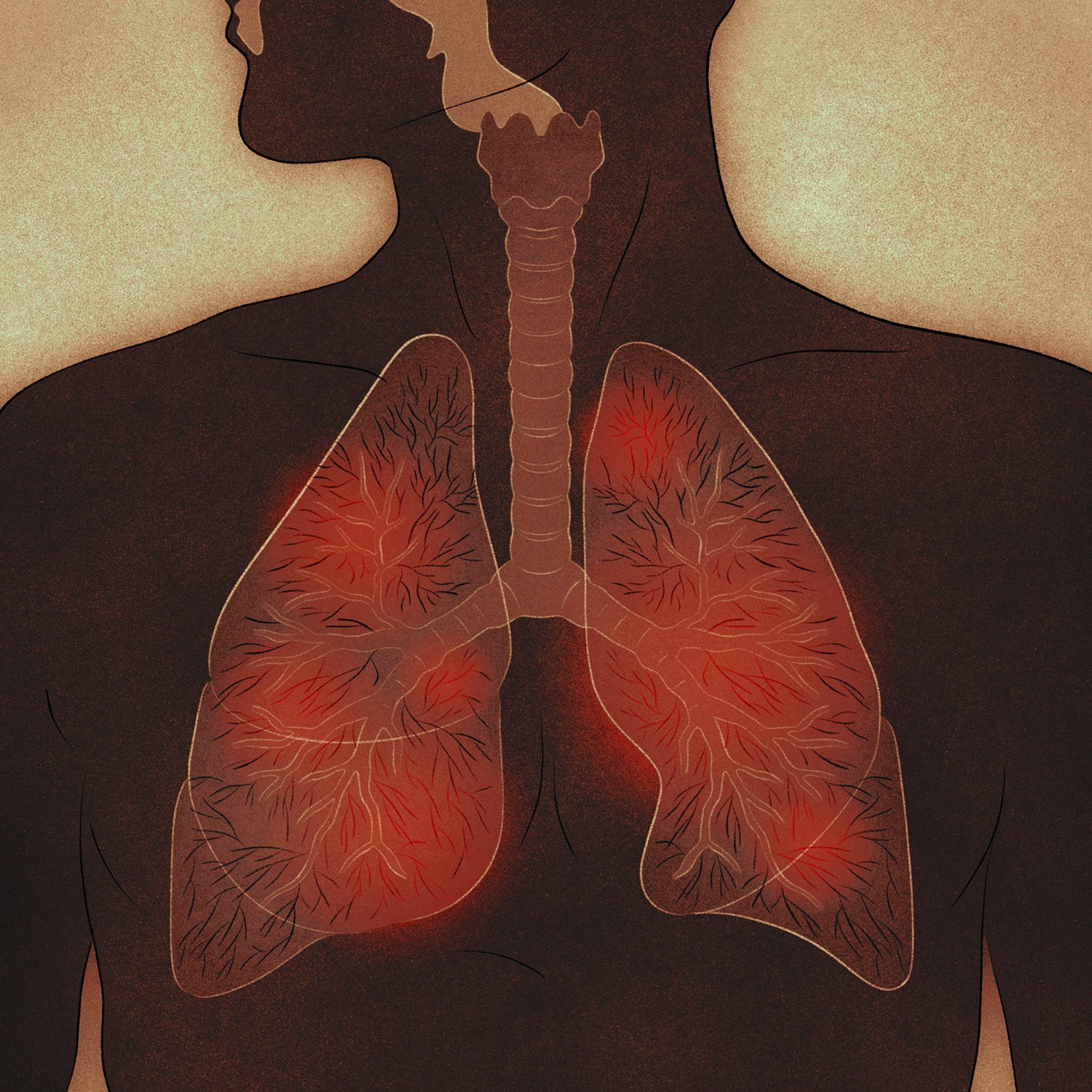
Bronchitis and other respiratory illnesses

Abnormal menstrual cycles and miscarriage

In extreme cases, death
Once the weapons are fired, it’s often difficult to control who gets hit. The canisters can roll along the ground, and the chemicals drift through the air. In Minneapolis, ProPublica found that tear gas traveled at least a quarter mile, entering a McDonald’s.
Families who live near an ICE facility in Broadview, Illinois, felt the effects inside their homes when officers tear-gassed the protesters who routinely gathered there.
Derrick Nash lives a block and a half east of the facility with his extended family, including four children ages 6 to 17. Each time the tear gas seeped in, the kids coughed, and their throats often burned. The eldest, a high school senior with asthma, would hide out in his second-floor bedroom. One evening, his face turned red as he coughed uncontrollably and sucked on his inhaler without relief.
“He was wigging out, saying, ‘I can’t breathe,’” Nash recalled. The family considered calling an ambulance, but the street was closed.
Nearby, two girls, ages 6 and 10, started wearing layers of surgical masks indoors, but that didn’t prevent their coughing fits.
“It was terrifying. My kids were scared,” said the girls’ mother, who asked not to be named out of fear of retaliation. “We felt it instantly. We were coughing. Our eyes were watering. Our noses felt funny.”
She worries the exposure to tear gas and pepper balls might have caused long-term damage. Since October, her youngest, now 7, has been coughing and wheezing a lot, especially at night. She’s taken the girl to urgent care about five times. “She’s been complaining about her throat,” she said. “It gets to the point she can’t breathe.”
Law enforcement officials have been dismissive of the effects of tear gas. In a lawsuit over the officers’ actions in the Chicago area, CBP supervisor Kristopher Hewson testified that the chemical irritant “doesn’t harm people” and that “after you leave it, it stops those effects within 10 seconds.”
But it’s undeniably toxic. A federal scientific panel in 2014 found that people could be harmed at even very low doses. Much of the research on health effects was conducted on men in the military; little is known about what happens to women, children, older adults and people with respiratory illnesses.
In the United States, some have been seriously hurt after a single exposure to tear gas.
In January, a Minneapolis family with six children was driving home from a youth basketball game when they encountered a protest and stopped for a while. As the situation escalated and they tried to leave, a tear gas canister rolled under their minivan, setting off the airbags and hampering their escape. Their 6-month-old son briefly stopped breathing.
“The baby is not responding. … Oh my god, come on,” a 911 caller said. The infant, who was given CPR, spent time in the hospital, along with two siblings who have severe asthma.
“Deliberate Indifference”
As Trump’s immigration crackdown moved from city to city, residents, journalists and protesters sued to stop the bombardments they said violated their constitutional rights.
Among dozens of declarations from Chicago and its suburbs, one witness in Broadview described seeing children covering their faces while walking to school; another in Brighton Park, who was 8 1/2 months pregnant, said she saw kids “coughing, wheezing, and crying” after tear gas was released.
“Tear gassing expectant mothers, children, and babies shocks the conscience,” U.S. District Court Judge Sara Ellis wrote in her ruling in November. She found that ICE and CBP officers used excessive force, deploying the weapons “without justification, often without warning” against people who didn’t pose a physical threat.
She ordered them to stop. But the injunction covered only the areas mentioned in the complaint.
In December, 15 days after Ellis’ written ruling, residents living diagonally across the street from an ICE facility in Portland filed their own suit. For months, they said, tear gas seeped into their apartments as federal officers fired it at the protesters gathered steps away. The residents filed their accounts to the court: While at home, one 12-year-old boy broke out in hives and suffered “chronic respiratory issues,” requiring an inhaler for the first time in his life. Two sisters, ages 7 and 9, slept inside a fort they made in a closet.
One neighbor, Mindan Ocon, told ProPublica that her 3-year-old daughter, Angelise, screamed and cried one night as the gas drifted in, holding her face as it burned her eyes. Over time, Ocon said, they developed a routine. Whenever Angelise coughed and rubbed her eyes, or when Ocon anticipated trouble, she took her daughter into the bathroom for a bubble bath. On certain days, she did this as many as four times. Angelise now prefers showers and says, “No bath!” when Ocon tries to put her in the tub.
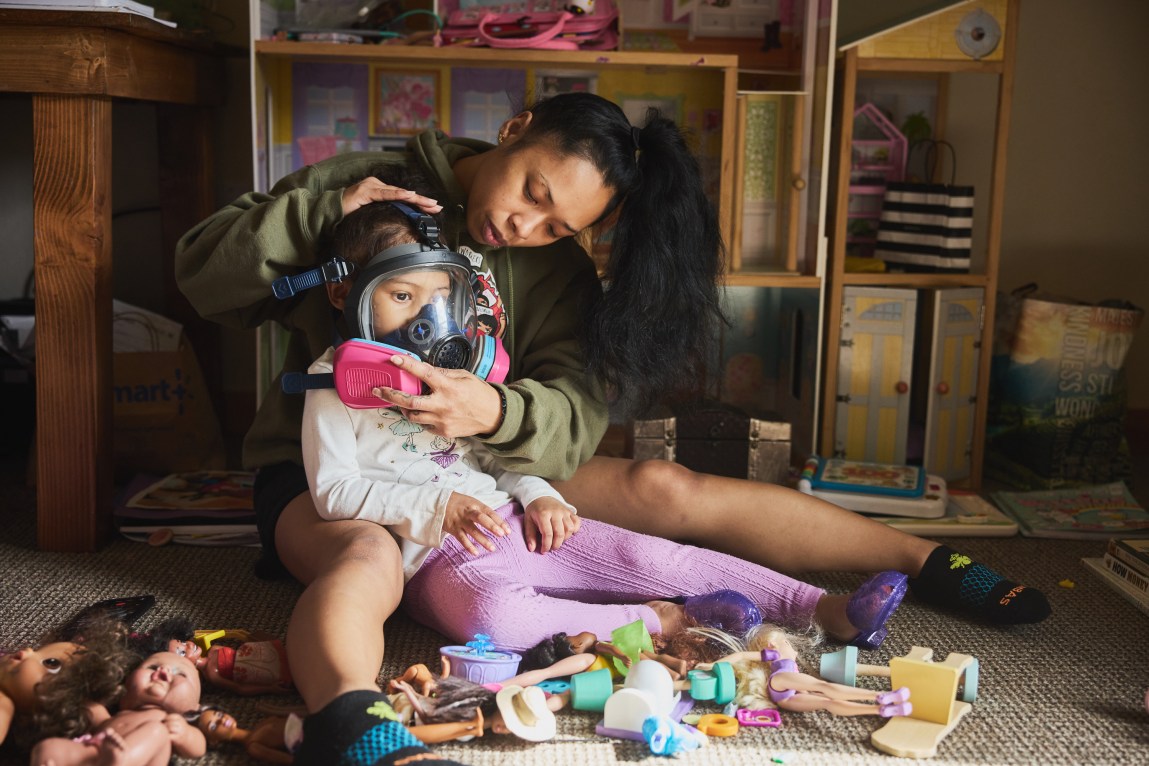
Angelise’s cough and eye irritation had subsided by the time she saw Dr. Benjamin Sanders, a pediatrician at Oregon Health and Science University, for treatment. But Sanders said he worried about the long-term effects, both physical and psychological. At this young age, Angelise was “laying down her emotional understanding of the world,” he said, which “includes some pretty dangerous stuff.”
U.S. District Court Judge Amy Baggio ruled that federal officers acted with “deliberate indifference,” a legal standard that means they knew of, but disregarded, a substantial risk of harm. She wrote that the clouds of tear gas made it difficult or impossible for residents inside the complex “to eat, sleep, or simply breathe normally while in their own homes,” and that DHS displayed a “protracted failure even to care.”
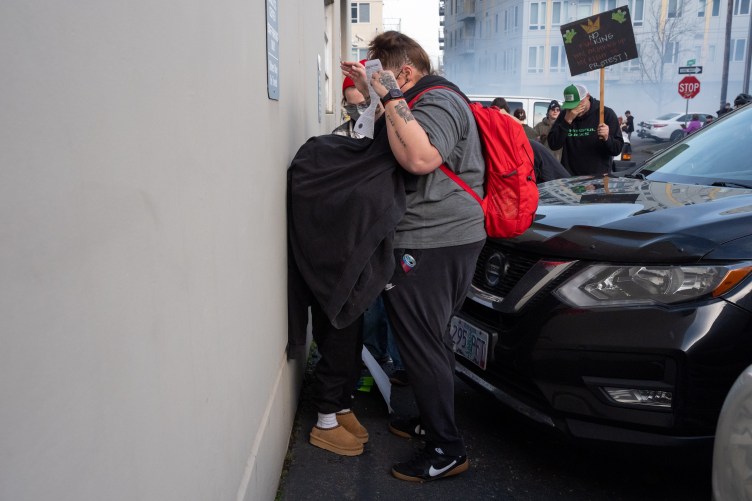
Another judge handled a lawsuit regarding what happened on Portland streets on Jan. 31, when thousands attended a Saturday afternoon rally. The event drew families — kids carrying band instruments, parents hoisting small children on their shoulders.
As the protesters marched past the ICE building, up to 50 “agitators” dressed in black tried to tie shut a vehicle gate and threw rocks and eggs at federal officers, according to DHS testimonies. Federal agents said they warned the crowd to move back and, within minutes, began launching weapons. These included Triple Chaser grenades that each separated into three tear gas canisters, dozens of pepper ball projectiles filled with chemical munitions, and “rubber ball grenades” that released stinging pellets, bright lights and loud sounds.
About a half block away, an 11-year-old boy thought those sounds were gunfire; then, the chemicals reached him. “I was coughing and hacking up phlegm and snot,” he told ProPublica. His father, who was with him and his brother, recalled their fear: “I think he really thought we were going to die, and so did I, because of the gas.” The boy’s 15-year-old brother said his eyes were sore for days. (The family asked us not to use names to protect the kids’ privacy.)
Matt Lembo, who went to the protest with his 14-year-old daughter, said the gas gave them sore throats and made their eyes water. “I saw at least a dozen kids,” he said, “getting their eyes washed out … seriously coughing, crying, spitting.”
A judge issued a temporary restraining order that forbade federal agents from using chemical munitions unless targeted at someone who posed “an imminent threat of physical harm.” CBP argued in a court filing that officers needed to be able to use the weapons in certain cases, like to break up a crowd of people blocking their vehicles.
These attempts to get relief in the courts have had limited success. Appellate courts have vacated the federal judges’ rulings in all three cases in Portland and Chicago, removing restrictions on how federal officers can use these weapons.
While DHS appears to have stopped using tear gas in Portland, its officers continued deploying it elsewhere, including in a residential area in South Burlington, Vermont, in March.
“Something Is Wrong”
The DHS policy on force says officers must use tactics that “minimize the risk of unintended injury” and should be guided by “respect for human life.” The CBP policy is more detailed; it says officers “should not use” pepper spray or “less-lethal” chemical munitions against “small children.” ICE’s policy says “the presence of other officers, subjects, or bystanders” are a factor in determining whether an officers’ use of force is reasonable.
Those policies fall short of more concrete reforms on tear gas and pepper spray use that many local police departments have been forced to adopt as a result of lawsuits or laws aimed at curbing excessive force. Portland’s police department requires officers to take into account their proximity to homes when considering tear gas use. Minneapolis forbids officers from using chemical munitions for crowd control unless authorized by the police chief — even when officers fear they will be physically harmed. Police in Akron, Ohio, were recently prohibited from using pepper spray “indiscriminately” to disperse a crowd and face other constraints on tear gas.
DHS officers also have historically been undertrained. In 2017, the department’s inspector general’s office found that agents did not appear to complete required training on weapons including tear gas and pepper spray. Four years later, another IG investigation into agents’ use of force while protecting federal buildings concluded that officers failed to complete required training. The report warned that “without the necessary policies, training, and equipment, DHS will continue to face challenges securing Federal facilities during periods of civil disturbance that could result in injury, death, and liability.”
DHS did not respond to ProPublica’s questions about whether it would examine its training or practices. “The pattern is NOT of law enforcement using force,” an agency spokesperson said in an email. “It’s a pattern of coordinated attacks and violence against our law enforcement.”
ProPublica’s findings make it clear that “something is wrong” with DHS’ use of force practices, said Edward Maguire, a professor of criminology and criminal justice at Arizona State University who advises law enforcement agencies on crowd control. “A responsible law enforcement agency … ought to be taking action to make sure these types of things don’t happen anymore.”
Requiring all law enforcement agencies to adopt uniform policies and training methods would go a long way, experts told ProPublica. These should include more extensive consideration of bystanders. When considering the use of tear gas or pepper spray in a crowd, for example, at least one officer should be assigned to conduct a collateral damage assessment to determine who may be inadvertently harmed, Maguire said. Then, the agency needs to be transparent about whether officers are following the policies.
To make that happen, various experts said, Congress would need to pass a bill mandating that federal law enforcement entities adopt such practices and incentivize local police departments to do the same.
Democratic lawmakers have repeatedly reintroduced the George Floyd Justice in Policing Act, which aims to strengthen use-of-force training and policies alongside more sweeping reforms on local policing. The latest versions, introduced in Congress last year, have not come up for a vote.
More recently, Congress members have drafted two bills narrowly tailored toward DHS and its use of these weapons. Both are with committees and have not been scheduled for hearings.
In the fall, three Democrats introduced a House bill that would strengthen DHS’ use-of-force policy, among other provisions. Notably, the bill would prohibit federal officers from carrying tear gas, pepper spray and other so-called less-lethal weapons unless they are arresting someone trying to enter the country illegally or have prior approval from their supervisor. “They don’t hold them to any standards like we would expect from local law enforcement,” said Rep. Scott Peters, a California Democrat who introduced the bill. “These are the kinds of reforms we need to make to restrain behavior.”
The Trump administration has said that any new restrictions would hamper immigration officers’ ability to carry out their work.
Rep. Delia C. Ramirez, a Democrat who represents Chicago, introduced a separate House bill in January. It would require DHS to publish a report every six months detailing each time officers used force and a summary of whether their actions complied with the department’s policy.
Ramirez said it shouldn’t fall to news outlets like ProPublica to document potential cases of excessive force. That is work “that we Congress members should be demanding from DHS.”
One of her co-sponsors on the bill, Rep. Seth Magaziner, D-R.I., called ProPublica’s tally of 79 kids harmed by tear gas and pepper spray a “horrific” finding. “I have two young children myself. I know how fragile young people can be, and not just physically but emotionally and mentally as well.”
Magaziner said Democrats in Congress may have a chance to question Markwayne Mullin, the secretary of Homeland Security, in a future budget hearing. When that happens, Magaziner said, he intends to ask, “When is there going to be accountability for the people who sprayed pepper spray into a moving vehicle that had a 1-year-old in it?”
About Our Findings
We learned that immigration officers stepped up their use of chemical munitions during President Donald Trump’s immigration crackdown through a data analysis. The University of Washington Center for Human Rights obtained nearly three years of Significant Incident Report data from the Department of Homeland Security. Immigration and Customs Enforcement officers are required to fill out such a report each time they use force, which includes deploying chemical agents. ProPublica analyzed the data and found that ICE officers reported a dramatic increase in their use of chemical munitions, comparing the year ending September 2025 with the prior two years.
Don't Miss:
-
Watch: Inside Our $22K Sports Betting Experiment
-
As Trump’s Wall Closes in, DHS Intimidates a Border Tribe With Surveillance, Masked Agents and Drones
-
To Speak the Truth: On the Mediated Obscene
-
The Pentagon Gave $350 Million in Contracts to a Firm Closely Tied to a Senior Defense Department Official
-
New York Plans Stronger Sports Betting Regulation to Curb Gambling Addiction