
 Trump administration gave firm with ties to ballroom donor the green light to do business with a sanctioned Russian bank
  Claire Sylvia on the Constitutionality of the False Claims Act
  School shootings in the Philippines put gun access under scrutiny
 Alex Nain Saab Morán is a Colombian businessman accused of being one of former Venezuelan President Nicolás Maduro’s main frontmen. The government of Venezuelan interim president Delcy Rodríguez deported him to the United States in May 2026, where he faces criminal charges.
International authorities have accused him of participating in a multibillion-dollar corruption and money laundering scheme involving several Venezuelan government officials. According to the US Department of Justice, Saab’s network diverted more than $350 million to overseas accounts. In January 2026, he was removed from office, and in May, Delcy Rodríguez’s government deported him to the United States, where he was once again taken into US custody.
In this profile:
Recent News About Alex Saab
August 3, 2026 – Alex Saab’s US trial set to begin September 8
Colombian businessman Alex Saab, widely accused of being a frontman for former Venezuelan President Nicolás Maduro, is set to face justice in the United States for a second time. His federal trial is scheduled to begin in Miami on September 8. Saab faces money laundering and international financial conspiracy charges, to which he has pleaded not guilty.
Saab was previously imprisoned in the United States from 2021 until December 2023, when he was released as part of a deal between the US government and Maduro in exchange for the release of 10 US citizens detained in Venezuela and several Venezuelan political prisoners. Following his return, he served as a minister until Maduro’s capture by the United States.
What Is Alex Saab’s story?
Álex Saab is the son of a Lebanese immigrant who settled in the city of Barranquilla and opened various businesses, finding success in Colombia’s textile industry.
Early in his career, he partnered with Álvaro Pulido, a Colombian businessman who was involved in drug trafficking and who invited Saab to do business in Venezuela.
Between 2004 and 2011, the two men exported merchandise to Australia, Ecuador, and Venezuela through a company called Shantex S.A. In Venezuela, their clients were small, relatively unknown businesses that had access to dollars at a preferential exchange rate thanks to the country’s former currency control agency’s (Comisión de Administración de Divisas – CADIVI) official exchange system that became well-known for its serious corruption scandals.
The close relationship between Saab and Chavismo dates back to 2011 when an agreement to supply the parts needed to build prefabricated houses for Venezuela’s Housing Mission was signed in front of then-president Hugo Chávez, Chancellor Nicolás Maduro, and former Colombian president Juan Manuel Santos.
The agreement was carried out with the company Fondo Global de Construcción (Foglocons), through which Saab and Pulido gained access to preferential exchange rates in Venezuela and to the Unified System for Regional Compensation (Sistema Unitario de Compensación Regional de Pagos – Sucre), which Colombia and Ecuador had promoted.
Between 2012 and 2013, the company received approximately $159 million to import housing kits into Venezuela. However, the company only delivered $3 million worth of products, according to Venezuelan investigative outlet Armando.info. Ecuadorian authorities investigated the exports, suspecting money laundering, fictitious operations, and overbilling by Foglocons’ subsidiary in Ecuador. Although the case was eventually dismissed, Ecuadorian authorities have continued their investigations.
Saab and Pulido entered the food supply sector in 2015 when a newly created Panamanian company, Global Foods Trading, linked to the two businessmen through frontmen, signed at least four contracts worth approximately $125 million to supply corn, wheat, rice, and soybeans to Venezuela, according to Armando.info.
Since late 2016, through Group Grand Limited, Saab secured lucrative contracts to provide millions of subsidized food packages distributed by the Local Supply and Production Committees (Comités Locales de Abastecimiento y Producción — CLAP) in partnership with the Táchira state government and the Venezuelan Foreign Trade Corporation (Corporación Venezolana de Comercio Exterior -Corpovex), according to Armando.info.
Although Saab initially sought to maintain a low profile as a government contractor, his name became widely known in August 2017 when former Venezuelan Attorney General Luisa Ortega Díaz identified him as the man behind Group Grand Limited, alongside Colombian businessmen Álvaro Pulido and Rodolfo Reyes. She also alleged that the company was actually owned by Maduro.
Saab’s business network expanded to include companies registered in the United Arab Emirates as intermediaries in the CLAP food supply scheme. This coincided with Maduro’s growing ties with Turkish President Recep Tayyip Erdoğan, particularly regarding the refining of gold extracted from Venezuela’s Orinoco Mining Arc and food trade agreements.
A few months later, Maduro formalized the creation of a joint venture between Venezuela’s state-run mining company CVG Minerven and a Turkish-registered company, Marylins Proje Yatirim. An Armando.info investigation linked this firm to Mulberry, another company owned by Saab, further evidencing his role in Venezuela’s gold trade.
Since at least 2019, Saab and Pulido had also ventured into the sale of Venezuelan oil. According to Armando.info, internal documents from Venezuela’s state-run oil company, Petróleos de Venezuela (PDVSA), from 2022 showed that 19 companies linked to the two Colombians owed nearly $1.5 billion to the state.
In June 2020, Saab was arrested after his plane landed in Cabo Verde. The United States quickly filed an extradition request, which was granted by Cabo Verde’s Constitutional Court in September 2021.
Following his arrest, Maduro — who had never publicly mentioned Saab before — suspended negotiations with the opposition and launched an extensive campaign in his defense. Meanwhile, Venezuela’s Ombudsman’s Office claimed that Saab had diplomatic immunity and was on a humanitarian mission to Iran at the time of his detention, though the legitimacy of his diplomatic status remains questionable.
During his trial, it was revealed that Saab had become an informant for the US Drug Enforcement Administration (DEA) in 2018, handing over more than $10 million in illicit funds and providing information on corruption within Maduro’s government. He also agreed to surrender to US authorities on May 30, 2019, but failed to do so.
In 2023, amid increased diplomatic engagement between the Maduro and Biden administrations, Saab was granted a pardon and returned to Venezuela as part of a prisoner exchange. In return, Venezuela released 10 US citizens, a fugitive wanted by US authorities, and several Venezuelan political prisoners.
In January 2024, Maduro appointed Saab as president of Venezuela’s International Center for Productive Investments (CIIP). Saab also assumed roles within the ruling United Socialist Party of Venezuela (PSUV).
In October of that same year, he was named Minister of Industry, replacing Pedro Tellechea, who also served as PDVSA’s president and was later arrested by Venezuelan authorities.
Saab was dismissed from his ministerial post on January 17, 2026, when the Ministry of Industries was merged with the Ministry of Commerce by Delcy Rodríguez, who became interim president after Maduro’s capture in January 2026 by the US government.
After months of rumors that Saab was being detained by Rodríguez’s government, Venezuelan authorities announced his deportation to the United States on May 17, 2026, identifying him as a Colombian citizen wanted by US authorities. The decision effectively reversed the Venezuelan citizenship that Maduro’s government had granted Saab in order to appoint him as a minister.
What crimes has Alex Saab been involved in?
Álex Saab has been accused of money laundering in the United States. Colombia has also investigated him for various crimes, though he was absolved of all charges.
The Colombian businessman built a network of opaque companies, mostly registered in tax havens under the names of third parties, including his son, the son of his business partner Álvaro Pulido, his brothers, and other associates. Through these shell companies, he allegedly conducted fictitious exports and corruption schemes that generated hundreds of millions of dollars in illicit profits.
Investigations into his CLAP food supply contracts have uncovered price gouging and low-quality products with poor nutritional value. Similarly, his dealings in Venezuelan oil left the state with massive unpaid debts. His involvement in Venezuela’s gold trade highlights another facet of his criminal operations, with reports linking him to criminal groups, corrupt security officials, and Colombian guerrilla organizations, including the National Liberation Army (ELN) and FARC dissident factions, in the extraction of precious metals.
Where did Alex Saab operate?
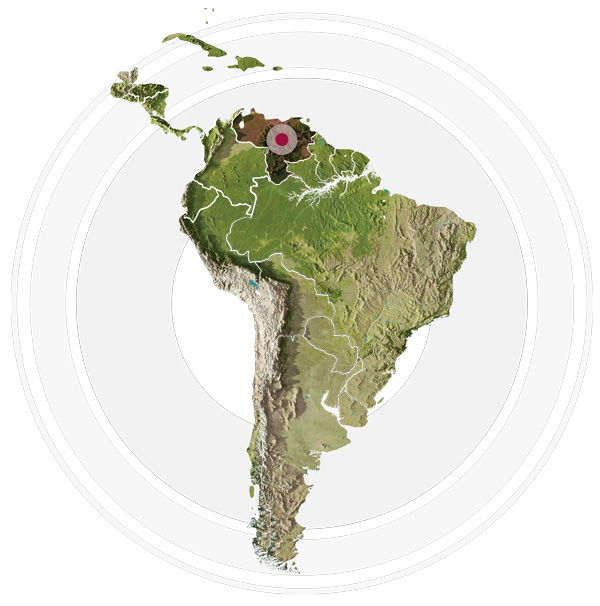
Saab and his associates have primarily operated in Venezuela, where they have enjoyed the support of Nicolás Maduro’s government.
To facilitate his operations, Saab has established companies in over a dozen countries, including Brazil, China, Ecuador, Mexico, Hong Kong, India, Panama, the United States, the United Kingdom, Russia, the United Arab Emirates, Italy, and Turkey — some of which have been shell companies. Investigations in multiple countries have traced funds from his Venezuelan dealings to banks in the United States, Panama, Malta, Spain, India, Israel, Italy, the United Kingdom, and Russia.
Initially, Saab and his associates used regional bases in Colombia, Ecuador, Mexico, and Panama to set up their businesses. However, as investigations into his activities intensified, he shifted operations to Europe with the help of his Italian wife, Camilla Fabri, and other relatives.
Who are Alex Saab’s allies and enemies?
The fact that Maduro paid Saab hundreds of millions of dollars amid Venezuela’s severe economic crisis and relentlessly advocated for his release suggests their relationship extends beyond business.
Beyond Maduro, Saab has cultivated ties with multiple Chavista officials who were frequently involved in his corruption and bribery schemes. One such figure is former Táchira state governor José Gregorio Vielma, who was indicted in the United States for accepting bribes from Saab.
In Colombia, Saab forged connections that helped him gain access to Maduro’s inner circle. One key ally was former Colombian Senator Piedad Córdoba, who publicly acknowledged her ties to the businessman in various interviews.
One of Saab’s most significant partners has been Álvaro Pulido, who collaborated with him on most of his illicit dealings with the Venezuelan government and was indicted in the United States for his role. Pulido was arrested by Maduro’s regime in April 2023 amid a sweeping anti-corruption purge at PDVSA.
Saab’s money laundering network also involved Bruce Bagley, a prominent organized crime scholar.
What lies ahead for Alex Saab?
Saab’s return to US custody further consolidates the loss of power of the Maduro-Cilia Flores faction in Venezuela. If Saab cooperates with US authorities, he could become a key witness in the case against Maduro and in investigations into the laundering of Venezuelan state funds.

Don't Miss:
-
The US-China tech war has evolved since the last Xi-Trump summit. Who has the edge now?
-
Canada’s British Columbia sues OpenAI in US court over school shooting
-
Top US Senate Democrat Jeanne Shaheen warns Trump not to waver on Taiwan ahead of Xi meet
-
UK PM Burnham agrees to Saudi request for refuelling support
-
Zelensky and US spy chief Ratcliffe meet in Ireland, sources say