
 Anatomy of a Chinese loanbook
 Philippines hands ASEAN chairmanship to Singapore
 Trump’s Asian tour: Trade promises, security alliances and the battle for regional influence
Last spring, the police chief in a tiny North Texas suburb called Pantego went before his town council with what might have sounded like an audacious pitch to bring in more money for policing.
His department could accept the federal government’s offer to get into the business of immigration enforcement.
“I won’t say there’s unlimited funding, but there’s quite a bit of money in the fund,” Pantego Police Chief Robert Rife said during the April meeting in which council members approved an agreement with Immigration and Customs Enforcement.
He was right. After a single immigration arrest this past June, Pantego received $100,000.
It stands to earn much more.
Rife predicted in his presentation to the council that federal grants could bring in an additional $720,000 for the 2,500-resident town a few miles east of Fort Worth. For perspective, combined with the money it had already received, that’s roughly equivalent to 40% of the town’s $2.1 million police budget last year.
Pantego is one of 429 law enforcement agencies in the state as of mid-September that have entered into agreements with ICE as part of President Donald Trump’s efforts to accelerate deportations. Texas leads the nation in these partnerships, known as 287(g) agreements, which authorize local officers to make immigration arrests during their normal course of duty. A key incentive for local governments across the country has long been the funding that comes with participation.
The federal program funnels millions of dollars to local law enforcement while requiring few measurable results and little tracking of how the money is spent. KXAN reviewed minutes from nine local government meetings and found that, over and over again, Texas law enforcement officials sold the program to their local elected leaders as a boon for their cash-strapped departments.
The same month Pantego decided to join the program, for example, the police chief in the small suburb of Hollywood Park near San Antonio made a similar pitch to his city council. The city “actively profits on payroll for the time spent,” he said.
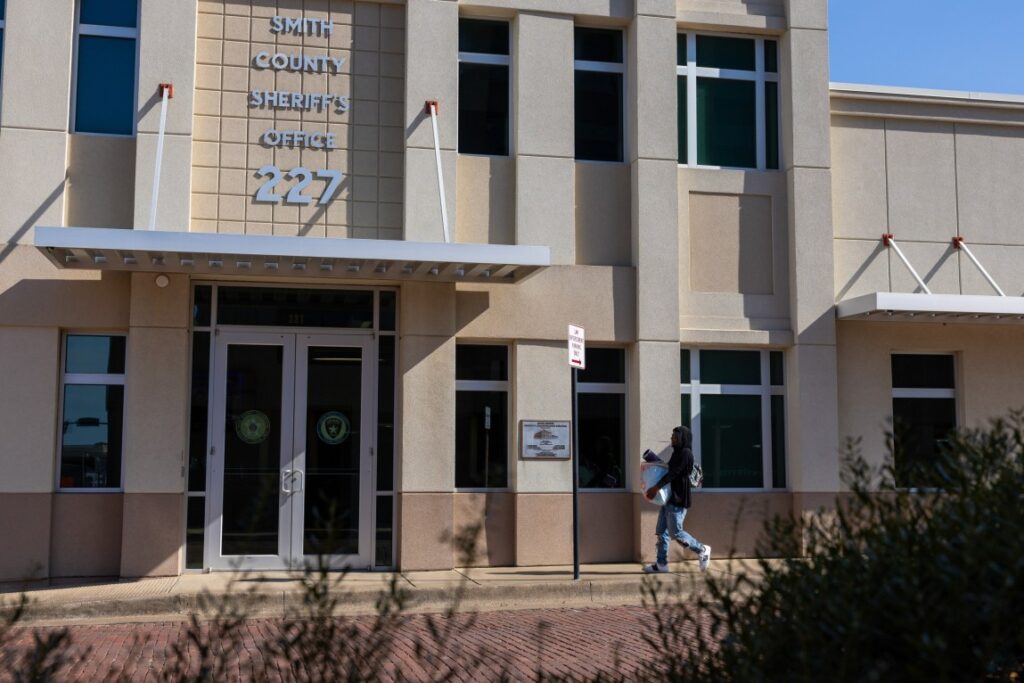
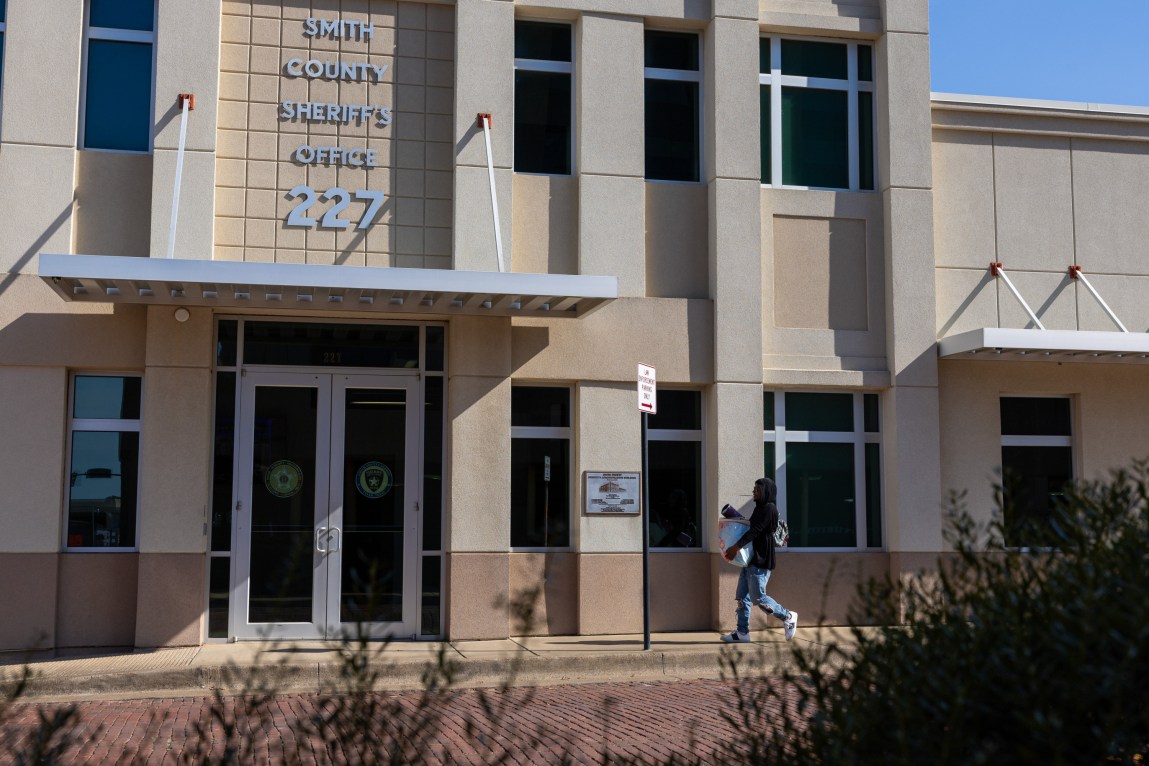
And in Smith County in East Texas, Sheriff Larry Smith told county commissioners that “equipment, use of fuel, mileage and things of that nature” could all be reimbursed, plus there would be $100,000 for two new vehicles and money for overtime.
“How often do the feds offer us money for anything?” Smith County Commissioner John Moore asked.
“Not very often,” the sheriff responded. He declined to speak with KXAN.
Austin-based immigration attorney Kate Lincoln-Goldfinch worries that local law enforcement will become dependent on the financial incentives, making it difficult to pull away from the program in the future.
“I’m concerned about what this money is going to be doing to the mindset of these small police departments,” she said.
In the Texas Panhandle, Hartley County Sheriff Chanze Fowler said nearly all the federal funding his department receives supports its regular operations, in addition to immigration work.
The sheriff’s office recorded 54 arrests under 287(g) authority from January to early July, most for minor traffic and vehicle violations, according to records obtained by KXAN. It received more than $205,000 during that time. By this past summer, it had spent about $30,000 on things like wages, extra pay for officers who became 287(g) certified, payroll taxes, retirement funds and “fleet purchases.”
Almost all of the 287(g)-related funds “go towards items needed for our everyday job,” Fowler said.
Other local city and law enforcement officials said the additional funds help officers protect their communities and carry out core duties. ICE did not respond to a request for an interview for this story but instead provided a statement that explained the program. Its website says the program targets dangerous criminal offenders.
Pantego officials have declined to answer KXAN’s questions about the department’s involvement with the program since August, despite repeated attempts to reach the mayor, town council, city manager and police chief by phone, email and in person.
“We are not interested in interviewing at this time,” said City Manager Leslie Galloway, the only official to respond.
Ammon Blair, a senior fellow for the Texas Public Policy Foundation, a conservative think tank that supports the program, acknowledged the money can help departments operating on thin budgets, including helping to pay for overtime. But he said there should be more oversight of how the federal money is spent.
KXAN obtained service agreements between ICE and the Smith County Sheriff’s Office and the police department in Bullard, Texas, a town of about 5,300 people in East Texas. The agreements allow either party to terminate with 60 days’ notice. None indicate that the federal government can reclaim funding if an agreement is terminated.
That was one of the selling points in Pantego. The department could get federal funding and eventually drop out of the program without penalty and keep the equipment already purchased, the police chief told town council members. All it had to do was make at least one immigration arrest.
Between the end of April and mid-June, it made two.
“Are You a U.S. Citizen?”
Local law enforcement agencies that join forces with ICE can choose among three models, two of which focus on identifying people already in jail who may be subject to deportation.
Trump revived the third kind, called the task force model, at the beginning of his second term. Task force agreements often worry civil and immigrants’ rights groups because of the model’s problematic track record: ICE started phasing them out in 2012, after Department of Justice investigations revealed that sheriff’s offices participating in the model had committed civil rights violations.
But task force agreements can also be lucrative.
Agencies can receive federal reimbursement for salaries, overtime and benefits for “conducting purposeful and intentional” immigration enforcement activities once the contract starts, according to a service agreement obtained by KXAN.
They can also get recurring quarterly incentive payments and one-time stipends for equipment, technology and vehicles, though federal memoranda and agreements obtained by KXAN don’t specify what agencies can purchase.
The Department of Homeland Security stopped renewing task force model agreements during the Obama administration after federal investigations revealed civil rights violations involving sheriffs’ offices in Arizona and North Carolina.
Since Trump’s return to office, the model has become the most common of the three agreement types. At least 241 task force model agreements were signed in Texas in 2026 alone, compared to just 30 combined for the other models in that time period, according to ICE participation data from September.
Smith County was among the first in Texas to sign on after the president reinstated the task force model in early 2025.
Moore, the only member of Smith County’s Commissioners Court who agreed to speak with KXAN, explained why he thought the commissioners wanted to partner.
His first word: “budgetary.”
“Any kind of training that any of our departments need to have, or are required to have, costs money, and it’s rare that we get an opportunity to get funding for training from outside county taxes,” Moore said. “Any time we can save the taxpayers money, I’m all for it.”
Smith County got more money than any other of the 93 Texas law enforcement agencies whose funding KXAN reviewed. The sheriff’s office received nearly $2.2 million in federal 287(g) funding from January 2025 to June 2026, according to records obtained by KXAN. That’s equivalent to about 12% of its budget for fiscal year 2025.
Smith, the sheriff, told the Commissioners Court last November that although vehicles purchased with that money would be used for the 287(g) program, “that doesn’t mean, if we’re out here, we won’t run to another call or take another call that comes across the radio. We will do that. We try not to separate 287(g) from our other law enforcement duties. We do it all together.”
About 120 of 198 licensed officers in the Smith County Sheriff’s Office participated in the program. Together, they conducted 124 immigration enforcement actions between October 2025 and July. KXAN requested a list of 287(g) stops from the department, in addition to any associated charge. Smith County listed no associated criminal charge for more than 100 of these stops.

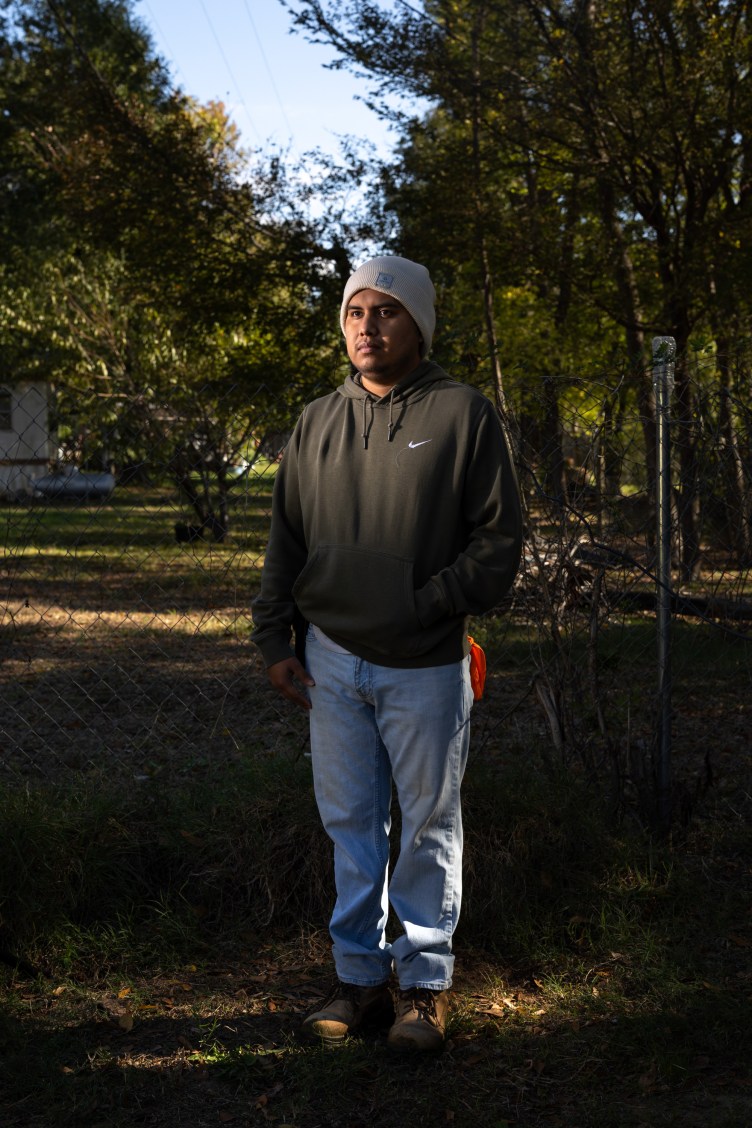
Jose Rodriguez and his 23-year-old son, Pablo Rodriguez, were among those affected.
One afternoon in late June, the pair cruised along Loop 323, a circular segment of highway in Tyler, a city of 113,000 people in East Texas. They’d spent hours working in the summer heat at a construction job and were headed to Chick-fil-A to pick up lunch for their family.
Then red and blue lights appeared behind them. The law enforcement agent said that he’d pulled their black extended-cab work truck over because of a missing license plate on the trailer attached to the pickup and a missing dual-wheel mud flap.
Body and vehicle camera footage showed the detective requesting that Jose Rodriguez get out of the truck. “Any English at all?” the detective later asked. Jose Rodriguez raised his right hand, holding his thumb and index finger close together.
“Un poquito?” the detective asked, followed by, “Are you a U.S. citizen?”
The man shook his head and answered. “No.”
Seconds later, the detective pulled Jose Rodriguez’s hands behind his back and put him in handcuffs.
He was eventually taken from the Smith County jail to an ICE detention facility, about two hours west of Tyler. His son, who is a U.S. citizen, said Jose Rodriguez was detained for about three months before being deported to Mexico.
KXAN could find no criminal convictions or arrests on his record when the Smith County detective took him into custody in June.
“Just like that, he’s gone,” Pablo Rodriguez later told KXAN. “My dad’s gone.”
Law enforcement officers, Pablo Rodriguez said, “portray us as criminals, rapists, violent people. We’re not that. We’re just regular people trying to find a better life. The only difference is our skin. That’s pretty much it.”

The Future of the Program in Texas
Elections earlier this month have left the 287(g) program’s future uncertain, at least in Texas.
While the Trump administration has reached agreements with local law enforcement to work with immigration officials, Congress has broader oversight authority. That includes decisions about funding. In January, Democrats will take over both chambers of Congress and many, including freshman Texas Sen. James Talarico, have criticized ICE tactics. It’s unclear, however, how much of their focus will be on immigration enforcement and specifically on the 287(g) program.
More locally, state Sen. Charles Schwertner, the Republican lawmaker who authored a measure in 2025 that required most Texas sheriff’s offices to participate in the program, wants to expand the mandate during the coming legislative session to include other law enforcement agencies, like police departments. So does the conservative think tank where Blair works.
But support for such legislation may be harder to get after November’s midterm election.
Schwertner retained his state Senate seat, and Republicans maintained their majority in that chamber, but Democrats took control of the governor’s mansion and the state House of Representatives for the first time in a generation. Any new bills would require legislative approval from both chambers and the governor’s signature, or enough legislative support to override a veto.
In a press release well before the election, Democrat Gina Hinojosa called on Gov. Greg Abbott to “demand accountability from the Trump administration and stop enabling ICE operations that are terrorizing communities and violating the law.” The release did not mention the 287(g) program by name. Hinojosa beat Abbott in this month’s election and will take over as governor in January. She did not respond to a request for comment for this story.
The state program could also be affected by this month’s election of Democrats Nathan Johnson, who won the race for state attorney general, and Sarah Eckhardt, who won her bid to become state comptroller.
Johnson, as a state senator, opposed the mandate that sheriffs’ offices participate in the program. He will inherit responsibility for enforcing the law, which requires most sheriffs to seek agreements with ICE by Dec. 1. Johnson said he will use his discretion in deciding whether to sue sheriffs who fail to comply if they have “legitimate law enforcement reasons for not having a 287(g) agreement.”
He also questioned the state attorney general’s continued participation in the program. Current Attorney General Ken Paxton signed a 287(g) task force model agreement in February 2025.
“The attorney general’s office has tremendous, vast responsibilities,” Johnson said. “Never included among them since the creation of this state was outsourcing your employees to a federal agency for a purpose in which we’re not trained or qualified and which distracts me from the mission of my office.”
Johnson didn’t entirely rule out working with ICE in some capacity if it allowed his office to investigate crimes committed by ICE agents in Texas.
Eckhardt, meanwhile, will take over oversight of a $20 million grant program that state lawmakers created two years ago to help sheriff’s offices cover any costs of participation in the 287(g) program not reimbursed by the federal government. By late September, the comptroller’s office had awarded more than $6.5 million to 78 sheriff’s offices, according to figures obtained by KXAN.
During her campaign, Eckhardt warned that expenses for the program could eventually fall on local taxpayers, calling it “unsustainable.” After winning her seat, she said she would “do a 287(g) audit to show how that expense is driving up property taxes.”
Even if state leaders don’t expand the participation requirement or remove the current mandate, departments can choose to keep collecting federal money to enforce immigration law.
In Fayette County southeast of Austin, Sheriff’s Lt. David Beyer told KXAN that the 287(g) funding his office had already received totaled about $800,000, which helps purchase equipment it can also use for ordinary police work.
“If they want to pay us extra to do that job,” Beyer said, “we’re more than happily going to accept those funds, because that saves our taxpayers money.”
Don't Miss:
-
Ohio Jobs Program Wants Its Money Back After Company’s Failure to Deliver GMO Salmon
-
These Teachers Were Charged With Sexual Abuse. California Could Have Revoked Their Licenses Earlier but Didn’t.
-
See How Much Companies Are Getting in Tariff Refunds
-
Corpus Christi Started Pumping Groundwater at “Lightning Speed.” Rural Residents Fear the Consequences.
-
The U.S. Paid Insurers Billions to Cover Civilians Harmed in War. Even the Government Says the System Is Ripe for Fraud.