
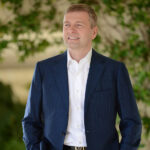
 A reclusive billionaire, a ‘fearless’ dealer and a globe-spanning feud over priceless art
 AI Governance: It’s Time for UN Environmental Leadership
 Facing China with Quiet Pragmatism
Before everything turned sour, Russian billionaire Dmitry Rybolovlev and Swiss art world figure Yves Bouvier had a flourishing partnership.
Bouvier, a self-proclaimed “fearless” wheeler-dealer, was pioneering the freeport model — a kind of free-trade zone for art, where the ultra wealthy could stash and trade expensive pieces without the art ever leaving the building.
Rybolovlev, a reclusive potash mogul and art collector, was looking to expand his portfolio — and Bouvier was happy to help. For more than a decade, Bouvier worked to help Rybolovlev amass one of the world’s great art collections. Then, their relationship fell apart.
Their globe-spanning, multi-billion-dollar feud is at the heart of “The Oligarch and the Art Dealer,” a new documentary from Danish director Andreas Dalsgaard, which dives deep into the shadowy trade in priceless masterpieces.
The film explores the series of lawsuits, criminal cases (that were eventually dropped), dirty tricks-style surveillance operations, and dramatic press coverage that played out after Rybolovlev accused Bouvier of swindling at least $1 billion by lying about the purchase prices of major works and pocketing the difference. (After a drawn-out battle, Rybolovlev and Bouvier eventually settled their dispute, with the terms undisclosed.) It also draws on ICIJ’s Panama Papers investigation, which helped expose how Bouvier used a vast network of offshore companies to move billions of dollars worth of art for his many clients, including Rybolovlev. The film is showing as part of the Double Exposure Investigative Film Festival and Forum in Washington, D.C. this week.
ICIJ spoke with Dalsgaard about how art has become one of the most efficient vehicles for hiding huge amounts of wealth, the challenges of documenting a billionaire oligarch, and how certain U.S. states have become magnets for dark money.
This interview has been edited for length and clarity.
Let’s start with the oligarch of the title of the film. You interviewed people who worked with Dmitry Rybolovlev. He’s a major part of the film, but ultimately, he’s not really there to speak for himself. What kind of character is he to you, beyond just a Russian oligarch?
What was unique in this story is that he never talks – literally never. He’s made one very short interview about the AES Monaco Football Club that he owns. That’s pretty much it. The story is about the dispute between the oligarch Rybolovlev and the Swiss art dealer and freeport magnate Bouvier. And they’ve been fighting it out in courts in eight countries. They’ve had PR teams. They’ve had spies.
So much has been made available to the public and to us through these court cases, everything from years of emails, years of text messages, invoices, whatnot. And to be allowed to look into a world they occupy — which is both the world of the ultra rich and the top echelon of the art market — and see how those deals were made, see how those negotiations take place, see how they communicate with each other, it’s just unique. I don’t know of any other case where that’s been so accessible.
It’s very interesting to me about how art stops being art. You use the phrase “wealth laundering,” and I’m wondering what it was like visiting the Swiss freeport, where thousands of pieces of priceless art are stored but almost never seen.
On one level, it’s just a warehouse. It’s a very, very dull warehouse sitting in this suburban area of Geneva, right next to the highway, close to the airport. It’s just a building. It’s got high security, sure. But it’s really just a building, and from the outside, it looks like any other building, more or less, with the fence.
When you go inside, and you walk around there, then it’s still very dull. It’s just storage. The security there is pretty much on par with Fort Knox. So, on that level, it’s an extremely secure place.
It’s basically still in the opaque international territory we can call offshore, which is the same thing you’re in when you leave the passport check-in in the airport, and then you’re in international waters, so to speak. That’s what the freeport is.
Then, someone came up with the brilliant idea. What if it doesn’t move? It just sits there.
At the same time, if it just sits there, it can be almost like a bank vault, and we can exchange that value amongst each other so I can move $100 million to you through the exchange of an ownership paper on a painting. The painting doesn’t move. It just sits in the freeport, and no one needs to see that exchange of ownership. Contrary to moving money in a bank, because all financial transactions are tracked and are actually available to authorities, this kind of transaction would be completely opaque. And that attracts a lot of people who have an interest in keeping their money hidden.
You spoke of the large document trail related to this case and this relationship between these two men. Approaching the documentary, how important was piecing together what already existed in public record, or were there parts of the story you were trying to advance?
What we really wanted to do was to put the whole story together as one story, and that has not been done before to any degree.
What really came out that was new for us was during the trial in New York, which was the trial between Rybolovlev and Sotheby’s. He sued Sotheby’s for aiding and abetting Bouvier. There was a new whole level of access to emails and evidence that … hadn’t been available before. That was an astounding insight into what these two people were doing. And one thing that I found really astounding there was that Sotheby’s, in one of those documents, said that they dealt with Bouvier on more than 800 occasions.
With Rybolovlev only, [Sotheby’s] traded 38 artworks. Total value: $2.3 billion.
But with Sotheby’s, [Bouvier] did 800 deals, oftentimes through opaque offshore structures. Mostly, it would never be his name on those deals. So, only because of this evidence and because Sotheby’s provided that evidence, we could see how big of a force in the art world he really was.
We get these insights into a much bigger world. But many questions still remain.
All these offshore companies, as you mentioned, that he had – it does seem like a partial glimpse into a much larger system.
Money constantly seeks places where it can be hidden. Art really became a tool for that in the last 25 years.
There’s a sort of broader form of crime at work here, and that’s political corruption all over the world, but especially in Monaco. What was it like cracking that open?
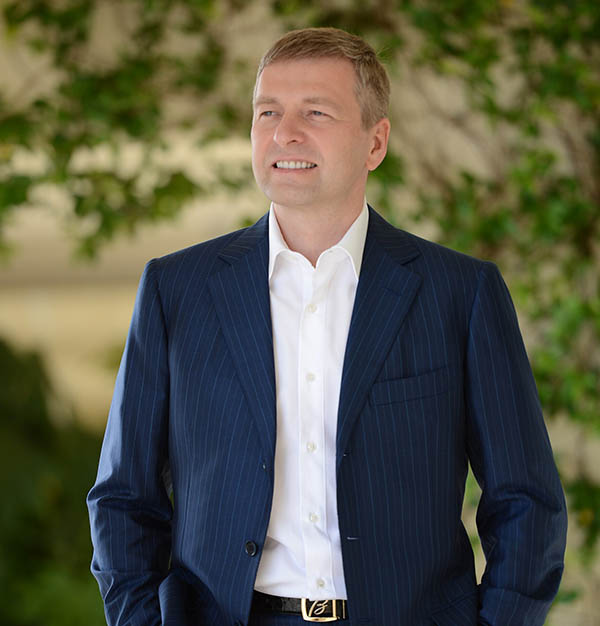
What came out of this case is this story that’s very big in France called “Monacogate,” where it was basically unveiled that [Rybolovlev] had much too close relations with a lot of power brokers in Monaco. Rybolovlev and his team are communicating with all those power brokers in Monaco, and that gives this amazing insight into what really constitutes a place like Monaco.
With Rybolovlev, where did he put his money? Who does he invest into, or what does he buy?
He bought the football club in Monaco and the most expensive apartment in Monaco and Europe from the prince of Monaco. He bought the most expensive apartment in New York from the CEO of Citibank. He bought the most expensive villa in the U.S. from this guy named [Donald] Trump.
We see all of these investments that don’t seem that random because they’re always with big power brokers.
Do you know if either man has had an opportunity to see the film?
Both sides have seen the film. I don’t think anyone is really happy. Which means that I feel like we did a good job.
Bouvier seems to have an ability to exploit these broken systems that you’re highlighting.
Bouvier is an incredibly complex character. He comes from this background of inheriting his father’s company that was moving furniture and art. And develops that whole model of not only storing art in freeports — he develops the Geneva Freeport system, [and becomes] the main person running that place. But he also develops all these service structures around the freeport.
That means restoration. It means investigating the provenance of a painting. It means moving and transporting. It means all kinds of things that you need if you own very expensive art. So he develops that whole service industry, too. And then he starts turning that into a global conglomerate with freeports in other countries and tons of companies related to those services in other countries as well. At the same time, he invests into galleries, he invests into corners of the art world. He basically is like a spider. He has his web everywhere.
These two reached a financial settlement while you were making the film. Do you see the war between them as being over?
I think largely, yes. I’m sure there’s still a ton of grievances between them. I’m sure that there are aspects of the story that we’ll never know, aspects of this that dealt with things or deals that we don’t really understand fully.
I have so many questions still, because we’re talking about a world of dark money and these were architects of that. Bouvier was an architect of a whole system and an infrastructure that made art a vehicle for dark money, and he had offshore structures everywhere around the world.
He’s not the only one who made art a vehicle for oligarchs from around the world, but he was at the center of it in a way that no one was.
It does seem like, in a sense, everyone got away with it. Maybe that’s just the world of corruption. Is that how this other world, this Moneyland, operates? There’s no accountability.
There was a recent poll in the U.S. that showed that corruption was actually now the most important topic for American voters. I find that very promising, that it’s so much becoming part of the agenda.
The world of dark money that we’re looking into here offers ways to corrupt that are used extensively everyday, everywhere around the globe. Places like Delaware, Wyoming, Nevada – those are some of the most opaque places on the planet.
Until we start taking this seriously – and take it seriously that ownership of things cannot be secret – then, nothing’s going to change, and it’s only going to get worse. It’s a huge challenge to democracy. It’s the thing that’s going to undermine liberal democracy more than anything, and is doing it right now.
—
Tickets are on sale now for the Double Exposure Investigative Film Festival and Forum in Washington, D.C., Nov. 5 to 8, 2026. The Oligarch and the Art Dealer will screen on the opening night of the festival, and will be followed by a Q&A with director Andreas Dalsgaard, producer and co-creator Christoph Jörg, and art dealer and film participant Ezra Chowaiki. Use promo code ICIJ-DX26 to get a 10% discount on tickets.
Don't Miss:
-
AI Governance: It’s Time for UN Environmental Leadership
-
Facing China with Quiet Pragmatism
-
Pharma giants pay millions to Russian distributor entangled in corruption allegations to win cancer drug business
-
Xi emerges powerful from Beijing meeting, but maybe not all-powerful
-
Egyptian court orders closure of news site Mada Masr and fines editor Lina Attalah, sparking international outcry